


Unveiling the Past: Transforming 19th-Century African American Newspapers with AI
This article was originally published in UCSB’s ‘The Current‘.
The Mission
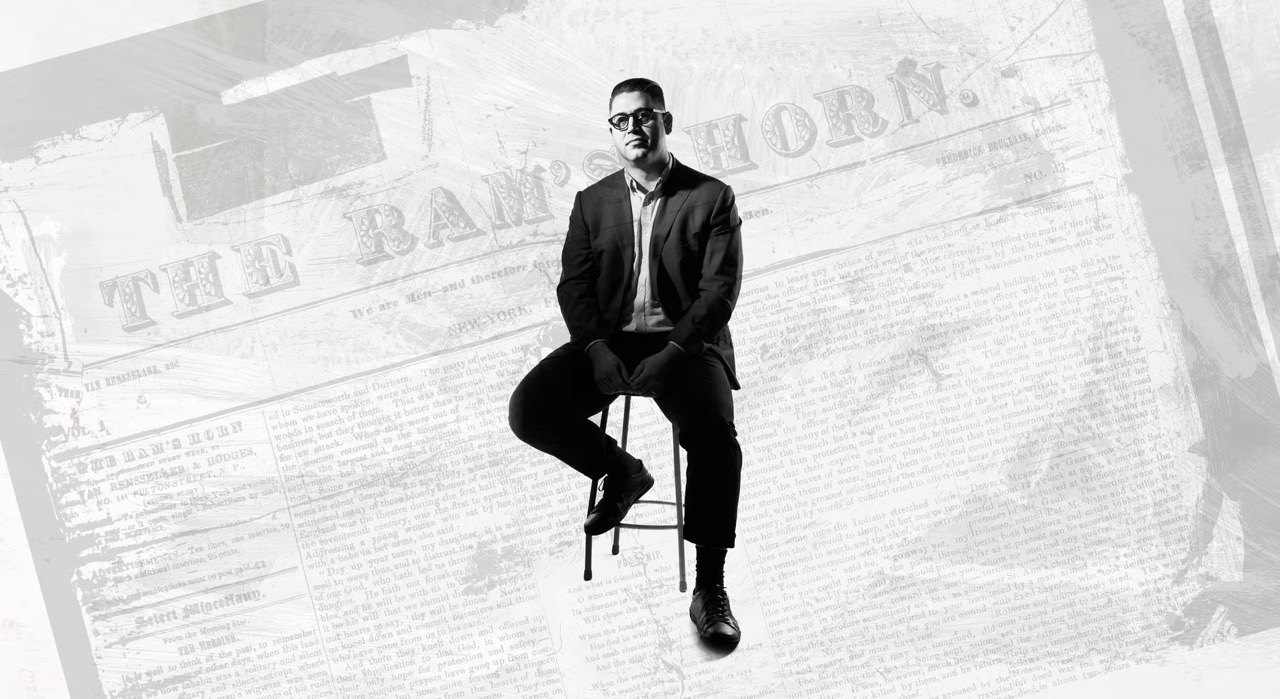
At UC Santa Barbara, English assistant professor Jim Casey is spearheading a groundbreaking project to recover and make accessible the rich but often overlooked history encapsulated in 19th-century African American newspapers. With a substantial grant of $750,000 from Schmidt Sciences’ Humanities and AI Virtual Institute, Casey is leading a diverse, interdisciplinary research team aimed at utilizing artificial intelligence (AI) to unearth historical narratives that have long been scattered and inaccessible.
Community-Focused Approach
This initiative, titled “Communities in the Loop: AI for Cultures & Contexts in Multimodal Archives,” redefines traditional uses of AI in research. Instead of a top-down, corporate-driven approach, this project focuses on community participation and historical justice. By prioritizing these elements, the team aims to create technologies that are ethical, inclusive, and culturally aware.
Historical Significance
The context of the project is rooted in the legacy of the Black press. In 1827, the inaugural Black newspaper, Freedom’s Journal, proclaimed, “Too long have others spoken for us.” This statement echoes throughout the project’s mission, as it emphasizes the importance of reclaiming voice and agency through authentic representation in historical narratives. The project aspires not just to adapt existing AI technologies but also to learn from the innovative practices of early Black journalists who navigated the harsh realities of slavery and Jim Crow.
The Challenges Ahead
Developing tools that can accurately interpret historical Black newspapers introduces a number of challenges. Most commercial AI systems are trained on mainstream datasets, which often neglect the specific nuances of Black journalism. These AI tools struggle with the intricate layouts and formats of historical publications, resulting in errors that stem from biased training data. Consequently, the project aims to create specialized machine learning models that focus exclusively on Black press materials to better perform optical character recognition and layout segmentation.
Interdisciplinary Collaboration
The project is not a solo endeavor; it encompasses a collaborative effort among experts from ten universities, alongside the Adler Planetarium. This broad base of skills and knowledge aims to ensure the development of sophisticated AI tools that uphold academic rigor while remaining grounded in community relevance. Daina Ramey Berry, the Michael Douglas Dean of Humanities and Fine Arts at UCSB, notes how Casey’s work represents a vital intersection between historical research and technological innovation.
Engaging the Public
One of the innovative aspects of the project involves the use of Zooniverse, a leading crowdsourcing platform that invites public participation. Volunteers will engage in a process known as “human in the loop,” validating and either improving or correcting machine-generated text. This active involvement not only enriches the dataset but also fosters a sense of community ownership over the historical materials.
A Hub for Historical Projects
The funding from Schmidt Sciences boosts an existing network of initiatives led by Casey in collaboration with P. Gabrielle Foreman from Penn State. Casey plans to develop a West Coast hub for the Early Black Press Project, alongside the Colored Conventions Project and Douglass Day—events designed to honor and celebrate Black history.
Looking to the Future
One of the most exciting aspects of this initiative is the upcoming public launch scheduled for Douglass Day in 2027, marking the 200th anniversary of Freedom’s Journal. This event will invite tens of thousands of individuals to transcribe historical documents using an accessible mobile interface, allowing a diverse audience to engage in saving Black history through active participation.
Rethinking AI and Technology
Ultimately, Casey advocates for a transformative vision of AI—one that breaks free from extractive and discriminatory paradigms. The goal is to implement technologies that learn from communities historically marginalized and to reshape narratives through collaborative efforts. This meaningful dialogue not only honors the past but also lays the groundwork for a more equitable future in both technological development and historical scholarship.
UCSB’s local Douglass Day event will take place on February 13, 2026, focusing on the Colored Conventions Movement. For more information about participation, keep an eye out for updates closer to the event date.