


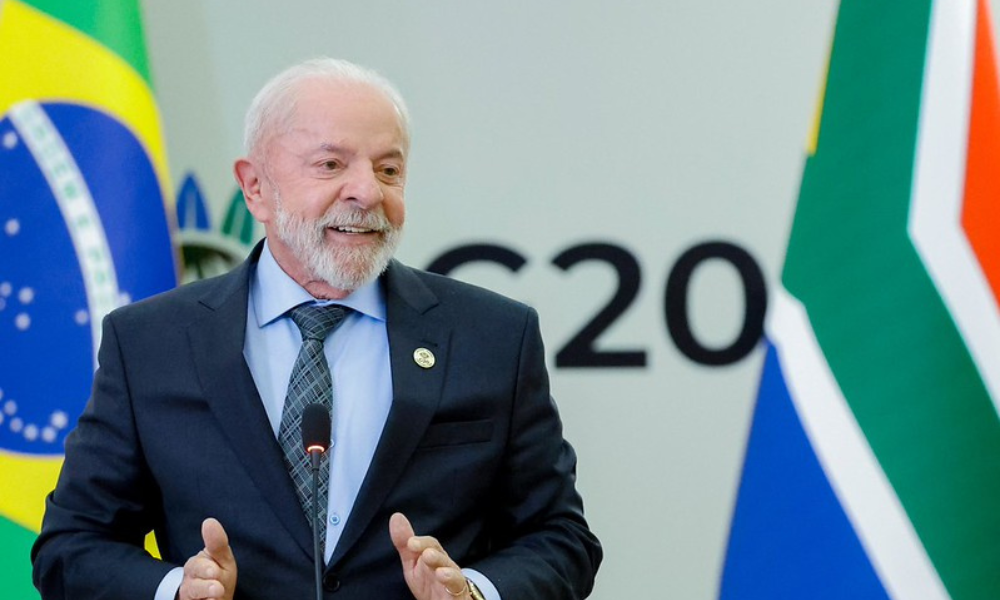
President Lula’s Address at the Ibas Leaders Meeting: A Call for Action and Cooperation
This past Sunday, September 23rd, President Luiz Inácio da Silva spoke at a pivotal meeting of the India-Brazil-South Africa Forum (Ibas), held on the sidelines of the G20 Summit in Johannesburg, South Africa. This gathering marks a significant moment for Ibas, a trilateral initiative established in 2003 to foster cooperation among countries in the Global South, as it has been nearly a dozen years since the last high-level meeting of its leaders.
Revitalizing Ibas: The Necessity of Leadership on Global Issues
In his address, President Lula emphasized the urgent need for Ibas to take a prominent role in addressing critical global challenges. He pointed out the stagnation the forum has faced in recent years and called for a renewed focus on governance surrounding artificial intelligence, decent work in emerging markets, and health-related issues such as vaccines and sexual and reproductive rights.
“India, Brazil, and South Africa have the vocation of reconciling the values of sovereignty and autonomy with the search for development and the defense of democracy and human rights,” Lula stated. He noted that this unique capability has become increasingly vital in the contemporary global landscape, where unity and collaboration are often overshadowed by division and discord.
Health and Human Rights: An Important Dialogue
Lula articulated the potential for Ibas to be a driving force in the multilateral health agenda. He highlighted the importance of discussing access to medicines, vaccines, and healthcare supplies. By fostering open conversations around human rights and gender equality, Ibas can tackle essential topics like sexual and reproductive rights. “There is confidence to discuss the fight against extremism and the defense of democracy,” he noted, signaling an environment ripe for constructive dialogue among the member nations.
Moreover, the president underscored the role of unions and non-governmental organizations in framing discussions around social participation and the workplace challenges faced in emerging markets. He believes there is much to gain from a collaborative approach that includes diverse stakeholders in the conversation about labor dynamics and the governance of artificial intelligence.
Assessing the Future of Ibas: A Call for Reflection
Reflecting on the forum’s potential, Lula urged a re-evaluation of Ibas’ role in the international arena, raising questions about its relevance amidst shifting global dynamics. He suggested that establishing a regular schedule for high-level meetings could enhance the forum’s effectiveness. “The question that arises for our countries is: what is the role of Ibas? What space do we have in the current situation?” he pondered, indicating a need for strategic assessment.
Lula emphasized that the power dynamics within major emerging nations and democracies afford Ibas a unique identity and capabilities, distinct from other international bodies. He called for thoughtful discourse on how to integrate new democracies from the Global South, such as Mexico, Kenya, and Malaysia, into Ibas’ broader framework and initiatives.
The Legacy of Ibas: Historical Contributions and Future Aspirations
In his speech, President Lula reminisced about the Ibas Fund, a testament to the forum’s commitment to South-South cooperation. He noted that this initiative has financed 51 projects across 40 countries since its inception. The Ibas Fund has been involved in initiatives such as the Global Alliance against Hunger and Poverty, launched during Brazil’s presidency of the G20 last year, illustrating the enduring legacy and impactful contributions of Ibas.
Engaging at the G20: A Broader Dialogue
Lula’s visit to Johannesburg not only included his address at the Ibas meeting but also featured participation in several thematic sessions of the G20. These discussions spanned crucial topics including sustainable and inclusive economic growth, climate change, disaster risk reduction, and the intersections of critical minerals, artificial intelligence, and decent work.
Additionally, Lula engaged in bilateral meetings with key leaders, including South African President Cyril Ramaphosa and German Chancellor Olaf Scholz, underscoring the importance of building diplomatic relations and collaborations beyond the scope of emerging nations.
Continuing to Mozambique: Strengthening Diplomatic Ties
Following the G20, President Lula will travel to Maputo, Mozambique, for a working visit to commemorate 50 years of diplomatic relations between Brazil and Mozambique. This visit underscores the ongoing commitment to foster partnerships and cooperative endeavors within the region.
In summary, President Lula’s remarks at the Ibas leaders meeting highlight an essential opportunity for collaboration among India, Brazil, and South Africa as they address pressing global challenges. With an emphasis on health, human rights, and the necessity of reinvigorating Ibas, Lula is advocating for a united front in the face of increasingly complex global dynamics.