


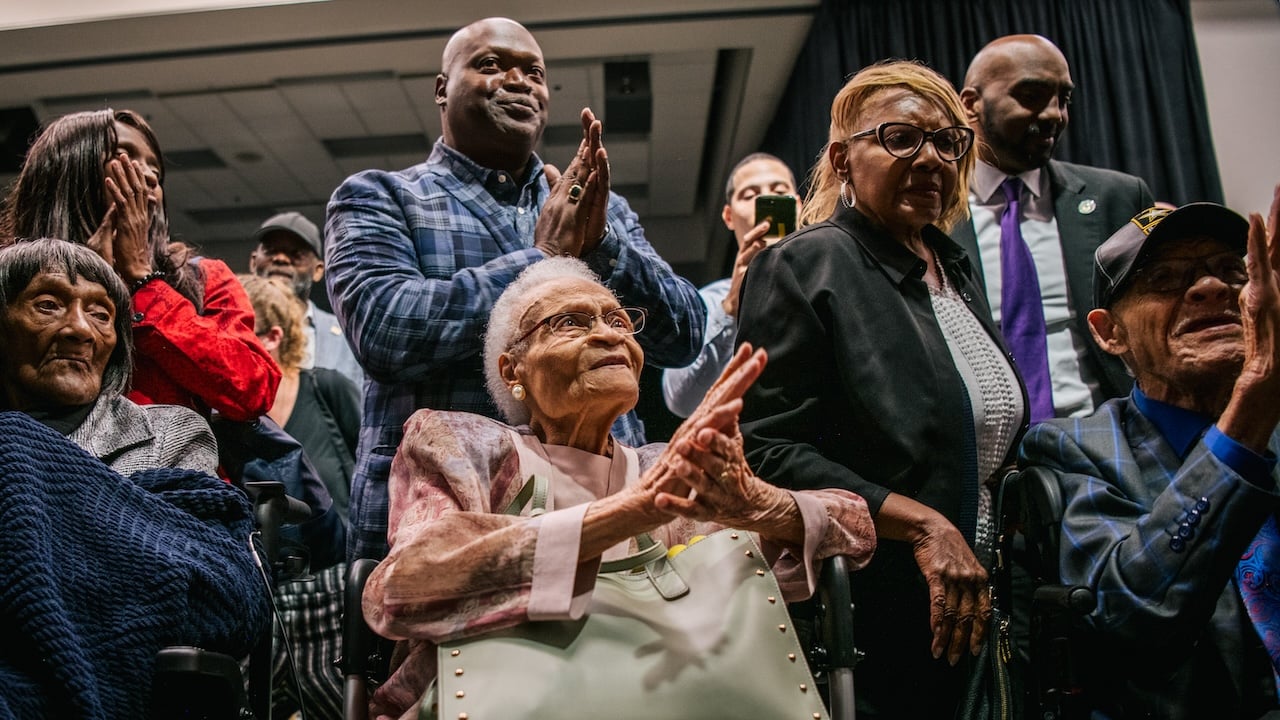
Honoring Viola Fletcher: The Legacy of a Tulsa Race Massacre Survivor
A Life Marked by Resilience
Viola Fletcher, the oldest survivor of the 1921 Tulsa Race Massacre, passed away recently at the age of 111, leaving behind a legacy that transcends generations. Known fondly as “Mother Fletcher,” she embodied strength and resilience, having endured hardships that no individual should have to face. Tulsa Mayor Monroe Nichols expressed deep sorrow over her passing, highlighting her indomitable spirit and her lifelong commitment to seeking justice for the victims of the massacre.
The Tulsa Race Massacre: A Dark Chapter in History
The Tulsa Race Massacre, which occurred over the course of two harrowing days from May 31 to June 1, 1921, resulted in the deaths of at least 300 Black residents and saw thousands displaced from their homes. The Greenwood District, often referred to as “Black Wall Street” for its thriving Black-owned businesses, was devastated by a mob of white residents. Sparked by a rumor of assault against a white woman by a Black man, this brutal act of racial violence culminated in one of the worst incidents of racial terror in U.S. history, including the first known aerial bombing of an American city.
Fletcher’s Unforgettable Memories
Though she had resided in North Texas during her later years, the traumatic memories of the massacre stayed with Fletcher. In a poignant interview during the 100th anniversary of the event, she recounted that the events would forever remain etched in her mind. Her reflections painted a vivid picture of chaos and destruction — recalling the gunshots, burning buildings, and waving planes above — a testimony to the horrifying reality faced by her community.
A Call for Justice and Remembrance
In her later years, Fletcher became a staunch advocate for justice, not only for herself but also for other survivors and their descendants. She participated in a lawsuit filed in 2020 against the city of Tulsa and Tulsa County, seeking reparations for the atrocities committed during the massacre. Alongside other survivors like Lessie Benningfield Randle, Fletcher bravely testified before Congress in 2021, sharing her haunting memories and demanding recognition and justice for those affected.
Community Support and Acknowledgment
Despite some opposition to reparations, including arguments from current residents of Tulsa, Mayor Nichols took significant steps towards acknowledging the historical trauma by revealing a $105 million package aimed at commemorating the first Tulsa Race Massacre Observance Day. This acknowledgment is a crucial step in recognizing the impact of systemic racism and the legacy of trauma that continues to affect Black communities today.
The Power of Legacy
With Fletcher’s passing, only Lessie Benningfield Randle remains as a direct link to the events of 1921. Fletcher’s brother, Hugh Van Ellis, who shared her commitment to advocating for justice, died in 2023, marking a significant loss for the community. Yet, the stories of these brave survivors serve as powerful reminders of the importance of remembering and honoring the past. Through her vivid recollections and relentless pursuit of justice, Mother Fletcher illuminated the path forward, inspiring future generations to continue the fight against racial injustice.
A Collective Mourning and Reflection
The city of Tulsa, along with countless individuals across the nation, mourns the loss of Viola Fletcher. Her life reminds us of the resilience required to withstand the injustices of history and the ongoing need for awareness and advocacy. As her legacy continues to inspire, it is vital for us all to carry forward the lessons of her life, recognizing both how far we have come and the distance we still need to travel towards true equity and justice.