


Violence in the Heart of the Nation’s Capital: A Shooting Incident Involving National Guard Members
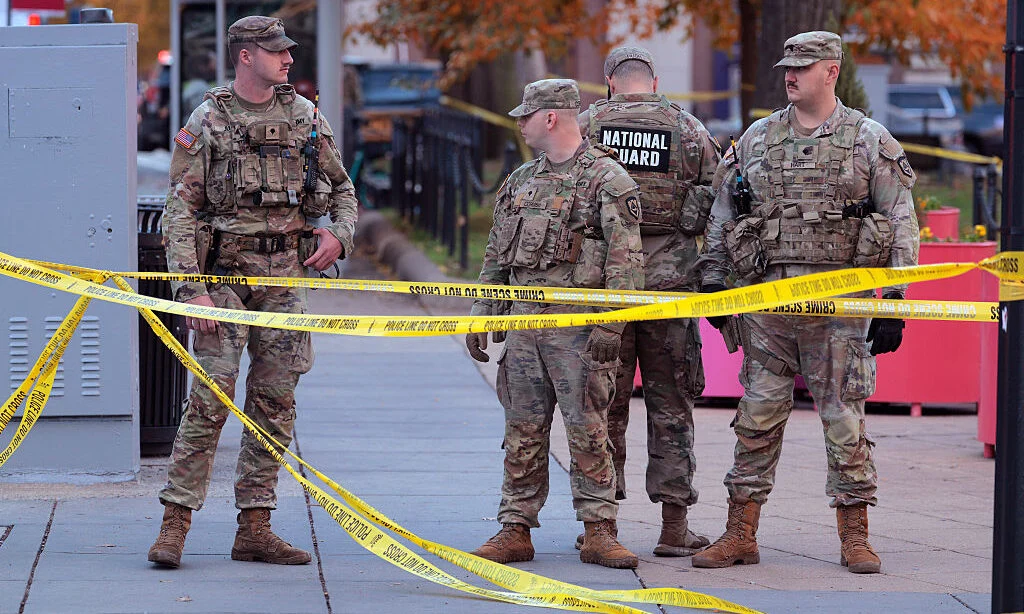
An alarming incident unfolded just blocks from the iconic White House, where two West Virginia National Guard members were shot in what has been described as a brazen act of violence. This occurrence came at a particularly sensitive moment, highlighting the ongoing debates surrounding the presence of military personnel in urban settings. The FBI and local officials, including Washington Mayor Muriel Bowser, confirmed that both troops were hospitalized in critical condition following Wednesday’s shooting—a shocking event that took place the day before Thanksgiving.
The Context of the Shooting
The shooting highlights the growing tensions regarding the military’s presence in U.S. cities. With ongoing court battles and public discussions about the Trump administration’s deployment of National Guard troops to combat what has been labeled an escalating crime issue, this incident inevitably became a focal point in those debates. Immediately after the shooting, the Trump administration responded by deploying an additional 500 National Guard members to Washington, indicating the seriousness with which they regarded the incident.
The Suspect: Rahmanullah Lakanwal
The individual accused of perpetrating the shooting has been identified as Rahmanullah Lakanwal, a 29-year-old Afghan national who entered the United States in 2021 under Operation Allies Welcome. This program aimed to evacuate and resettle Afghans who had collaborated with U.S. forces during the longest war in American history. While the initiative has been hailed as a lifesaving effort for those at risk of Taliban reprisals, it has faced scrutiny over the vetting processes in place.
Lakanwal had reportedly settled in Bellingham, Washington, with his wife and five children after arriving in the United States. Law enforcement officials are still working to confirm his background, navigating the complexities associated with the Operation Allies Welcome program.
The Shootout: Eyewitness Accounts
According to reports, the shooting incidents erupted in a highly populated area near a metro station, and it quickly drew attention from witnesses and first responders. Law enforcement officials described the assailant as having ambushed the National Guard members, opening fire without warning. Eyewitness Michael Ryan recounted hearing the gunshots and fleeing the scene amidst chaos. Others who witnessed the event saw the immediate aftermath, with National Guard members hugging each other and emergency responders administering CPR on the ground.
The response from bystanders was commendable; those nearby quickly subdued the assailant after he himself was shot, showcasing a swift collective effort to control the situation.
Law Enforcement Response
Jeffery Carroll, an executive assistant chief with D.C. police, stated that initial investigations had yet to determine the motive behind the attack. He clarified that the shooter appeared to be a lone gunman and emphasized the effectiveness of the rapid response by the troops on the ground. At least one guard member reportedly exchanged fire with the shooter, adding a layer of complexity to the incident.
Authorities did not draw immediate links suggesting that the assailant had accomplices, allowing law enforcement to focus on understanding the shooter’s intentions.
Political Repercussions
The shooting incident quickly became a political talking point. Former President Donald Trump called for a new investigation into the vetting processes of Afghan refugees, characterizing the event not merely as a violent act, but as “a crime against our entire nation.” This sentiment echoes the broader narrative regarding national security and the implications of opening borders to those fleeing war and persecution.
Support for the Injured
In the wake of the shooting, major military and political leaders expressed their support for the injured National Guard members. D.C. Police Chief and various military officials missed their holiday plans to stand in solidarity with the troops. The deployment of National Guard members to urban environments has spurred further discussions, igniting debates about military roles in civilian settings as they remain embroiled in political tribulations.
The National Guard’s Role in Urban Areas
Currently, around 2,200 National Guard troops are deployed to Washington, D.C., under an emergency order issued in August. These forces have been tasked with various duties, ranging from patrolling neighborhoods to conducting highway checkpoints. However, recent court rulings challenge the grounds for their continued assignment in the area, generating a pressing conversation about the future of National Guard deployments in urban centers across the United States.
This shocking incident is more than just an isolated act of violence; it symbolizes broader societal issues related to security, military presence, and the complex narratives surrounding immigration and public safety in America.