


### A Touch of History: The Legacy of David Drake
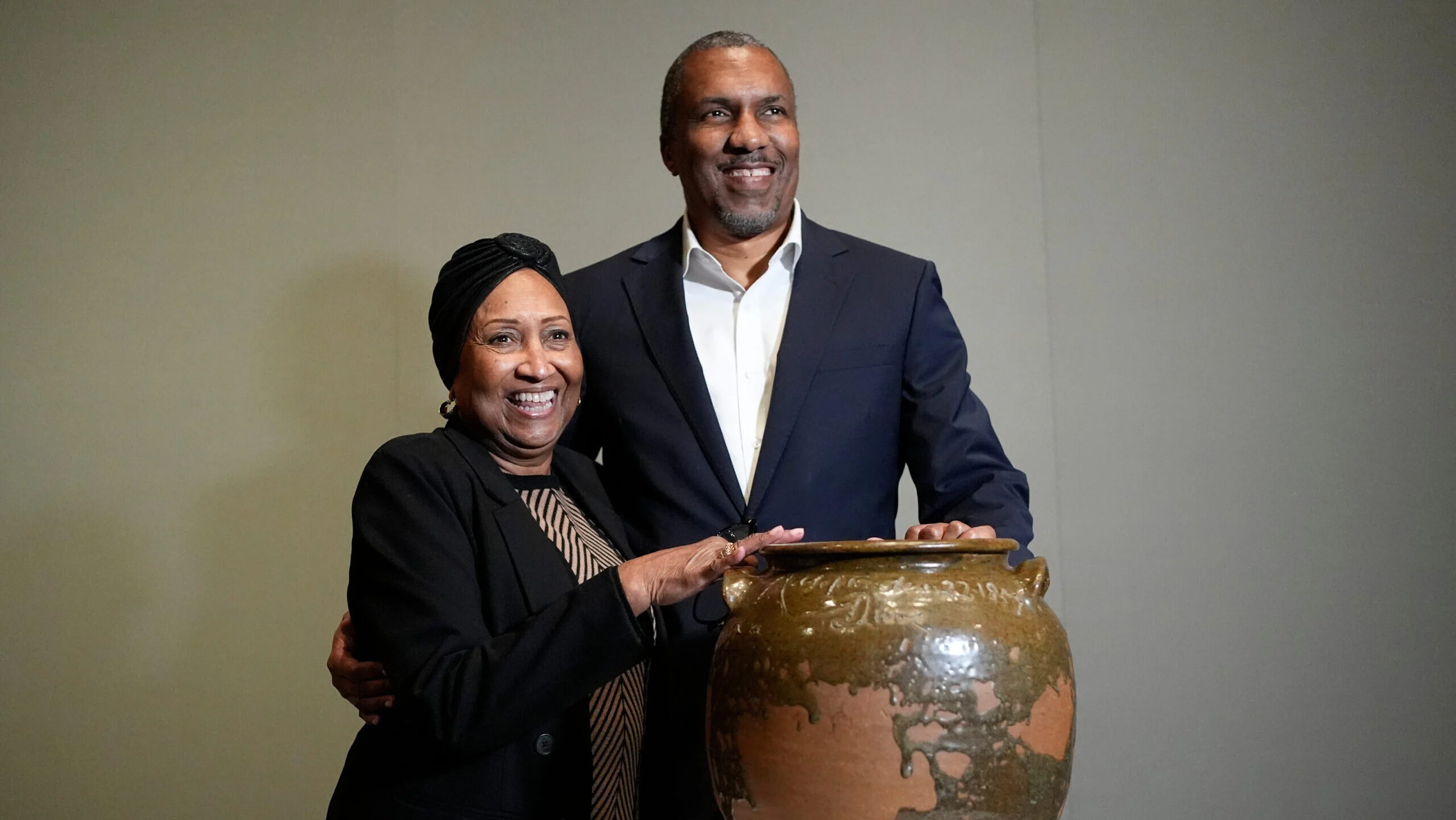
Inside the wide mouth of a stoneware jar, Daisy Whitner’s fingertips found a slight rise in the clay—a mark she hoped was a trace left behind by her ancestor, an enslaved potter who shaped the vessel nearly 175 years ago in South Carolina. Standing in the gallery of the Museum of Fine Arts in Boston, Whitner felt a quiet connection to her ancestor, David Drake. The jar, along with another, was returned to Drake’s family as part of a historic agreement recently established with the museum.
Whitner, an 86-year-old retired account manager for The Washington Post, shared her emotional connection, stating, “Inside this jar, I’m sure I’m feeling his tears, sweat drops off his face, his arms.” The return of these artifacts is significant, representing a poignant chapter in the narrative of art restitution, particularly as it pertains to works created by enslaved individuals in the U.S.
### The Significance of Retrieving History
David Drake, often referred to as “Dave the Potter,” created numerous stoneware vessels in the alkaline-glazed potteries of Edgefield, South Carolina, during the decades leading up to the Civil War. Remarkably, Drake not only crafted jars but also inscribed them with rhyming couplets, showcasing an extraordinary and unprecedented assertion of identity during a time when literacy was criminalized for enslaved people. The jars are some of the few surviving works of his—an estimated hundreds, if not thousands, crafted alongside other enslaved potters.
The agreement between the museum and Drake’s descendants marks the first notable art restitution case related to creations by an enslaved person in the United States. Traditionally, restitution has been associated with artworks looted or stolen during the Holocaust, making this instance particularly unique. As owners of these creations were often unknown or undocumented, establishing the lineage of such works poses significant challenges.
### A Family’s Journey Through Time
For Yaba Baker, Dave’s 54-year-old fourth-generation grandson and children’s book author, the return of the jars symbolizes a “spiritual restoration” for his family. Baker, whose literary pursuits focus on Black history, spoke of the dual feelings of pride and grief that emerged from this experience. “Many Black families struggle to trace their ancestry past a few generations,” he explained. “Recovering Dave’s work gave them back a piece of themselves.”
After the museum repurchased one of the returned pots, Baker emphasized the family’s intention to share this legacy, stating, “We don’t want to hide them away in our house. We want other people to be inspired by it.” His statements echo the desire to honor Drake’s legacy while ensuring his story resonates with future generations.
### The Artistry of David Drake
Drake’s craft was not merely functional; it stands as a testament to his creativity and resilience. He labeled his works with his name and inscribed them with poetry reflecting both his identity and experience. One of his most notable pots, created on July 12, 1834, included the couplet: “Put every bit all between / Surely this jar will hold 14,” noting its capacity. Over time, as his life unfolded amid the struggles of enslavement, his poetry increasingly explored themes of loss and separation.
One poignant engraving from 1857 questioned, “I wonder where is all my relation / friendship to all – and every nation,” a reflection of the divided families due to the horrors of slavery. For his descendants, this line now resonates deeply, providing a sense of closure and connection to a moment in history that once seemed irretrievable.
### Crafting Identity Against Oppression
The fate of Drake’s jars following his death remains uncertain. Purchased by the Museum of Fine Arts in 1997, these pieces survived largely due to the neglect of their large size, which rendered them less likely to be moved or broken. Today, the museum houses at least two of Drake’s exceptional works: a “Poem Jar” and a “Signed Jar” from 1857.
The emotional weight of these artifacts lies not only in their art but also in their representation of authorship claimed by an enslaved individual. “Think of this as an enslaved person, speaking in the first person claiming authorship,” explained Ethan Lasser, MFA Boston’s Art of the Americas Chair. In his works, phrases like “I made this Jar” confront the history of disenfranchisement.
### Bridging Generational Gaps
As descendants of Drake reflect on their ancestry, this proces often sparks pride intertwined with grief. Yaba Baker emphasizes the emotional journey for his family, explaining how discovering Dave’s artistry provided a traceable link to their history. “Before, we didn’t have that link,” he noted, highlighting the importance of understanding one’s roots.
For Drake’s family members, uncovering his life story, the laborious conditions under which he worked, and the human spirit he embodied proves both enlightening and emotionally complex. His mother, Pauline Baker, articulates this struggle: “If you’re not African American, you don’t understand the missing links in your history.” Yet, the moment they connect to Drake’s legacy becomes deeply personal.
### A Call to Action for Museums and Collectors
Since the agreement was reached, interest in ethical restitution has surged among museums and private collectors who possess Drake’s work. The family’s desire for transparency and respect for their ancestor’s legacy has initiated conversations about how to approach the return of artwork created under duress.
Each time Daisy Whitner slips her hand inside the jar, she feels the legacy of her ancestor, David Drake. “It broke my heart,” she said, attuned to the sacrifices inherent in that history. The museum’s action toward returning the jars fosters not just a sense of healing for the family but an opportunity for all to learn about the past, revealing the beauty and pain interwoven in the legacy of an extraordinary artist.