


The U.S.-South Africa Rift: A Geopolitical Crossroads
The Meeting That Changed Everything
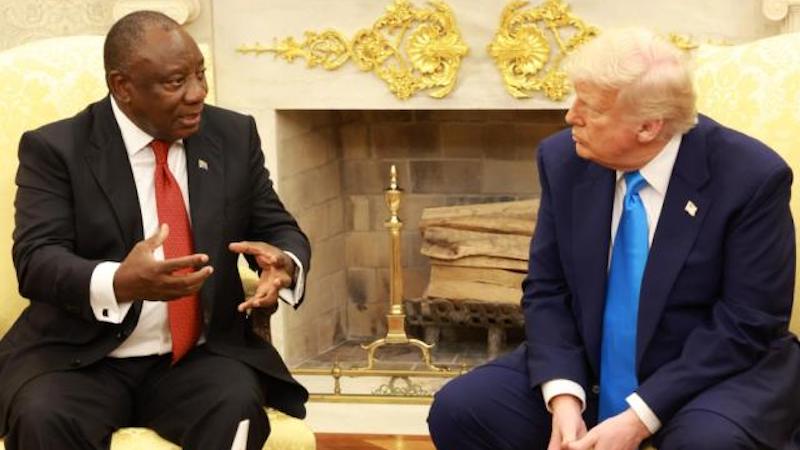
Just six months ago, a significant diplomatic confrontation unfolded in Washington between former U.S. President Donald Trump and South African President Cyril Ramaphosa. In a tense exchange, Trump accused South Africa of “white genocide,” a claim steeped in far-right conspiracy theories and widely discredited by experts and even parts of Trump’s own administration. This moment was unsettling for many observers in Africa, leading to a collective hope that it would pass without escalation. Yet, surprisingly, it has returned with increased urgency.
Trump’s G20 Decision: An Unexpected Fallout
Recently, Trump announced that South Africa would not be invited to the 2026 G20 Summit in Washington, a move that shocked many, including Pretoria, New Delhi, Brasília, and Beijing. This decision felt more than a mere diplomatic snub; it threatened to unravel the inclusive, multipolar vision that these nations had been striving to cultivate, where Africa would play a central role in global governance.
South Africa’s Importance on the World Stage
Why does South Africa matter so much beyond its geographical boundaries? The answers vary widely, revealing the complex interconnections Africa has with global governance.
1. Africa’s Institutional Anchor: South Africa is a vital member of the African Union, SADC, and the G77, often consulted on pressing global issues from climate diplomacy to UN reforms.
2. BRICS’ African Foundation: Joining BRICS in 2011 transformed this coalition into a truly global platform, allowing Africa a voice in discussions dominated by powers spanning Latin America to Eurasia.
3. Diplomatic Bridge Between Worlds: South Africa’s unique historical background creates a diplomatic bridge connecting it to India, the West, and the moral politics of the Global South.
Therefore, removing South Africa from the G20 sends a disheartening message that African representation is conditional and transient, undermining the continent’s aspirations and U.S. long-term interests.
BRICS: The Overarching Forum
To fully grasp the implications of the U.S.-South Africa divide, we must explore BRICS, which South Africa has significantly shaped into a global platform.
In its decade of existence, BRICS has evolved beyond symbolic gestures to include initiatives like:
- The New Development Bank, dedicated to financing infrastructure without political strings.
- Local-currency trade agreements, reducing reliance on the U.S. dollar.
- Partnerships in infrastructure development, covering transportation and renewable energy.
As BRICS plans to expand to include nations like Egypt, Ethiopia, Saudi Arabia, and the UAE by 2025, South Africa remains that crucial stabilizing force, ensuring a balance that neither India nor the U.S. would want to see disrupted.
India’s Multi-faceted Challenge
For India, the rift poses multifaceted challenges, intricately linked with its broader global strategy:
1. A More Representative G20: With India’s G20 presidency introducing the African Union as a permanent member, excluding South Africa diminishes that major achievement.
2. A Multipolar Africa: India aims for an Africa with diverse strategic choices, rather than a mere pawn in the U.S.-China rivalry.
3. A Balanced BRICS: South Africa’s participation is critical for sustaining a balanced BRICS that serves Indian interests amid its complicated relationship with China.
In this context, Trump’s decision directly undermines India’s vision of inclusivity and multipolarity.
Africa’s Resilient Response
Africa stands today with a spirit of confidence and assertiveness, markedly different from two decades ago. Recent calls from African leaders at the 2025 Johannesburg G20 Summit demonstrate a determined agenda focused on attainable climate finance, better investment in local resources, and balanced discussions on global issues.
Trump’s actions were perceived as attempts to dim Africa’s emerging influence, but the response was anything but submissive. African diplomats have asserted, “We will not be silenced,” advocating for systemic reforms instead of passive acceptance of punitive actions.
The Quiet Advantage for China
While the United States publicly maintains a tough stance, China quietly benefits from the fallout:
- The U.S.’s inconsistencies in foreign policy become evident.
- China is increasingly seen as a more stable long-term partner.
- Such a rift nudges South Africa closer to Beijing, strengthening BRICS amid increased vulnerabilities for U.S. influence.
Here lies the irony: a strategy perceived as tough on BRICS could inadvertently bolster China’s position, a dynamic neither India nor the U.S. wishes to see materialize.
Building India-Africa Partnerships Based on Trust
India’s connections with Africa have been fostered through mutual respect and shared aspirations, providing a stark contrast to heavy-handed geopolitical tactics. India has established a myriad of partnerships over the years, signaling its commitment to cooperative development through:
- Training programs for various professionals.
- Collaborations on digital public infrastructure.
- Renewable energy projects.
This relationship reflects a deep mutual understanding, with Africa viewing India as a true partner.
The U.S. Perspective: A Dichotomy of Intentions
Despite claims that Africa is a strategic priority, Trump’s actions contradict U.S. interests. With strategic imperatives that include securing vital mineral supply chains and countering China’s influence, excluding South Africa from the G20 diminishes U.S. leverage.
Even among U.S. diplomats, there is apprehension that this decision could erode potential partnerships with Africa, alienating a nation that is pivotal for long-term goals.
The BRICS-Africa-India Triangle
BRICS has created a unique space where African priorities are acknowledged in global discussions. Through initiatives like the New Development Bank and local-currency payment systems, BRICS resonates with African nations in meaningful ways.
Should the G20 become less inclusive due to the U.S.-South Africa clash, expect BRICS and its ties with Africa to strengthen, a shift contradicting U.S. ambitions and potentially even India’s interests.
The Path Forward: Responsibilities and Challenges
India’s Responsibilities
- Steer clear of any efforts to remove South Africa from the G20.
- Deepen development partnerships with African nations.
- Maintain BRICS’ balance against undue Chinese influence.
- Forge a coalition advocating for inclusive governance.
Africa’s Priorities
- Unitedly defend its representation on global platforms.
- Fortify the African Union and strengthen regional economic frameworks.
- Push for equitable discussions on minerals and climate finance.
- Engage with global powers on equal footing.
U.S. Strategic Interests
- Avoid alienating the continent it professes to prioritize.
- Collaborate with India to devise a sustainable African strategy.
- Foster a multilateral approach that strengthens alliances.
- Realize that punitive measures can create unforeseen backlash.
This geopolitical rift isn’t just another chapter in foreign relations; it’s a defining moment, shaping a future where the roles and identities of nations like South Africa, India, and the U.S. may be fundamentally impacted. If we choose to foster a more connected, inclusive global landscape, the actions taken today will echo into the future, promising a world that is multipolar, fair, and profoundly human.