


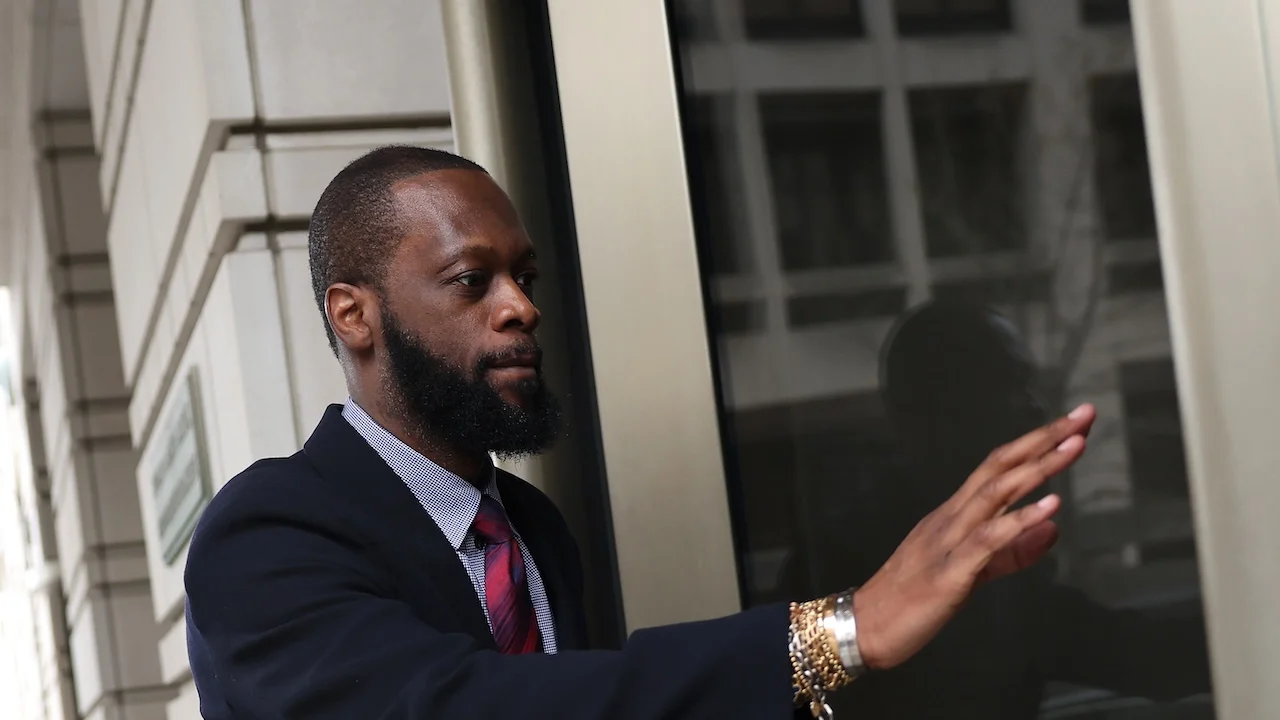
Pras Michel, a prominent member of the hip-hop group The Fugees, is currently seeking to overturn a significant 14-year federal prison sentence for money laundering. On December 4, 2023, the rapper filed a Notice of Appeal in the U.S. Court of Appeals for the DC Circuit, challenging not only his conviction but also the duration of his 168-month prison sentence.
In April 2023, Michel was found guilty on multiple counts, including conspiracy, illegal foreign lobbying, money laundering, witness tampering, and acting as an unregistered agent of a foreign government. The core of the allegations centered around Michel’s acceptance of over $100 million from Malaysian financier Jho Low, purportedly to influence U.S. political affairs and assist in shielding Low from extradition back to the United States. Notably, Jho Low remains a fugitive.
During the trial, federal prosecutors painted a damning picture of Michel’s actions. They argued that he illicitly funneled foreign money into Barack Obama’s 2012 re-election campaign. Additionally, he reportedly sought to sway members of the Trump administration to halt investigations into 1MDB, a company owned by Low, which was entangled in a multibillion-dollar fraud investigation. The scheme was characterized by authorities as a “covert back-channel lobbying campaign” aimed at undermining U.S. investigative efforts into the much-publicized scandal, which has been dubbed one of the largest global financial conspiracies in modern history.
Michel’s conviction falls under the Foreign Agents Registration Act (FARA), a law established to ensure that individuals acting on behalf of foreign governments register with the Department of Justice. This rare prosecution highlights the seriousness with which the government views violations of FARA, particularly when they involve significant financial and political ramifications. In addition to the prison sentence, Michel was also ordered to forfeit a staggering $65 million.
In the aftermath of his conviction, Pras’ legal team posited that he merited probation rather than prison time, arguing that he had been manipulated by Jho Low and had previously engaged in philanthropic efforts contributing to public good. However, the court dismissed these assertions, affirming the severity of Michel’s offenses.
In an unexpected twist, Pras claimed that his attorneys employed artificial intelligence to formulate his closing argument. In a brief filed seeking a new trial, Michel alleged that his defense attorney offered “frivolous arguments” and misinterpreted key legal elements while conflating various schemes and overlooking significant weaknesses in the government’s case. This case has garnered attention for being one of the first instances involving “generative AI” in a federal trial setting. Despite these arguments, the request for a new trial was not granted.
Further complicating matters, Pras’ defense attorney, David Kennner, has faced legal troubles of his own, having pleaded guilty to leaking court documents related to the case to journalists. This likely raised additional questions about the integrity of the defense team and contributed to the adverse trial outcome for Michel.
As the appeal process unfolds, legal experts suggest it could span months, if not years, before reaching a resolution. Until then, Pras Michel’s case continues to draw significant attention both in the realms of music and the legal world, reflecting broader discussions around celebrity, accountability, and the intersections of politics and crime.