


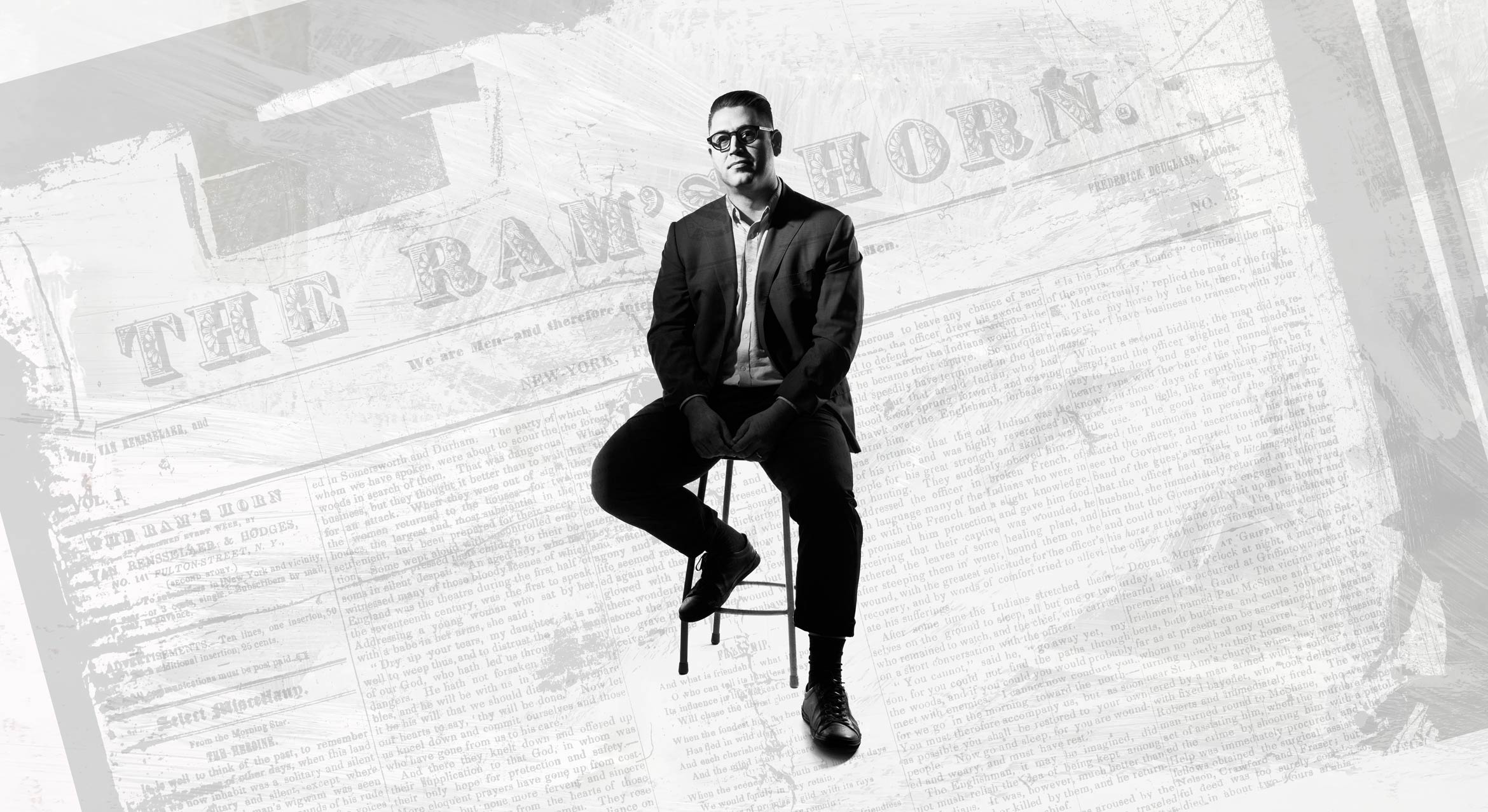
Recovering the Voices of the Past: An AI Initiative to Illuminate 19th Century Black Newspapers
In a groundbreaking initiative, Dr. Jim Casey, an English assistant professor at UC Santa Barbara, is spearheading a project to reclaim and share early African American newspapers. This effort is vital, as much of the early Black press remains scattered and often inaccessible. With an impressive $750,000 grant from Schmidt Sciences’ Humanities and AI Virtual Institute, the project is aptly titled “Communities in the Loop: AI for Cultures & Contexts in Multimodal Archives.” It aims to blend cutting-edge technology, scholarly inquiry, and community engagement, making these historical resources available to the public in a free and meaningful way.
The Team Behind the Transformation
Under Casey’s leadership, an interdisciplinary team has formed, comprising expertise from ten universities and the Adler Planetarium. This diverse collaboration is essential for developing new artificial intelligence tools designed to unlock the fragmented archives of 19th-century Black newspapers. The team’s approach is refreshing; it emphasizes community involvement and historical justice, diverging from traditional corporate-centric AI models that focus on profit-driven extraction and opaque algorithms. There’s a clear intent to prioritize ethical considerations and invite community voices into the process.
Lessons from History
“As Freedom’s Journal, the first Black newspaper, declared in 1827, ‘Too long have others spoken for us,’” Casey retains a poignant reminder of the urgency and necessity of this work. He emphasizes that the project is not merely about deploying existing AI technologies but also about understanding the Black press tradition itself. Casey poses a crucial question: What can the historical practices of Black editors and journalists teach us about collecting, sharing, and interpreting information today? In a time when the Black press was innovating under the oppressive thumb of slavery and Jim Crow, their methodologies offer invaluable insights that can guide current and future technological practices.
Navigating Technical Challenges
One of the significant hurdles the UCSB-led team faces is the inadequacy of existing commercial AI tools. Typically trained on mainstream datasets, these models overlook the historical nuances essential for accurately interpreting complex and innovative layouts found in early Black newspapers. Consequently, they struggle with the idiosyncrasies of this genre, often generating errors that perpetuate biases rooted in their training data.
To combat this, the team is focused on developing machine learning models specifically tailored to Black press materials. These custom models will facilitate page layout segmentation and optical character recognition, enabling the accurate recovery and representation of these historical documents. This tailored approach can bring to light voices and narratives that have long been marginalized or erased.
A Convergence of History and Technology
Daina Ramey Berry, the Michael Douglas Dean of Humanities and Fine Arts, emphasizes the project’s importance: “Professor Casey’s work represents a vital convergence of historical inquiry and technological innovation.” This sentiment speaks to the overarching goal of the initiative—to bridge the gap between advanced computing methods and the intricate narratives found in the humanities. By doing so, the project not only aims to recover crucial elements of history but also sets a precedent for ethical, community-centered research, demonstrating how technology can create pathways to previously obscured knowledge.
Through this innovative project, the team is redefining the boundaries of scholarship, linking the past with the future and urging communities to engage with their shared histories. The seamless integration of technology and humanity stands as a testament to what can be achieved when we let history guide technological advances, ensuring that the stories of early African American newspapers are not only preserved but amplified for future generations to explore and learn from.