


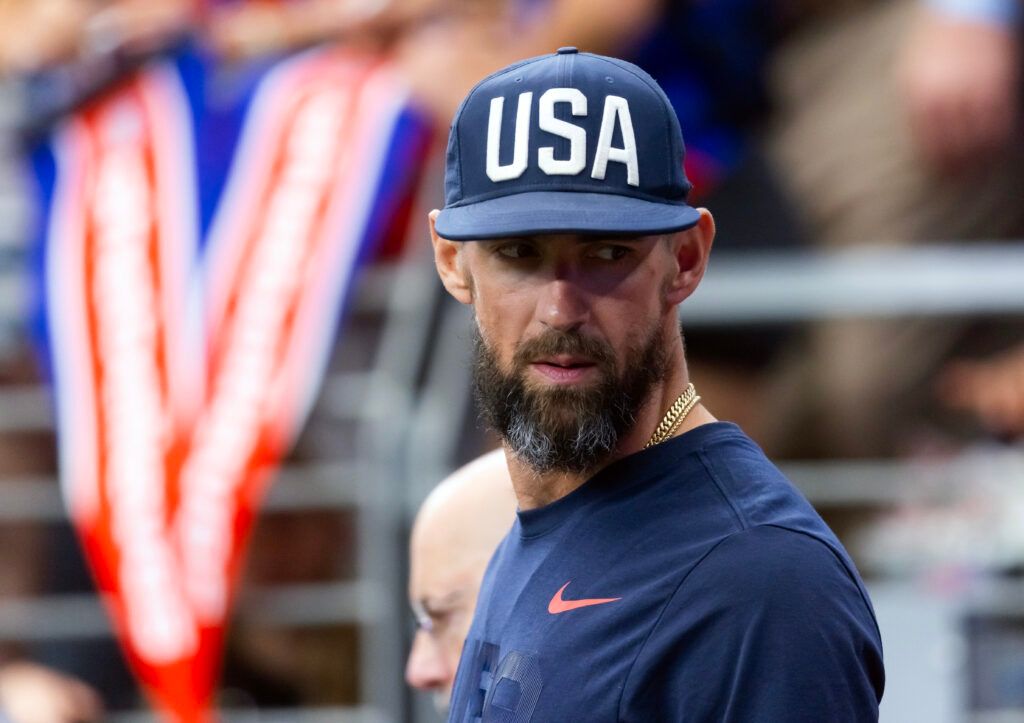
Michael Phelps Reacts to USA Swimming’s New Restrictions on International Athletes
In a significant shift set to take effect in 2028, USA Swimming announced new policies that will restrict international athletes from training at the United States Olympic and Paralympic Committee (USOPC) facilities. This decision was influenced by the rising competitiveness of foreign swimmers, who have been closing the gap with American competitors, prompting a national reevaluation of training practices.
As the most decorated Olympian in history, with a staggering 28 Olympic medals—23 of which are gold—Michael Phelps has a unique perspective on the evolving landscape of competitive swimming. His insight is particularly valuable in light of the USOPC’s recent announcement, which has ignited discussions about inclusivity and the future of swimming in the United States.
Phelps Questions the Rationale Behind the New Policies
In a recent episode of the SwimSwam podcast, USA Swimming CEO Kevin Ring discussed the increasing trend of international athletes training under American coaches. He specifically pointed out Olympic talents like Leon Marchand and Summer McIntosh, both coached by Phelps’ former coach Bob Bowman at the University of Texas. These athletes have made remarkable strides on the global stage, posing a substantial challenge to U.S. swimmers.
Given this new backdrop, Phelps took to social media to question the intent behind the USOPC’s restrictions. He expressed concerns about whether this is indeed what USA Swimming aims for, recalling how he thrived while training with a diverse array of athletes during his competitive days. He poignantly stated, “What are our goals? I thrived training with all athletes, never discriminated.”
The Impact of International Competitors in American Swimming
Phelps’ remarks resonate deeply in light of recent performances at the 2024 Paris Olympics. Marchand’s remarkable achievement of winning four gold medals contrasted with the U.S. clinching only one gold in the men’s division. Additionally, international athletes training in the United States took home a total of 14 medals, illustrating a significant shift in the swimming landscape. This momentum continued into the 2025 World Championships, where six non-U.S. male swimmers—guided by U.S.-based coaches—secured podium finishes, raising questions about the future of elite swimming in America.
The Broader Context of USA Swimming’s Decision
The new guidelines from USA Swimming are expected to have a considerable impact on both collegiate swimmers and international competitors—many of whom travel to facilities in Colorado Springs to elevate their training. Just weeks ago, a Texas group that included Marchand and McIntosh completed an intensive 24-day training regimen at this venue, exemplifying how integral such opportunities are for competitive development.
Phelps Supports Ryan Lochte Amid Controversy
In a separate but equally compelling narrative, Phelps has also recently lent his support to his fellow swimmer Ryan Lochte. Lochte sparked a media frenzy when he opted to auction his gold medals, leading to public backlash. In defense of Lochte, Phelps positioned him as a friend, clarifying that Lochte had never been motivated by medals alone but rather by the joy and passion for swimming. Phelps emphasized that defining oneself by accolades is not the essence of being an athlete.
Although Phelps retired from competitive swimming in 2016, he remains a prominent figure in the sport through his foundation and ongoing contributions to swimming development. His interactions with emerging swimmers and advocacy for inclusivity highlight his commitment to not just swimming as a sport but also as a community.