


U.S. Military Action against ISIS in Nigeria: A Detailed Overview
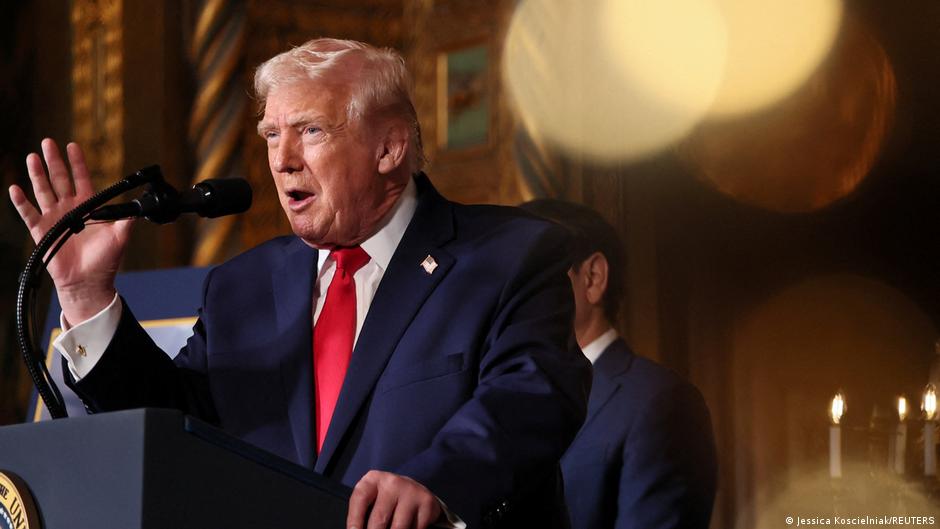
U.S. President Donald Trump recently ordered the American military to carry out “powerful and deadly” strikes against targets linked to the Islamic State (ISIS) in northwestern Nigeria. This decision, echoing months of Trump’s assertive rhetoric regarding military intervention, has stirred considerable conversation regarding the complex interplay of religion, security, and international relations in the region.
Context of the Military Strike
This military action comes after Trump labeled the situation in Nigeria as an “existential threat” to Christianity, a characterization that the Nigerian government has disputed. Through a post on Truth Social, Trump asserted that ISIS’s assault on “primarily innocent Christians” had escalated to unprecedented levels. His ultimatum emphasized that under his leadership, the U.S. would not allow “Radical Islamic Terrorism” to flourish.
The U.S. military’s Africa Command (AFCOM) stated that the operation was conducted at the request of the Nigerian authorities, signifying a level of cooperation between the two nations in combating terrorism.
Official Statements and Reactions
Pentagon Chief Pete Hegseth expressed gratitude for the collaboration with Nigerian officials, further underscoring the bilateral relationship in addressing terrorism. Meanwhile, Nigeria’s Foreign Ministry acknowledged the strikes as “precision hits on terrorist targets,” reinforcing the Nigerian government’s commitment to protecting all citizens, regardless of their faith.
In a social media statement, the Nigerian government emphasized that any form of terrorism against its diverse religious communities is an affront to national values and international peace. This indicates a unified front against terror, irrespective of the religious undercurrents in the region.
Underlying Factors for the U.S. Action
The strike raises critical questions about the motivations behind U.S. intervention in Nigeria. One key factor is the rising violence perpetrated by various Islamist factions within the country. The U.S. State Department has recently declared its intention to impose visa restrictions on Nigerian nationals involved in religiously motivated violence, and designated Nigeria as a “country of particular concern” under the International Religious Freedom Act. This paints a larger picture of U.S. foreign policy focused on religious freedom, especially for Christians facing sectarian violence.
The Landscape of Militancy in Northern Nigeria
Northern Nigeria is currently grappling with a brutal Islamist insurgency that has claimed thousands of lives. According to Nigeria’s National Human Rights Commission, over 2,266 people were reported killed by bandits or insurgents in the first half of 2025, eclipsing the total number of such deaths in the entire previous year.
Prominent among the groups operating in this region, Boko Haram has been a historic player, primarily targeting the northeastern state of Borno. Additionally, the splinter group known as the Islamic State in West Africa Province (ISWAP) has intensified its campaigns, particularly in Borno but also occasionally in northwestern states like Sokoto. These factions are often in conflict, leading to a fractious landscape rife with violence.
The complexity of this situation is magnified by the multitude of groups vying for control, which has created a precarious environment for civilians, especially those of different religious backgrounds.
The Role of International Relations
The U.S. military action represents not just a combat initiative but also a layer of geopolitical strategy. The relationship between Washington and Abuja (Nigeria’s capital) has gone through various phases, frequently influenced by the changing tides of terrorism and human rights concerns. U.S. officials have often viewed the stability of Nigeria as critical, not only for the country’s citizens but for broader regional security in West Africa.
The interplay of traditional military intervention and international diplomacy may have long-lasting effects on how future threats are managed within the region. The response to ISIS’s insurgency serves as a reminder of the global stakes vested in regional conflicts, particularly those involving religious extremism and human rights violations.
Looking Ahead
The military interventions in Nigeria highlight a significant element of ongoing global counter-terrorism efforts, raising critical questions about the effectiveness of military force against ideological extremism. The juxtaposition of American military power with the realities faced by local populations underscores a complex chapter in international relations, where efforts to promote peace and security continue to grapple with the harsh realities of violence and instability.
As the situation unfolds, the actions taken today will likely resonate within the halls of government, affecting policies and perspectives on both sides for years to come.