


Secret Briefing Documents: The Impact of September 11 on the Northern Ireland Peace Process
In the wake of the September 11, 2001, attacks, secret briefing documents have surfaced that shed light on the implications for US foreign policy towards the Northern Ireland peace process. These documents reveal a belief among Irish officials that American policymakers might adopt a less nuanced approach to the intricate dynamics of Northern Ireland due to the overriding narrative of the war on terror.
An Early Assessment
Just 24 hours after the heartbreaking events of September 11, a government official in Ireland compiled a briefing document assessing potential consequences on international relations, specifically focusing on Northern Ireland. The official emphasized that it was “very early days” for determining the effects on the foreign policy agenda of President George W. Bush’s administration. However, they forecasted a strong possibility that the US would enter a prolonged state of introspection. Issues of internal security and counter-terrorism were poised to dominate the US political landscape for an extended period.
War on Terror and Foreign Policy Prioritization
The documents indicated a fundamental shift in US priorities, suggesting that discussions regarding the Northern Ireland peace process would have to compete with a heavier focus on counter-terrorism policies. Irish officials worried that the war on terror could lead US politicians to adopt a more rigid approach towards Northern Ireland, influenced by the “whiff of cordite,” a phrase referring to evidence of violent conflict’s lingering presence.
The potential for heightened scrutiny was further underscored by the context of a new, more aggressive stance on international terrorism. In remarks made shortly after the attacks, President Bush stated his administration would “make no distinction between the terrorists who committed these acts and those who harbor them.” This strong phrase hinted at a zero-tolerance approach towards terrorism, which might prioritize security concerns over understanding the complex historical backdrop of conflicts like those in Northern Ireland.
Implications for Engagement
The briefing advised Irish officials to consider these evolving sentiments when planning engagements or reviews of the Good Friday Agreement. It highlighted the likelihood that lawmakers in Washington would not only increase their scrutiny but also demand quicker disarmament actions from the republican movement, which would soon become a focal point for US-Irish relations. The document clearly stated that continued associations with groups like the Colombian guerilla faction Farc could further complicate the republican movement’s standing in the US.
The Challenge of Distinctions
According to one official, the war on terror would likely drive US foreign policy, overshadowing any nuanced discussions about conflict resolution—core tenets of the Northern Ireland peace process. The assessments warned that US policymakers might struggle to differentiate among various groups labeled as terrorists and might regard them uniformly as part of a broader enemy. This approach risks stifling the rich, contextual understanding necessary for a peaceful resolution to conflicts steeped in history and identity.
The document expressed concern over the possibility that actions perceived as siding with terrorist elements could turn the republican movement into a target of a more hostile US environment. If the Irish republican movement failed to swiftly meet its commitments, such as disarming its arms, it faced the risk of losing support from a traditionally sympathetic Irish-American congressional caucus.
A Changing Image in US Politics
Irish-American support for the republican movement had generally been favorable, even amidst its militant past. However, shifting post-9/11 sentiments and an increasingly security-focused Congress might alter this dynamic. While the “whiff of cordite” contributed to the charismatic appeal of Sinn Féin leadership among the Irish diaspora, the aftermath of terror attacks in the US could significantly challenge their respectability and accessibility in American political circles.
A Condolence Letter from Ireland
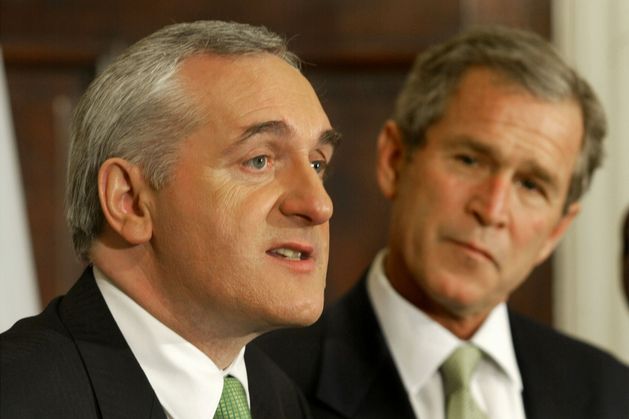
On the very day the attacks occurred, then Taoiseach Bertie Ahern swiftly wrote to President Bush, extending Ireland’s heartfelt condolences to the American people. His message underscored a shared horror at the scale of the tragedy and a clear condemnation of the actions taken by those responsible. This gesture highlighted the complexities of transatlantic relationships during a time of heightened emotional and political turbulence.
These briefing documents elucidate a critical moment in history where the implications of global conflict intersected with local issues. As US foreign policy pivoted towards a predominantly security-centric lens, the nuanced dynamics of the Northern Ireland peace process faced considerable challenges, highlighting the delicate balance between addressing immediate threats and working towards lasting peace.