


The Real Africa: Setting the Record Straight on Common Misconceptions
Have you ever asked someone if they’ve been to Africa? If their response was, “Could you be more specific?”—good for you! This reaction highlights a common misunderstanding: Africa is often thought of as a single entity, when in fact, it encompasses an incredibly diverse range of countries, cultures, and environments.
A Continent Misunderstood
What comes to mind for many when they think of Africa? A vast landscape filled with roaming safari animals coexisting with village communities, where resources like food and water are perpetually scarce. Winding dirt paths replace modern roads, and technology seems nonexistent. However, this image is a gross oversimplification. As Dipo Faloyin, author of Africa is Not a Country: Breaking Stereotypes of Modern Africa, has noted, “Few entities have been forced through [a] field of distorted reality as many times as Africa … A region that is treated and spoken of as if it were a single country, devoid of nuance and cursed to be forever plagued by deprivation.”
So, why is the continent that scientific evidence supports as the cradle of humankind so often stereotyped and misunderstood? One reason is that Africa is simply too vast—both geographically and culturally—for blanket statements to hold true. Let’s dive into some of the most prevalent misconceptions about Africa.
Misconception 1: Africa is a Country
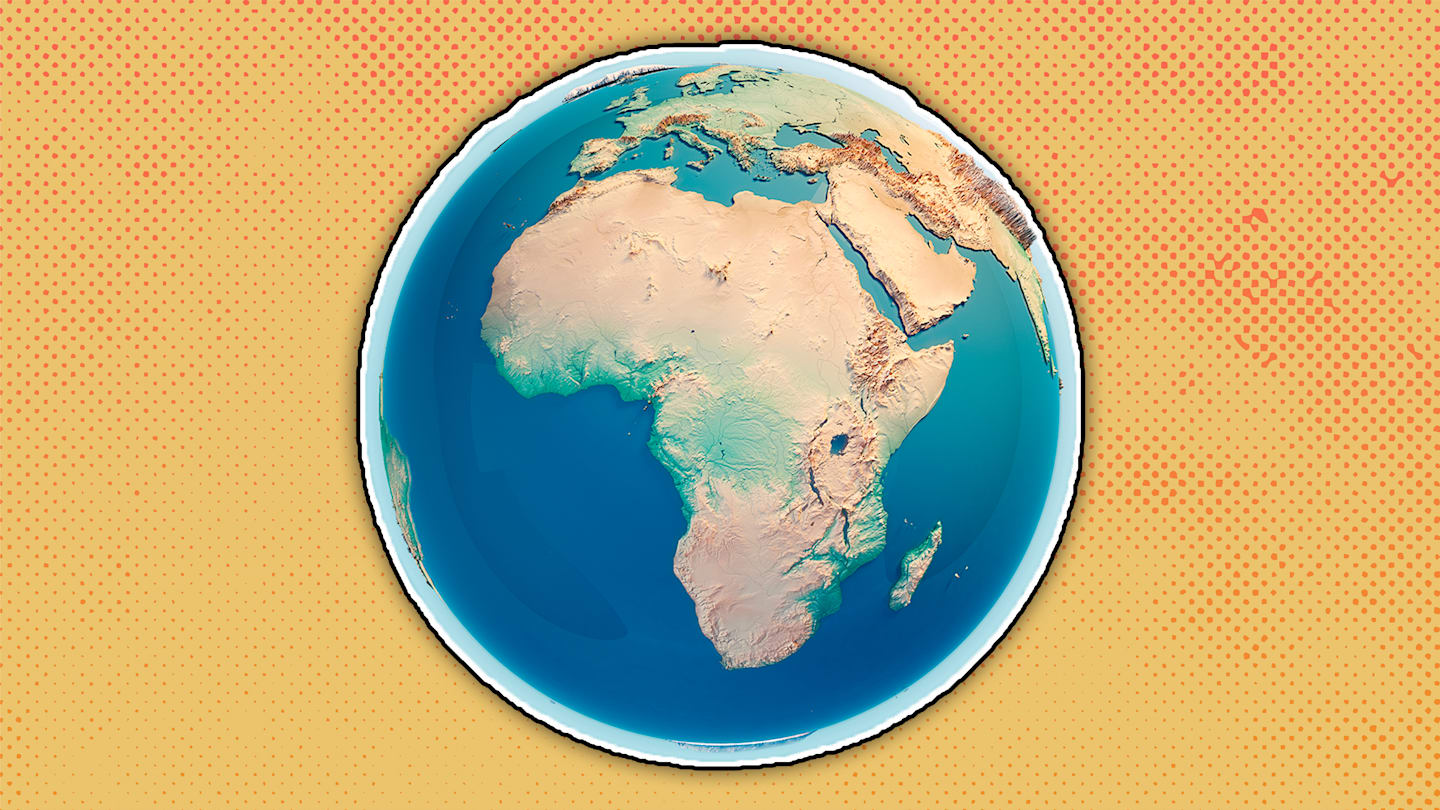
Without looking it up, how many countries do you think exist in Africa? The answer is a staggering 54, accounting for over a quarter of the United Nations’ member states. Not only is Africa large in number of countries, but its landmass totals an impressive 11.7 million square miles (30.4 million square kilometers). That’s 14 times the size of Greenland; it could theoretically fit the entire contiguous U.S., India, China, Japan, and a good chunk of Europe!
Misconception 2: Africans Speak African
Many people mistakenly believe that “African” is a language and that every African person speaks it. In reality, over 2000 languages are spoken across Africa’s 54 countries, with around 8000 dialects. Swahili often makes the cut as the most commonly spoken language, boasting about 16 million native speakers, with Arabic, English, and French also widely spoken. African languages belong to several major families, such as Niger-Congo, Afroasiatic, and Khoisan, making this continent one of the most linguistically diverse regions in the world.
Misconception 3: Africa is Always Hot
Knowing that Africa straddles the equator, one might assume it’s a uniformly hot continent. However, Africa’s climate is remarkably varied, with regions ranging from rainforests to deserts. The Kalahari Desert, for example, can reach temperatures of 110–115°F (43–46°C) during the day, but drops to as low as 10°F (-12°C) at night in winter. Some regions, like the Atlas Mountains in Morocco, even receive snowfall, complete with ski resorts!
Misconception 4: Wild Animals Roam Among African People
Many envision scenarios where wild animals like giraffes and lions casually stroll through African towns. In reality, these animals typically inhabit protected reserves far from human populations. Lions, for instance, are mostly found in wildlife parks south of the Sahara. The misconception often stems from media portrayals that blend nature documentaries with human settings, leading to a distorted view of life in Africa.
Misconception 5: All Native Africans Have Dark Skin
It’s commonly assumed that all Africans share a uniform skin tone. Research indicates that skin pigmentation correlates with geographic location and exposure to UV radiation. Therefore, while many Africans have darker skin, populations vary widely. For instance, the KhoeSan hunter-gatherers in Botswana have lighter skin, while some groups in East Africa showcase some of the darkest skin tones on the planet.
Misconception 6: African Food is Simple and Sparse
Another stereotype is that African cuisine is basic and lacks variety. This couldn’t be further from the truth. The diversity of African food reflects the continent’s wide range of geography and culture. Northern African dishes often incorporate spices like za’atar, while West African jollof rice has gained popularity worldwide. Various meat dishes like suya and nyama choma are celebrated staples, further showcasing the continent’s culinary richness.
Misconception 7: Africa Doesn’t Have Technology
Many assume Africa is devoid of modern technology, but that’s a significant oversimplification. From successful heart transplants in South Africa to innovative applications like the Cardiopad for heart monitoring invented by Cameroonian scientist Arthur Zang, Africans have played pivotal roles in technological advancements. The continent is also home to flourishing tech hubs and industries, with Nollywood being a powerful force in the global film industry.
Misconception 8: There is No Major African Folklore or Fantasy
While European folklore and mythology are widely recognized, many people are unfamiliar with Africa’s rich tapestry of folklore, largely due to its oral tradition. Stories featuring deities like Oshun, the Yoruba goddess of fertility, and Ananse, the Ghanaian trickster, are just a few examples of the continent’s diverse mythologies. These tales, though not as well-documented, are incredibly vivid and offer valuable insights into the cultures that have nurtured them.
In exploring these misconceptions, we begin to unravel a more nuanced understanding of Africa—a continent that is anything but singular in its identity and experiences. Through dialogue, education, and travel, we can continue to confront and dismantle these stereotypes, leading to a richer appreciation of a vital part of our global heritage.