


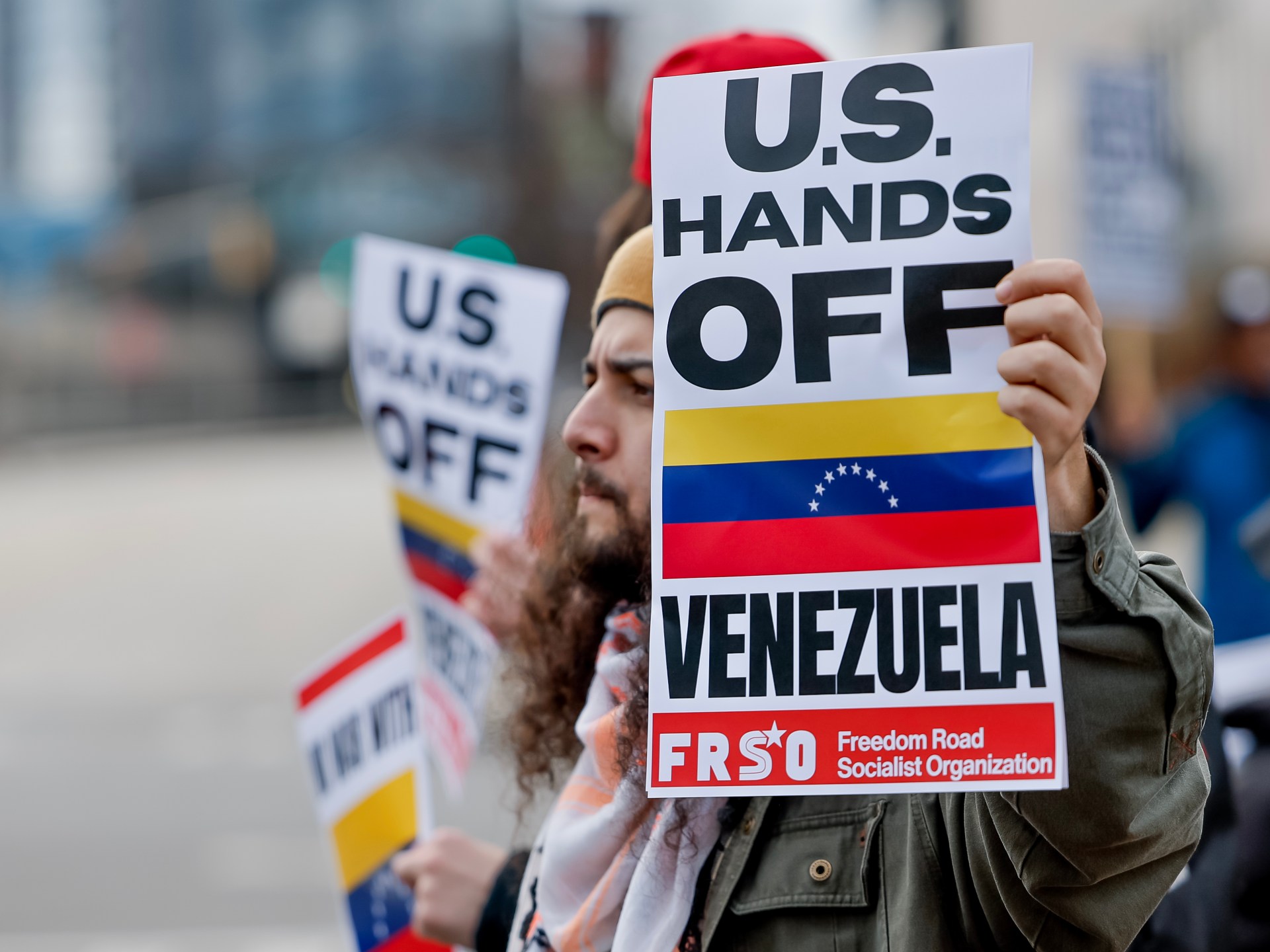
The Controversy Surrounding U.S. Actions in Venezuela
In recent headlines, the discussion around U.S. military actions in Venezuela has intensified, with President Donald Trump and his allies defending these maneuvers amid a storm of international condemnation. This article seeks to unpack the various perspectives surrounding the U.S. military strikes aimed at the removal of President Nicolas Maduro.
The Official Narrative
President Trump recently claimed that Maduro was “captured” following U.S. military operations in the Venezuelan capital of Caracas. He portrayed these strikes as a necessary step against what he termed a “campaign of deadly narco-terrorism” allegedly orchestrated by Maduro against the United States. The President asserted that the U.S. government would oversee a political transition, promising Venezuelans a future that is “rich, independent, and safe.”
Legal Backlash
However, these justifications have not been universally accepted. Experts like Claire Finkelstein, a law professor at the University of Pennsylvania, have strongly criticized the U.S. actions, labeling them as an “illegal use of force” and a violation of Venezuelan sovereignty. She emphasized that international law, including the United Nations Charter, prohibits attacks on other nations without provocation.
Finkelstein elaborated on her position, asserting that Maduro possesses personal jurisdiction rights, making the U.S. intervention even more egregious under international law. According to her, the U.S. has no legal grounds for its military actions, arguing that such maneuvers violate both international and Venezuelan laws.
The Context of Military Action
The military strikes were part of a broader pressure campaign against Maduro, who has been accused—though unproven—of having ties to drug trafficking. Prior to the strikes, the U.S. had escalated its efforts by attacking vessels suspected of smuggling drugs, seizing oil-carrying ships, and placing sanctions on Maduro’s inner circle. Congressman Tom Cotton, a key ally of Trump, welcomed the military action, labeling Maduro not just as a dictator but as the mastermind of a large-scale drug trafficking operation.
Interestingly, Maduro had previously expressed openness to dialogue with the U.S. regarding cooperation on drug trafficking. This underlines the complexity of U.S.-Venezuelan relations and raises questions about the intentions behind such military interventions.
The Debate on Congressional Authority
The historical context of U.S. military interventions reveals ongoing debates about presidential powers. Democratic lawmakers have vocalized concerns over Trump’s unilateral decisions in foreign policy, arguing that military actions conducted without congressional approval constitute an unlawful act of war. According to the U.S. Constitution, Congress holds the exclusive power to declare war, yet this authority has often been circumvented in recent decades.
Gregory Meeks, a leading Democrat on the House Foreign Affairs Committee, emphasized that no imminent threat existed that warranted military action without Congress’s consent. His statement resonated with many critics who argue that the justification for military intervention lacked legitimacy.
The Concept of Immediacy in Threats
Scholars like Finkelstein have also reiterated that an immediate threat must be present for such unilateral actions to be permissible under international law. She argued that even if concerns about drug trafficking were valid, there was insufficient “immediacy” to justify bypassing Congress. The discourse posits that U.S. actions seem more aligned with regime change than with addressing national security concerns.
Sovereignty and International Relations
Finkelstein further critiqued the notion that the U.S. could “run” Venezuela post-Maduro. She pointed out that states possess sovereignty rights, and such an intervention undermines the principle of self-determination. A fundamental tenet of democracy is that people should choose their own leaders, a notion the U.S. should actively uphold rather than subvert.
The complexities surrounding U.S. actions in Venezuela reveal deeper implications for international law and foreign policy. As the situation continues to evolve, the dialogue surrounding legality, legitimacy, and moral responsibility will remain central in any discussion about interventionist policies in sovereign nations.