


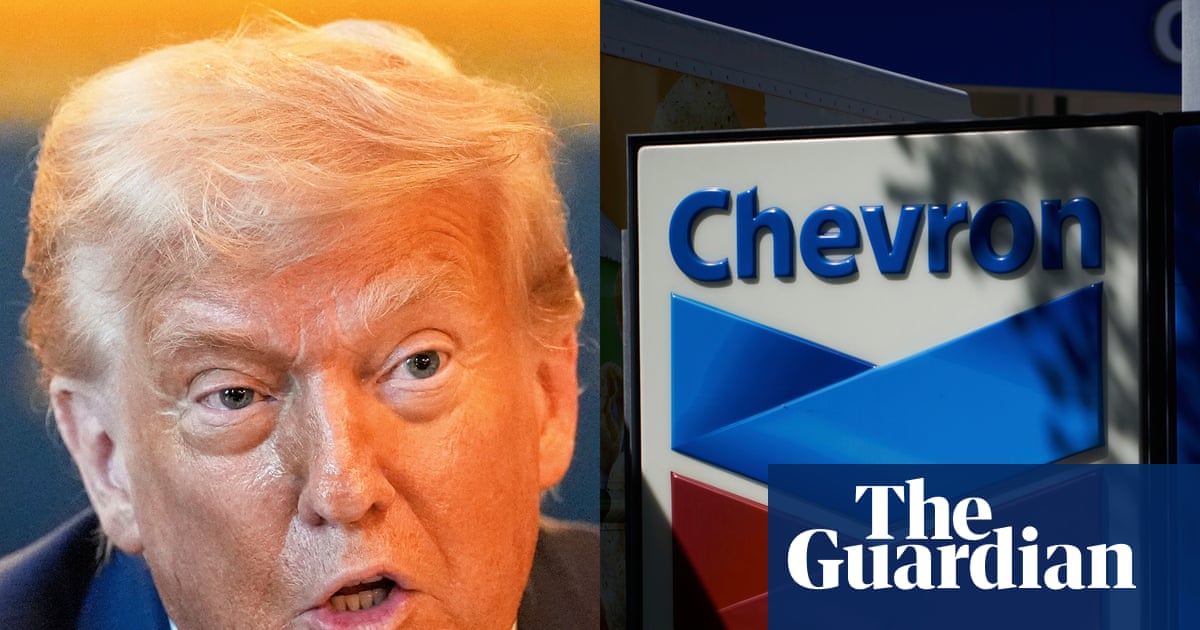
Silence from US Oil Giants Amid Trump’s Venezuelan Oil Claims
US oil giants have remained notably quiet following Donald Trump’s assertions that they are prepared to invest “billions and billions of dollars” in rebuilding Venezuela’s oil infrastructure after the anticipated removal of Nicolás Maduro. This silence raises questions about their involvement and intent, especially given the complexities of Venezuela’s oil industry.
Chevron’s Cautious Stance
Chevron is the only major US oil company still operating in Venezuela. In response to Trump’s claims, Chevron simply stated its commitment to adhere to “relevant laws and regulations.” This indicates a careful approach, as the geopolitical landscape remains fraught with uncertainty. The company is primarily focused on the safety of its employees and the integrity of its operations.
Trump’s Vision for Venezuela’s Oil
In multiple interviews and a press conference at his Mar-a-Lago estate, Trump painted an optimistic picture of Venezuela’s oil industry revival. He claimed that US oil firms would invest heavily to modernize what he termed “rotted” infrastructure. He promised that these companies would not only enhance production but also facilitate the sale of substantial oil quantities to other nations. Trump emphasized the potential profits, stating, “We’re in the oil business,” while noting that the firms would be “reimbursed,” though without providing further clarity on this reimbursement mechanism.
Major Industry Players Respond
Despite the sweeping promise, other US oil giants have been less vocal. ExxonMobil, the largest US oil company, did not respond to requests for comment. ConocoPhillips, another key player, stated it was monitoring the situation but deemed it “premature to speculate” on potential business ventures. This indicates a cautious approach, reflective of the industry’s turbulent history with Venezuela.
Historical Context: Nationalization and Conflicts
Venezuela’s government nationalized its oil industry over 50 years ago, taking full control of operations by 2007. While Chevron agreed to stay during the upheaval, ExxonMobil and ConocoPhillips chose to exit, leading to drawn-out legal battles that resulted in substantial compensation rulings from international arbitration panels. However, Venezuela’s faltering economy, exacerbated by mismanagement and ongoing sanctions, has made it challenging for the country to settle these debts.
The US Embargo and Energy Landscape
Currently, the US maintains a complete embargo on Venezuelan oil, a point Trump alluded to in his comments. His administration has previously accused Venezuela of misappropriating American assets through its oil nationalization. Moving forward, any attempts to reclaim these assets through American oil firms will be scrutinized closely, especially given the legal and ethical complexities involved.
Analysts Weigh In on Potential Investments
Trump’s statements lead analysts to believe that there may have been some level of prior consultation with US oil executives. Jorge León, a geopolitical analyst, suggested that Trump’s public assertions could imply there was an underlying agreement with these corporations. Similarly, geopolitical strategist Tina Fordham indicated that it would be reasonable to assume conversations had taken place with oil executives.
Conditions for Investment
Recent discussions within the Administration have hinted that US oil companies looking to reclaim property and seek compensation must return to Venezuela and commit significant investment. This expectation suggests that the path to participation in Venezuela’s oil revival is tied to a broader strategy of rebuilding trust and infrastructure in a nation with a complicated history of foreign investment.
Venezuela’s Oil Reserves and Production Challenges
Venezuela is home to about 17% of the world’s oil reserves, yet its production has plummeted from a high of 3.5 million barrels per day in the 1970s to around 1 million barrels per day recently. Experts like León suggest that recovering even to 2 million barrels per day by the early 2030s could require colossal investment, estimated at around $110 billion. This staggering figure presents a daunting challenge for any potential investors.
Hesitations Among Corporations
Concerns about stability in Venezuela loom large in the minds of oil executives. The nationalization era initiated by Hugo Chávez has not been forgotten, and recent history indicates that any rush back into the country would be fraught with uncertainty. Companies will likely await signs of political and economic stability before making significant financial commitments.
A Shifting Global Oil Market
The global oil market is currently experiencing trends that show an oversupply, which means prices may continue to decrease. León points out that this makes oil companies more selective about where they choose to invest. With the present climate, companies might prefer regions where they have established operations rather than venturing into a market as complex as Venezuela’s.
Competitive Landscape
Despite these challenges, some observers believe that major oil firms will view Venezuela as an enticing opportunity. Fordham posits that there will be considerable competition among firms for the prime opportunities within the country, should conditions improve. This competitive spirit may catalyze a more aggressive approach to rebuilding and improving Venezuela’s oil sector.
Historical Precedents
Trump’s bold claims and optimistic outlook echo past interventions in regions like Iraq, Afghanistan, and Libya, where post-authoritarian transitions have often been tumultuous. Fordham notes the complexities surrounding such transitions, emphasizing that Trump’s confidence does not necessarily guarantee a smoother process in Venezuela.
As this story unfolds, the interplay between politics, economics, and the oil industry will be crucial in shaping the future of Venezuela’s oil sector and its potential resurgence on the global stage.