


The Dress Debate: Church Fashion and Viral Opinions
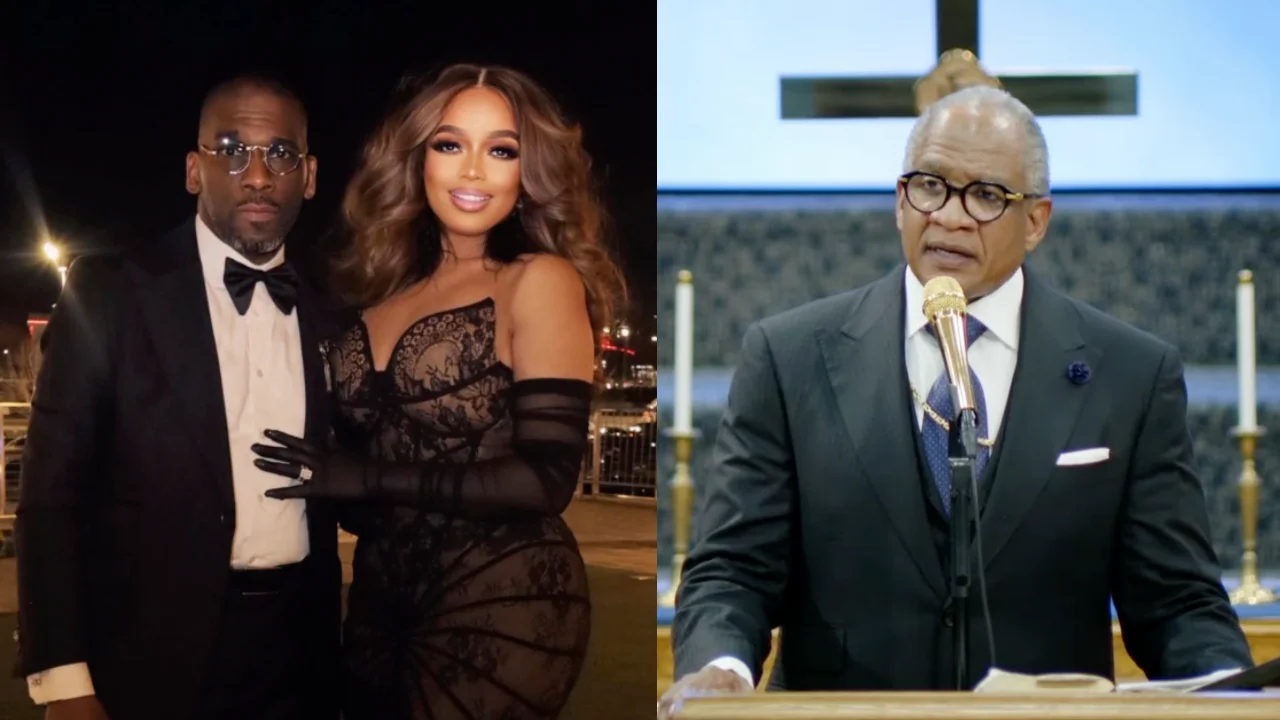
Over the holidays, a wave of controversy washed over social media as discussions about style choices morphed into heated debates reminiscent of a mid-service hush in a Black church. Here, whispers carry more weight than the pastor’s sermon, and the congregation’s side-eyes speak volumes. The focal point of this discourse was none other than Pastor Jamal Bryant and his wife, Dr. Karri Bryant, who sparked a conversation about fashion and propriety at a recent gala event.
The Spark of Controversy
Despite Pastor Bryant’s efforts to quell the mounting criticism, the whispers escalated. Social media timelines, buzzing with opinions, transformed into virtual pulpits where various voices weighed in. Notably, conservative Bishop Patrick Wooden of the Upper Room Church of God in Christ (COGIC) stepped into the spotlight, sharing his thoughts from his own pulpit during a sermon.
Bishop Wooden’s Critique
Bishop Wooden began his address by praising his wife, First Lady Pamela Wooden, for embodying the elegance and modesty expected of a first lady. However, he quickly pivoted to Pastor Bryant’s choice of attire for Dr. Karri. “The lowering of standards is amazing,” he lamented, pointing out that Dr. Bryant’s dress was authentically captivating but arguably inappropriate for a pastor’s wife.
At one poignant moment, he remarked on the dress’s color, which he described as “flesh-colored,” claiming it gave the illusion that she was wearing nothing beneath. This was not merely a fashion critique; it was a statement about community standards. His comments, including the controversial comparison of Dr. Bryant’s dress to that of a “two-dollar whore,” caught the attention of many social media users. The backlash was swift, with public reactions flooding in, many reminiscent of his sharp rhetoric.
Social Media Reactions
As the discourse continued, social media users didn’t hold back in their responses to Bishop Wooden’s inflammatory remarks. Memes and comments emerged that echoed his controversial comparison and sparked further dialogue about what constitutes appropriate attire for clergy and their spouses.
For many, this moment became a rallying point to discuss gender, sexuality, and standards within church culture. Criticism of Bishop Wooden’s remarks also made the rounds, as users highlighted the disparity between his comments and modern interpretations of fashion and feminism.
Pastor Bryant’s Response
In the midst of this swirling chaos, Pastor Bryant addressed the criticisms directly during a New Year’s Eve service. He emphasized the positive impact of the gala, noting that the event raised $4 million for the United Negro College Fund, which many online critics had overlooked in their focus on attire. He characterized the critics as “insecure, jealous, petty,” asserting that their observations were rooted in a misguided understanding of holiness tied solely to appearance.
His fervent defense extended beyond fashion; it celebrated his wife’s contributions to the community and her robust spirit.
Dr. Bryant’s Support
Dr. Karri Bryant, at the heart of the conflict, expressed her gratitude for her husband’s support. In a heartfelt comment on social media, she acknowledged the emotional toll the criticism took, praising her husband for his unwavering affirmation. “Your words have been like a healing salve to my heart,” she wrote, showcasing the power of support amidst public scrutiny.
In the wake of the backlash, the Bryants took a lighter approach, sharing photos that showcased Dr. Bryant in new outfits. This move seemed to indicate a playful resilience against the negativity that had arisen from their public appearances.
The Broader Implications
What began as a discussion of fashion quickly morphed into larger conversations about the expectations placed on public figures, especially those in religious contexts. The discourse not only reflects differing opinions on how church leaders and their families present themselves but also highlights the evolving landscape of societal norms regarding modesty, respectability, and the role of women within the church.
As debates like these unfold, they underscore the complexity of public life and the many ways in which personal choices can resonate throughout communities. The moments we spend discussing attire are often intertwined with broader societal concerns about class, gender, and the evolving role of faith in modern life.
In this ongoing dialogue, one thing is clear: what we wear speaks volumes, but so too does the conversation surrounding our choices.