


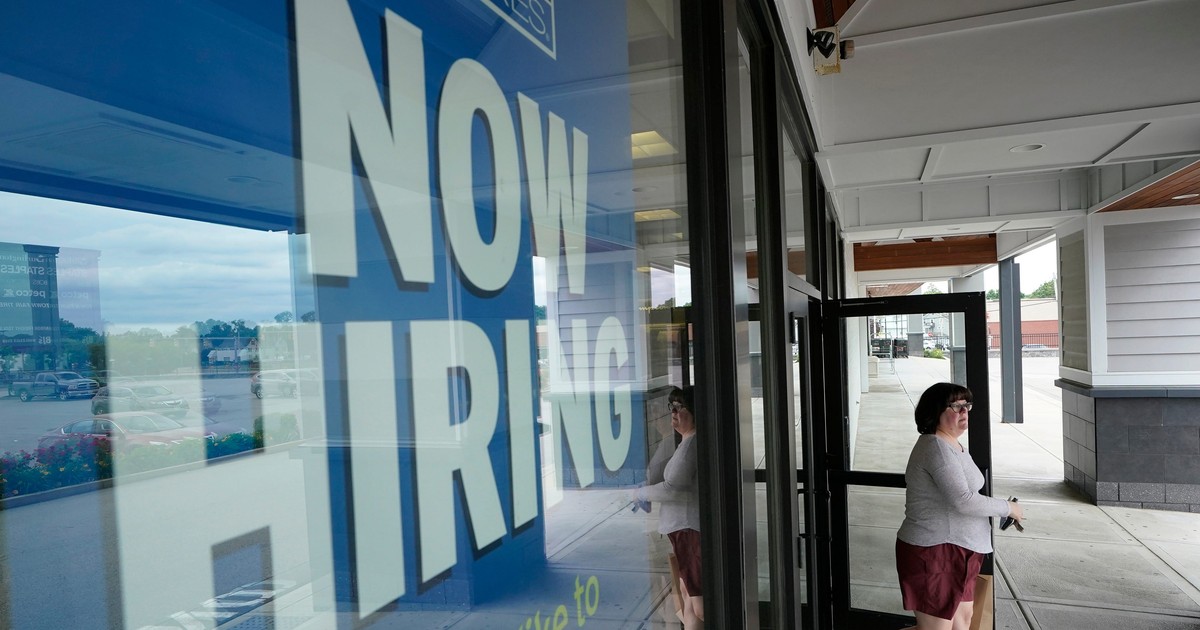
Navigating the Job Market in Late 2025: Insights into Economic Trends and Employer Behavior
In the final month of 2025, economists anticipated a modest increase in employment with 70,000 new jobs added to the economy. This statistic is pivotal, especially in light of an unemployment rate projected to settle at 4.5%. Understanding these numbers requires delving into the broader context of the job market marked by a unique phenomenon dubbed the “Great Freeze.”
The “Great Freeze” Phenomenon
The job market throughout 2025 has not followed the conventional patterns of hiring and turnover typically seen in a thriving economy. Instead, it has been characterized by low hiring rates, with a noticeable lack of workers switching jobs. This stagnation suggests a period of cautious corporate activity, which contrasts sharply with what might be expected in a booming economic environment. Notably, while layoffs have not reached alarming numbers, the general hesitance in hiring indicates that companies are adopting a wait-and-see approach.
Low Hiring Rates: Causes and Implications
The low hiring rates observed are not primarily attributed to external factors such as technological advancements like artificial intelligence (AI) or stringent governmental policies. Economic analysts have pointed out that these trends are more indicative of a strategic pivot by companies. As noted by industry experts, Jed Kolko, a senior fellow at the Peterson Institute for International Economics, emphasized that if AI was responsible for this slowdown, we would have seen more drastic changes in hiring patterns. His analysis points toward a flattened hiring landscape that has persisted since 2024, rather than a sudden downturn.
Further insights from Sarah Foster, an economic analyst for Bankrate, highlight a paradoxical situation where the economy is experiencing growth in profits and stock market performance without corresponding increases in employment. This phase, often called a “jobless boom,” implies that companies are investing in productivity-enhancing technologies rather than expanding their payrolls.
The Federal Reserve’s Rate Decision
As the labor market dynamics evolve, the Federal Reserve is also grappling with critical decisions regarding interest rates. Scheduled meetings in late January 2026 involving the Federal Open Market Committee will address these rate adjustments, which play a pivotal role in shaping the economic landscape. As we approach this meeting, it’s noteworthy that before the latest jobs report, there was nearly a 90% chance that interest rates would remain unchanged, with only a 14% probability of a potential cut. This cautious stance reflects a measured approach to economic fluctuations, acknowledging both the risk of inflation and the importance of stability in financial markets.
Employment Landscape and Future Considerations
The current job market illustrates a complex web of factors influencing hiring trends. While many companies are thriving financially, the reluctance to hire signals a fundamental shift in employer sentiments. This cautious behavior can be attributed to uncertainty surrounding future economic conditions, potential policy changes, and the pace of technological adoption, which collectively influence business strategies.
Employers are increasingly leveraging technology to boost productivity, thus reducing their dependency on an expanded workforce. This strategic pivot raises questions about the future nature of work, job design, and the skills employees will need moving forward. As much as the economy appears robust, the juxtaposition with the subdued hiring rates tells a story of restraint and prudence dominating corporate boardrooms.
Navigating Forward in a Changing Economy
As we wrap up the year and move into 2026, individuals and organizations alike must remain agile in response to these economic signals. Professionals seeking new opportunities may need to adapt by enhancing their skills to align with the technological advancements that companies are prioritizing. Employers, on the other hand, may have to rethink how they approach talent acquisition and retention, particularly in a landscape where traditional hiring practices are evolving.
In summary, the economic environment of late 2025 offers a fascinating glimpse into the complexities of modern labor markets, characterized by cautious hiring practices amid overall economic growth. By understanding these trends, both employees and employers can better navigate the challenges and opportunities that lie ahead.