


Introducing the Advanced Capabilities Directorate
On January 5, 2026, the U.S. Army Southern European Task Force, Africa (SETAF-AF) launched its Advanced Capabilities Directorate (ACD). This new initiative marks a pivotal moment for the Army, indicating a significant shift towards integrating innovation, advanced data management, and accelerated procurement processes to enhance modern warfare capabilities. As the world of military strategy evolves, the ACD reflects a commitment to remain at the forefront of technological advancements and effective decision-making.
A Shift in Strategy
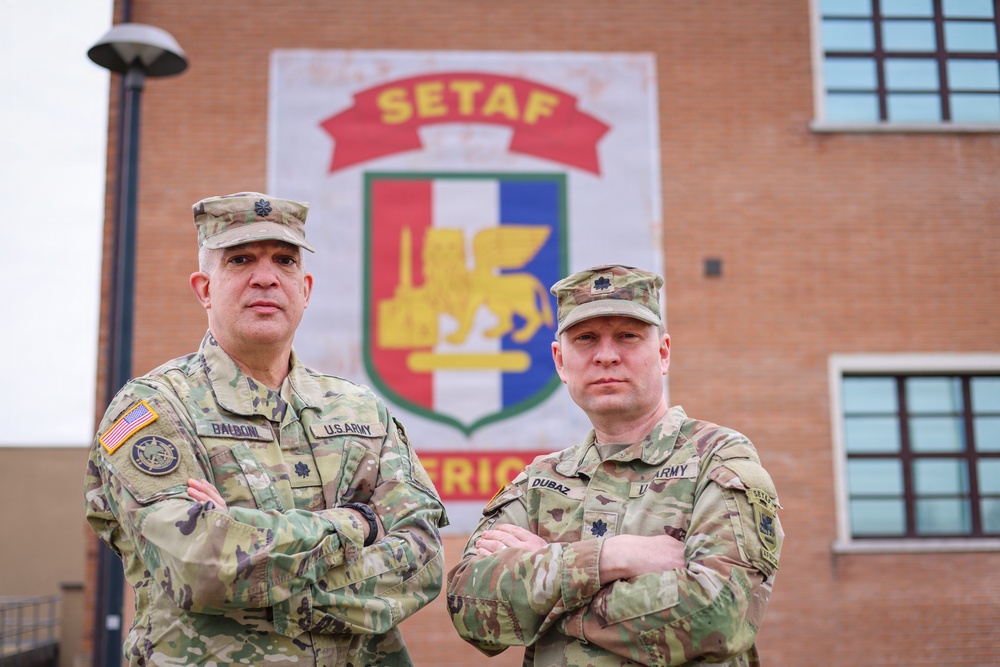
The establishment of the ACD signals a replacement for previous initiatives, reorienting how SETAF-AF approaches innovation and operational data. By centralizing these efforts under a directorate that reports directly to the chief of staff, the Army aims to streamline processes and enhance transformation across its various missions. Lt. Col. Nicholas R. Dubaz, the directorate’s innovation branch chief, emphasized that “the ACD brings together our innovation division and operational data team” to enable decision dominance and maximize the potential of the data in daily operations.
Innovative Integration
The ACD is designed to merge cutting-edge technologies with practical applications on the battlefield. It not only tests new technologies but also systematically evaluates their effectiveness in real-world situations, ensuring that results are communicated with Army leaders, industry partners, and policy developers. Lt. Col. Dubaz noted that a full-time innovation division will focus on identifying new technological opportunities, while an operational data team will analyze and manage critical information.
The Human Element in Innovation
Another integral aspect of the ACD is the role of U.S. Army Lt. Col. Armand L. Balboni, who serves as both the innovation branch deputy chief and the newly created science and technology advisor. His dual role underscores the importance of integrating human factors into technological advancements. Balboni argues that innovation involves more than just acquiring the latest technology; it encompasses understanding the human-technology interface and command systems necessary for complex military operations.
Collaborative Acquisition Efforts
The ACD also features a dedicated Global Tactical Acquisition Directorate (GTAD) representative. This liaison facilitates direct communication with the Assistant Secretary of the Army for Acquisition, Logistics, and Technology, enabling faster and more adaptive procurement methodologies. According to Dubaz, this connection enhances SETAF-AF’s ability to pursue innovative solutions quickly—vital during dynamic military engagements.
Hands-On Evaluation at African Lion 2026
A key mission of the ACD will be its involvement in African Lion 2026 (AL 26), the largest annual joint exercise conducted by U.S. Africa Command. Scheduled from April 20 to May 8, 2026, this exercise aims to validate military units and systems in realistic battlefield conditions. Dubaz pointed out that “African Lion is where innovation meets reality,” emphasizing the need to assess and understand the effectiveness of integrated technologies within a live operational context.
Real-World Testing of Technologies
AL26 will showcase over 45 technologies within three operational scenarios: defense in depth, deep attack, and counterattack. Technologies being evaluated include advanced unmanned aerial systems, loitering munitions, and autonomous ground systems. This hands-on testing is crucial for providing insights into system effectiveness, particularly under the stresses of battlefield conditions—which include heat, dust, and electronic warfare.
Iterative Innovation for Enhanced Capability
The ACD employs an iterative approach to innovation, allowing for continuous data collection and evaluation. This process ensures that insights from live exercises lead to meaningful enhancements in capabilities. Dubaz articulated that the ACD aims to provide vital feedback to industry partners, ensuring that what works in theory is applicable in challenging environments where soldiers operate.
Addressing the Procurement Gap
One of the major challenges identified by the ACD is the traditional military procurement cycle, which is often lengthy. Balboni noted that accelerating the cycle is key to delivering the right capabilities to soldiers exactly when they need them. By fostering a more agile approach to procurement and integration, the ACD is positioned to influence future military engagements significantly.
A Strategic Future
Ultimately, the ACD aspires to bridge the gap between technological innovations and their practical applications in combat scenarios. As military operations become increasingly complex, the integration of innovation, data analysis, and rapid procurement is essential. The creation of the ACD is a response to the ever-evolving landscape of warfare and positions SETAF-AF to meet these challenges head-on with agility and foresight.