


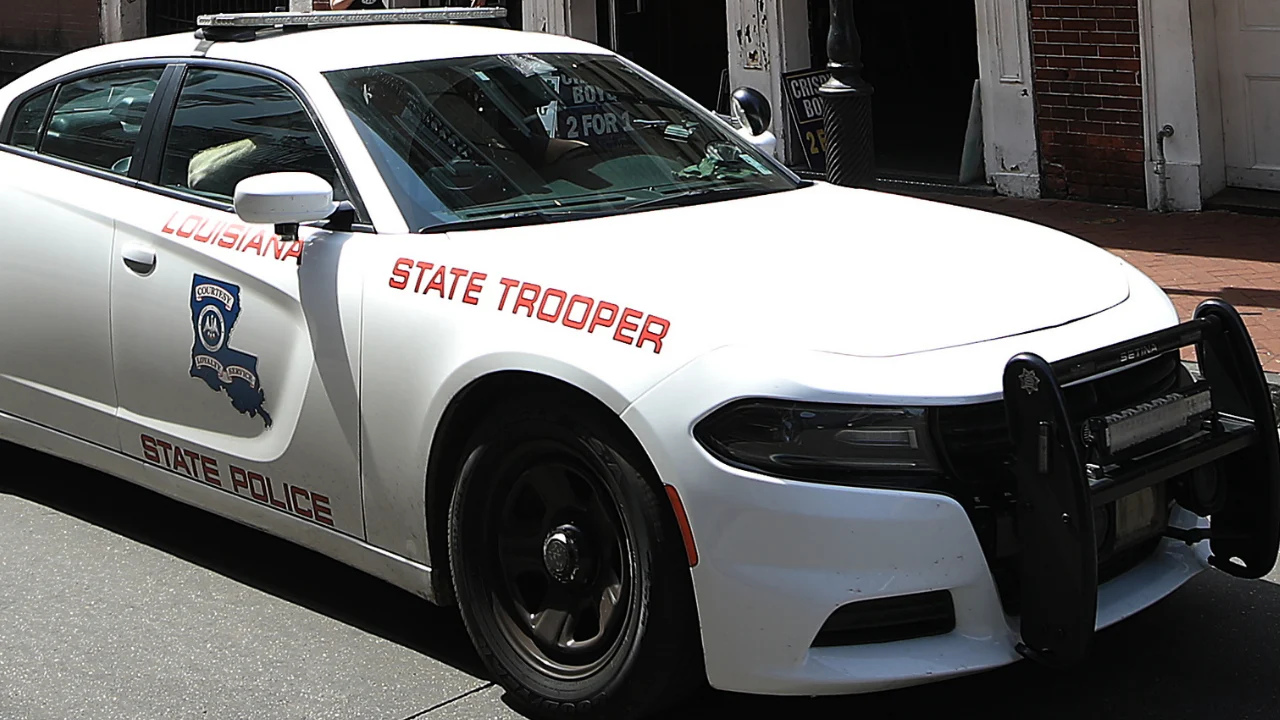
Racial Disparities in Louisiana State Police Use of Force: An In-Depth Analysis
A recent data analysis of the Louisiana State Police Department reveals concerning racial disparities in the use of force incidents involving state troopers. Conducted by Innocence and Justice Louisiana, the report covers a three-year period from 2022 to 2024, documenting that Black individuals faced violence at alarming rates compared to their representation in the state’s population.
The Numbers Speak Volumes
In Louisiana, Black residents make up approximately 31% of the population; however, they accounted for over 60% of all reported use-of-force incidents involving state troopers. The analysis highlighted 902 incidents involving Black individuals, in stark contrast to 341 incidents involving white residents, who constitute about 61% of the state’s population. This discrepancy raises pressing questions about systemic bias and the potential consequences for communities of color.
Analyzing the Data
The data does, however, come with some limitations, as 11% of use-of-force incidents lacked any recorded racial identification. Esme Lee, Community Coordinator for Innocence and Justice Louisiana, noted that this gap restricted the precision of the analysis. Despite these challenges, the overwhelming trends indicate that racial disparities are not isolated incidents but rather systemic issues prevalent across the State Police’s regional force throughout Louisiana.
Regional Disparities: A Focus on Southwest Louisiana
The data analysis identifies significant regional differences, particularly in Southwest Louisiana, where the rates of use-of-force incidents involving Black and Native American residents were up to three times higher than would be expected based on their population percentages. This suggests that certain areas may be more prone to aggressive policing tactics, highlighting the need for targeted reform and community engagement.
Legislative Context: The Shantel Arnold Act
In an effort to shine a light on police practices, state law mandated that police departments report all incidents of force resulting in bodily injury. Named the Shantel Arnold Act, this legislation arose from a high-profile incident in 2021, where a Jefferson Parish sheriff’s deputy was recorded dragging a Black woman, Shantel Arnold, by her hair. The ensuing public outcry led to a civil lawsuit that resulted in a $300,000 settlement, yet the deputy involved was allowed to remain on the force despite a history of excessive force complaints.
Responding to Criticism: State Police Leadership’s Perspective
State Police Public Affairs Commander Capt. Russell Graham acknowledged the importance of the data but argued that it may not fully capture the complexity of the incidents. He pointed out that the study did not differentiate between incidents that stemmed from high-speed chases and those involving other forms of force. According to Graham, “While the numbers are accurate, it’s not a fair depiction of our stats.” This statement reflects a commitment to understanding the nuances behind the numbers while recognizing that systemic issues still exist.
Transparency and Future Role of Technology
In response to the findings, the Louisiana State Police are looking to implement updated technology to enhance their data collection methods. Capt. Graham mentioned the development of an online dashboard for transparent reporting on use-of-force incidents, which aims to inform training practices for state troopers. He emphasized an intention to address the reasons behind most reported incidents, which are primarily linked to speeding motorists rather than the racial identities of those involved.
Continuation of Racial Discrepancies
Despite the potential for improved data reporting, the existing data still reflects racial discrepancies similar to those projected by the Innocence and Justice Louisiana report. In an analysis of incidents that included pursuits, there were 307 Black suspects compared to 102 white suspects, illustrating a three-to-one ratio that underscores the ongoing challenges within policing practices.
The Need for Further Discussion
As the Louisiana State Police confront the implications of these findings, they represent a call to action for further dialogue about racial equity in policing. Beyond the quantitative data, these incidents touch the lives of countless individuals and communities throughout the state, and the ongoing pursuit of justice and accountability remains a paramount concern.
The conversation surrounding race and policing continues, and data like this emphasizes the urgent need for collaboration between law enforcement and the communities they serve. As transparency increases and discussions around training and policy reform advance, the hope is to drive systemic change that ensures equitable treatment for all citizens, irrespective of race.