


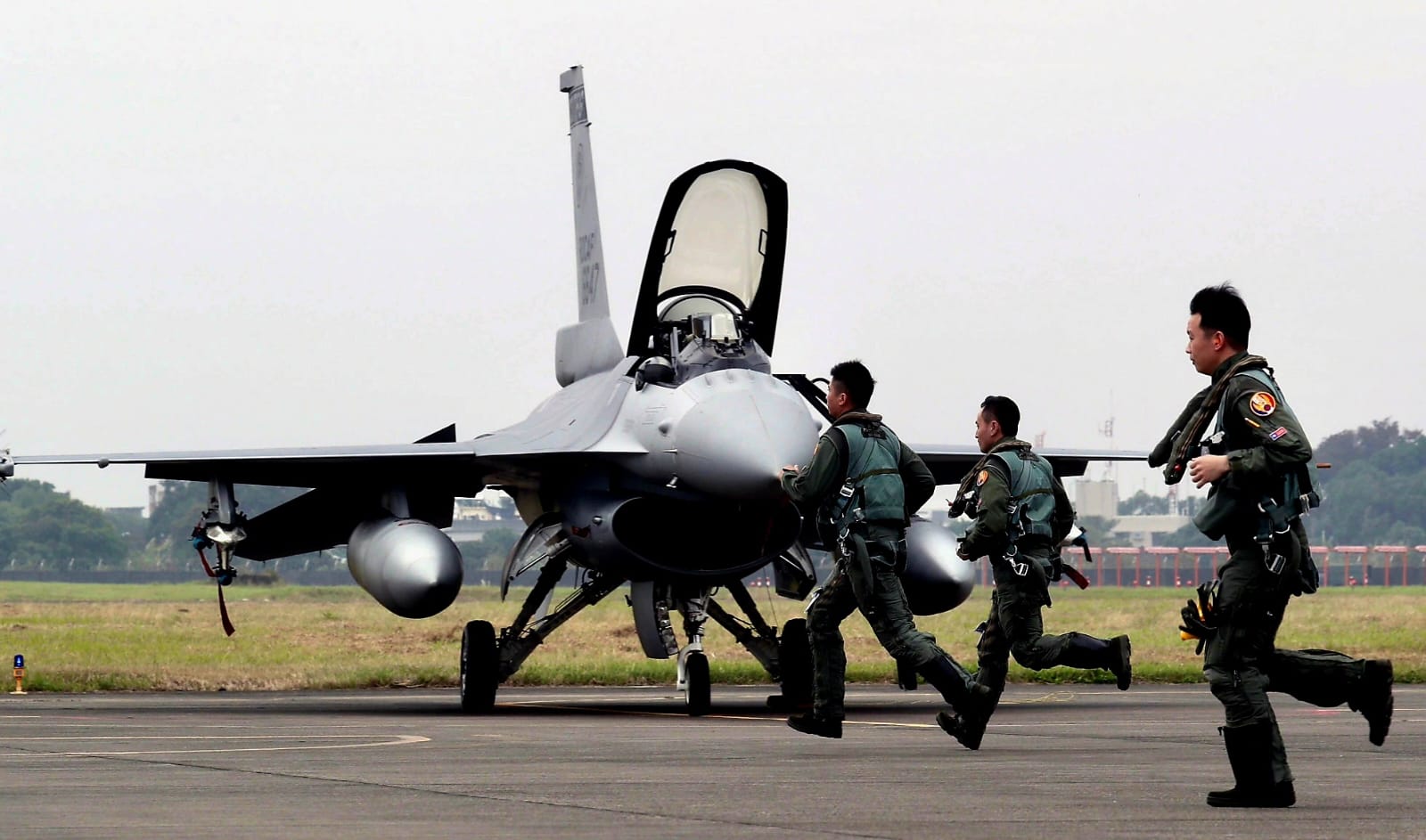
Accuses South African Flight Academy of Illegally Exporting Military Technology
By Chris Williams
Washington, DC, United States – The United States has leveled serious charges against the Test Flying Academy of South Africa, asserting that it unlawfully sent military-grade flight simulator technology and shared expertise with China. This situation raises pressing concerns about national security and global relations while the academy firmly rejects the allegations, maintaining that all interactions were legitimate and involved only non-sensitive items.
Details Emerge on Seized Equipment and Forfeiture Action
The heart of the case revolves around two containers containing advanced anti-submarine warfare crew trainers, which were intercepted in Durban, South Africa, while en route to China. These mobile units, designed to replicate classrooms, were developed using American technology and were intended to train aircrew in submarine detection and tracking.
Officials in the U.S. argue that this equipment falls under strict export regulations due to its potential to enhance China’s military capabilities, particularly in maritime operations. The shipment was seized following a tip-off, which sparked a collaborative effort between South African and U.S. authorities.
Among the contents were simulators that replicate real-world anti-submarine missions, equipped with software and hardware derived from U.S. systems. The U.S. Justice Department has initiated legal proceedings to gain permanent control of these items, claiming their shipment violated necessary export licenses. This action forms part of a broader initiative aimed at preventing sensitive technology from reaching rival nations like China, where it could assist in the modernization of their military forces.
These trainers are not basic tools; they impart complex skills necessary for sonar and radar operations, essential in contemporary warfare. By blocking this shipment, the U.S. aims to safeguard its technological edge and hinder assistance to China’s rapidly expanding submarine fleet.
Academy’s History and Alleged Role in Training Chinese Pilots
The Test Flying Academy of South Africa, located in Oudtshoorn in the Western Cape, has been under scrutiny since 2023 when the U.S. Commerce Department placed it on a restricted list. This designation restricts U.S. companies from engaging with the academy without special approval due to claims about training Chinese military test pilots.
These pilots, reportedly part of China’s air force, are alleged to have learned advanced flying techniques using Western aircraft, including models containing American parts. The academy is renowned for its exceptional training programs, designed to prepare pilots for safe testing of new aircraft. It attracts students internationally and provides courses ranging from basic flight testing to managing high-risk scenarios.
However, the U.S. points to evidence suggesting that former pilots from NATO countries, including ex-members of the U.S., British, and other Western air forces, were engaged to teach these skilled techniques to Chinese personnel. This transfer of knowledge, according to U.S. authorities, violates export control regulations designed to protect military secrets.
The academy vehemently refutes these claims, arguing that its collaboration with Chinese clients was strictly civilian-focused, aimed at enhancing general aviation safety and skills rather than military strategies. They contend that no classified information or prohibited technology was exchanged and that all exports adhered to South African and international regulations. The disputed equipment, they claim, consisted of basic training aids rather than tools with genuine military application.
Broader Tensions in U.S.-South Africa Relations
This controversy arises during a delicate period for U.S.-South Africa relations. Recently, South Africa hosted naval exercises with Iran, Russia, and China as part of the BRICS coalition, provoking sharp criticism from Washington. Skeptics argue that such actions indicate South Africa’s alignment with nations perceived as adversaries of the West, potentially jeopardizing trade and aid relationships.
The U.S. has already curtailed some support due to different issues, including South Africa’s position on global conflicts. This case only exacerbates the situation. South Africa’s foreign affairs department has acknowledged the allegations and committed to investigating them through appropriate channels while assuring that the country upholds strict export laws and seeks to avoid being ensnared in major power rivalries.
Local experts express concern that this situation could deter investors or lead to further restrictions on South African companies involved in advanced technology, with detrimental effects on the economy. Meanwhile, Chinese officials have characterized the U.S. actions as unjust interference, asserting that their military development is purely defensive and that collaboration with partners like South Africa is routine.
This scenario reflects a larger pattern of friction between the U.S. and China over technological issues, where both sides accuse each other of manipulating regulations.
Implications for Global Security and the Aviation Industry
If substantiated, these allegations could result in substantial fines or bans for the academy and even imprisonment for those involved. This situation underscores how standard training can inadvertently veer into military territory, especially concerning dual-use technologies—items that serve both civilian and defense functions.
For South Africa, a pivotal player in Africa’s aviation industry, this may mean stricter monitoring of training participants and the sale of technology. The case further illustrates the extensive reach of U.S. export laws, which extend far beyond American borders. Companies globally must obtain U.S. approval for items incorporating American components, even if they are manufactured elsewhere.
This has spurred calls for clearer regulations and enhanced dialogue among nations to avert misunderstandings. For someone unfamiliar, it’s akin to borrowing a high-tech tool from a friend and then lending it to someone they don’t trust without obtaining permission. The U.S. perceives their technology, meant for secure use, ending up in potentially contentious arenas as a significant concern.
The academy maintains that their actions resemble sharing a standard training manual—nothing confidential or sensitive. As investigations proceed, both parties are entrenched in their positions, with the U.S. advocating for stringent enforcement while South Africa defends its economic sovereignty and right to trade freely. This evolving narrative could fundamentally alter the landscape for African firms navigating global technology agreements, prompting more caution to avoid entanglement in superpower conflicts.

🔴Central News Special Edition | Issue 122: Download the Latest Print and E-Edition | Suspended Ekurhuleni Deputy Chief Julius Mkhwanazi Vows ‘I Can’t Go to Jail and Leave My Kids’ Amid Blue Lights Saga Scrutiny 🔴
Download here⬇️⬇️⬇️
Read all our publications on magzter:
https://www.magzter.com/ZA/Central-News-Pty-Ltd/Central-News/Newspaper/All-Issues
Central News also offers Sponsored Editorial Content, Podcasts, Radio / Social Media Simulcast, Video Production, Live Streaming Services, Press Conferences, and Paid Interviews (Video/Audio), etc.
We guarantee exceptional exposure, reach, and engagement, with an excellent return on investment.
Advertisement:
To place your advert on our platforms (Print Newspaper or Digital Platforms): Please email: sales@centralnews.co.za
For Business Related:
business@centralnews.co.za
Newsroom:
Send your Stories / Media Statements To: newsroom@centralnews.co.za
General Info:
info@centralnews.co.za
Office Administrator:
admin@centralnews.co.za
Whatsapp / Call: 081 495 5487
Website: https://www.centralnews.co.za
Social Media Platforms (@centralnewsza): Linkedin, Facebook, Tiktok, Twitter, Instagram, Youtube