


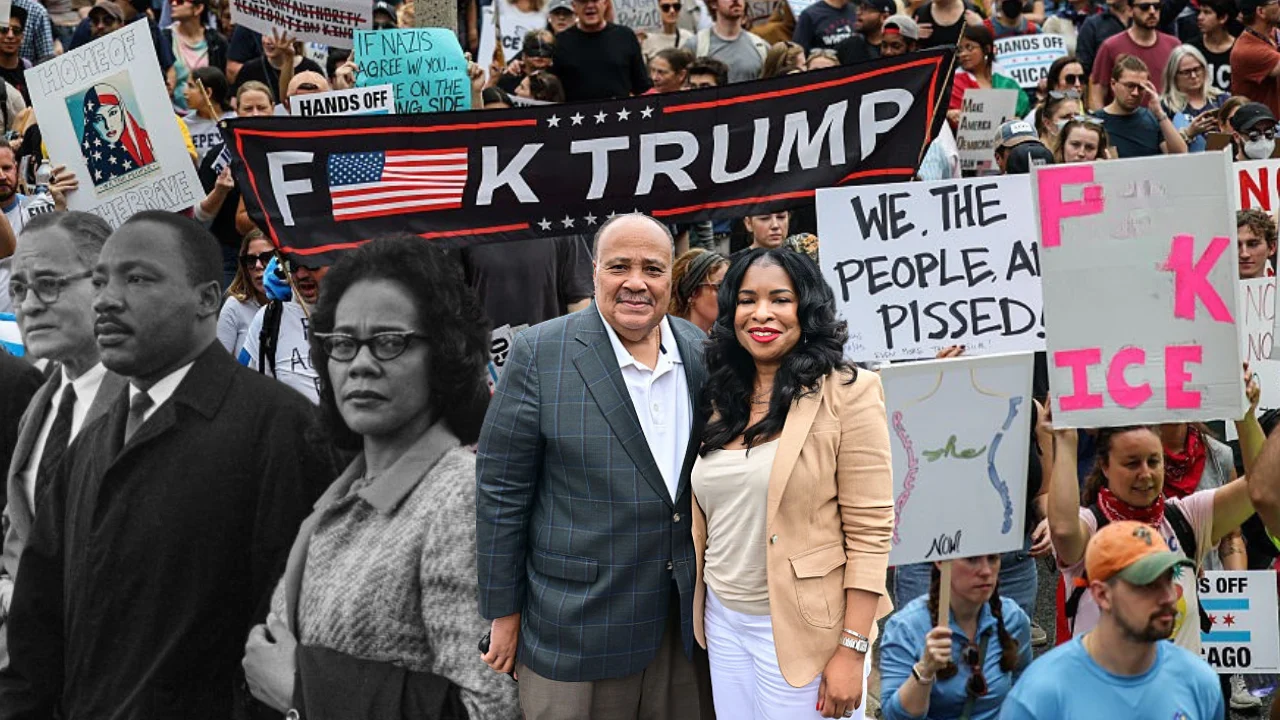
Protests Against the Trump Administration: Echoes of History
In recent weeks, protests against the Trump administration’s domestic policies have intensified, triggered by the tragic shooting of Renee Good by Immigration and Customs Enforcement (ICE) officers. The contentious atmosphere has boiled over, with demonstrators reporting violent encounters with federal law enforcement, raising grave concerns about the state of civil liberties in the United States. As tensions escalate, President Trump has ominously threatened to invoke the Insurrection Act of 1807, potentially dispatching the military into American cities.
Historical Parallels
The scenes unfolding in cities like Minneapolis, Chicago, Los Angeles, and Houston are reminiscent of the Civil Rights era. The images of protesters being tear-gassed and forcibly arrested evoke memories of the courageous demonstrations led by civil rights icons like Dr. Martin Luther King Jr. in the 1960s. Such overwhelming force to quell peaceful protests raises questions about the lessons society has learned from its past.
Martin Luther King III, son of the legendary civil rights leader, reflected on this grim reality. “This type of engagement has always existed,” he noted. “During my parents’ era, people continued to stand up against oppression despite the risks.” King referenced the infamous march across the Edmund Pettus Bridge in 1965, where activists were met with brutal violence. His observations underscore a cyclical nature of history, where the struggles for justice continue to resonate through generations.
The Role of Federal Law Enforcement
In light of these recent protests, Martin Luther King III criticized the aggressive tactics employed by ICE and other federal agencies. Thousands of officers have mobilized in cities, escalating the already fraught environment. King expressed alarm at the militarization of law enforcement that has become a glaring reality in American streets. “It’s almost unconscionable,” he stated. “The budget for ICE exceeds that of the FBI, creating an intimidation model rather than a model aimed at community building.”
The prospect of deploying National Guard troops in Minneapolis further complicates the situation. This echoes a historical precedent where the military was used during the Civil Rights movement to enforce desegregation, yet the implications are far-reaching when considered in the context of contemporary protests involving widespread public dissent.
Upholding Nonviolence
While the anger and frustration among protesters are palpable, King emphasized the importance of adhering to nonviolent principles. Echoing his father’s philosophy of peaceful resistance, he warned against meeting force with force, stating that such a strategy risks creating further chaos. “Engaging in violence will only lead to more violence,” he cautioned, highlighting the persistent danger of abandoning the path of peaceful protest.
The sentiment was echoed by his wife, Arndrea Waters King, who leads the Drum Major Institute. She stressed that amidst the fervor of protests, it is crucial to remember the broader array of strategies employed by leaders of the Civil Rights movement. She advocates for a return to educational initiatives that build knowledge among activists about methods of effective resistance, much like the training Rosa Parks underwent before her historic act of defiance.
Educational Initiatives for Activists
Waters King brought attention to the potential for “freedom schools” that could empower today’s activists with the tools they need to create impactful change. By studying the history of civil rights movements, current activists can develop a more informed approach, cultivating resilience amid adversity. Drawing parallels from Gandhian philosophy, she emphasized that while despair may feel overwhelming, it is essential to remember that tyrants do not prevail.
The Kings commended the contemporary demonstrators opposing the Trump administration’s policies, particularly those that disproportionately affect marginalized communities. The significant rise in protests over the past year is telling, signaling a collective outcry for justice and equality.
A Call to Action
As protests surge, Waters King called for clarity of purpose and vision among activists. “In these heavy times, it’s vital not to let despair consume us,” she noted. Instead, she encourages a recommitment to activism, stressing the importance of identifying an inner source of inspiration.
The ongoing protests reflect a broader, longstanding struggle for justice, and the Kings remind us that while the tactics may evolve, the fight for equality and civil rights remains a persistent endeavor. Through thoughtful engagement and strategic planning, today’s activists can aim to forge a path toward genuine change, drawing on the profound lessons of history while carving their own identities in the ongoing pursuit of justice.