


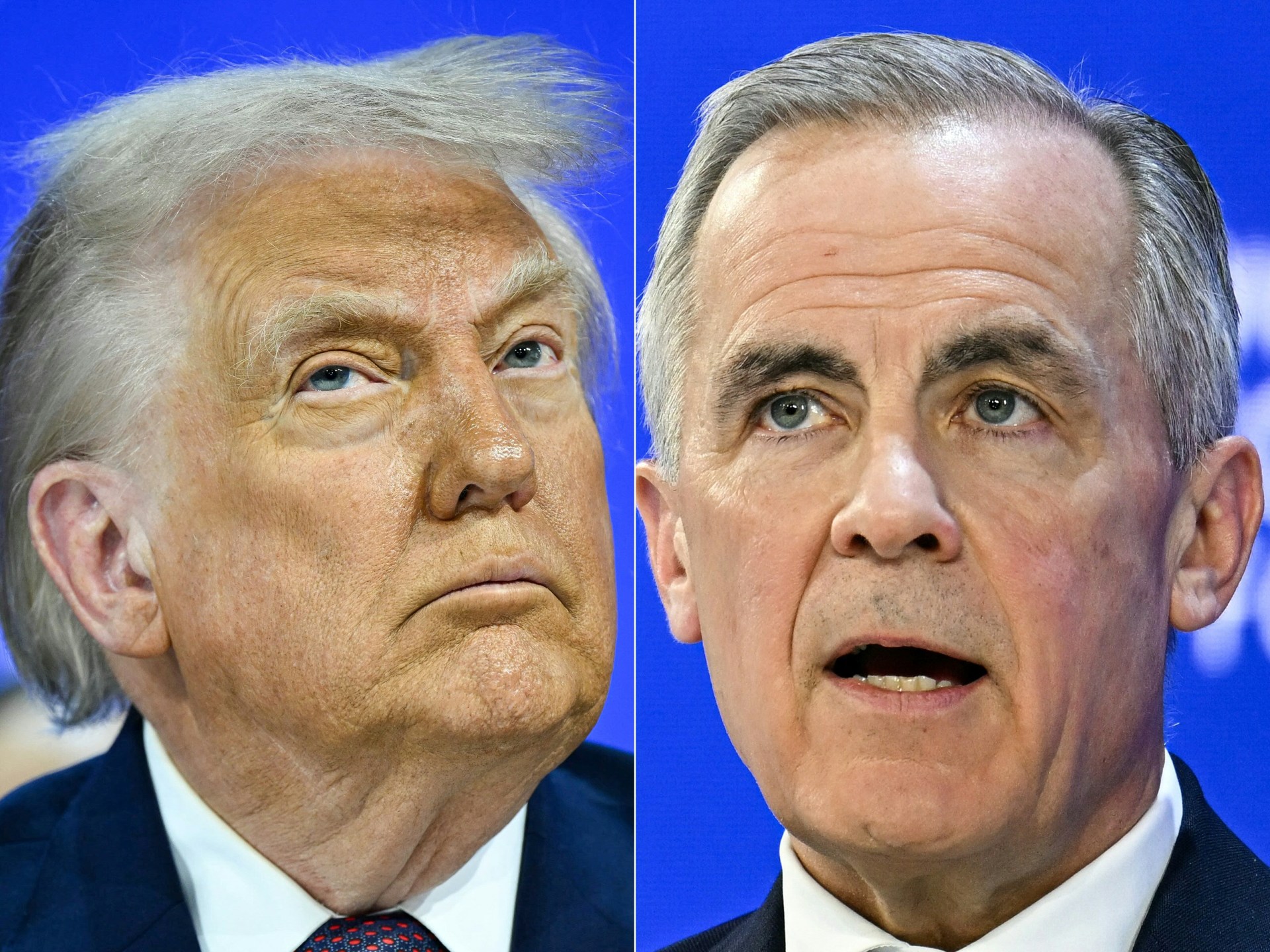
Trump’s Trade Threat and the Canada-China Deal
Recent Developments: Tensions Rise Over Trade Agreements
In a striking move, U.S. President Donald Trump has publicly threatened to impose a staggering 100 percent tariff on Canadian goods if Prime Minister Mark Carney proceeds with a new trade agreement with China. This warning emerged not long after Canada reached a deal with China last week, aimed at facilitating trade in agricultural products and electric vehicles. The announcement has sent shockwaves through the political and economic landscapes of both nations.
Details of Trump’s Threat
Trump took to his platform, Truth Social, to voice his concerns, stating that Carney is “sorely mistaken” if he believes Canada could function as a “Drop Off Port” for Chinese goods entering the United States. This rhetoric encapsulates the rising tensions between the two neighboring countries, which have seen relations deteriorate under Trump’s administration.
In his post, Trump explicitly outlined the consequences of any Canadian trade dealings with China, asserting, “If Canada makes a deal with China, it will immediately be hit with a 100% Tariff against all Canadian goods and products coming into the U.S.A.” The urgency of his message highlights the protective stance the U.S. has taken toward its economic interests, particularly in these evolving geopolitical dynamics.
Carney’s Response and Broader Implications
As yet, Carney’s office has not issued an official response to Trump’s remarks. However, the tension encapsulated in Trump’s threat has roots in broader, mounting disagreements between the U.S. and Canada. This week, Carney delivered a notable address at the World Economic Forum in Davos, where he criticized the current state of U.S. policies, suggesting that the world is experiencing a “rupture, not a transition.”
As he called for increased cooperation among “middle powers” in the face of global coercion, it’s clear Carney is positioning Canada as an independent actor on the world stage, rather than a mere U.S. satellite.
Echoes from Davos: The U.S.-Canada Relationship
Trump’s disparaging response to Carney at Davos—stating, “Canada lives because of the United States”—reveals a deep-seated frustration with what he perceives as ingratitude from Canada. This interaction reaffirms the complexity of the U.S.-Canada relationship, one characterized by both interdependence and growing friction.
Moreover, the cancellation of an invitation for Carney to join Trump’s “Board of Peace” following the Davos address signals a symbolic unraveling of ties. These actions by Trump are indicative of a deeper strategy aimed at asserting U.S. dominance in regional trade discussions while isolating Canada in the process.
Strategic Partnerships: Canada’s Economic Diversification
Under increasing pressure, Prime Minister Carney is actively seeking to foster new economic partnerships beyond the U.S., particularly with China, the European Union, and Qatar. This pivot marks a significant attempt to diversify Canada’s economic interactions, which have historically been heavily reliant on trade with the United States.
As Asa McKercher, a professor at St. Francis Xavier University, pointed out, Carney’s drive to lessen Canada’s reliance on the U.S. reflects a strategic approach: stabilizing Canada’s economic portfolio in light of perceived volatility in U.S. policies and trade relations.
The China Deal: Enhancing Trade Opportunities
The trade deal between Canada and China represents a significant shift in Canada’s economic strategy. The agreement includes provisions for China to lower tariffs on Canadian canola and other agriproducts, while Canada has agreed to permit as many as 49,000 Chinese electric vehicles to enter its market.
Carney expressed optimism about the partnership, noting, “At its best, the Canada-China relationship has created massive opportunities for both our peoples.” This sentiment illustrates Canada’s commitment to exploring new avenues to bolster its economy, even amid threats from its southern neighbor.
Navigating the Future Landscape
As this narrative unfolds, the intricate interplay between national interests, economic strategies, and global partnerships is shaping the paths of both Canada and the United States. With ongoing threats from Trump and a determined push from Carney to solidify new international relationships, the stakes are higher than ever for both nations. The potential for a trade war looms large, while Canada embarks on a quest for greater independence on the world stage.