


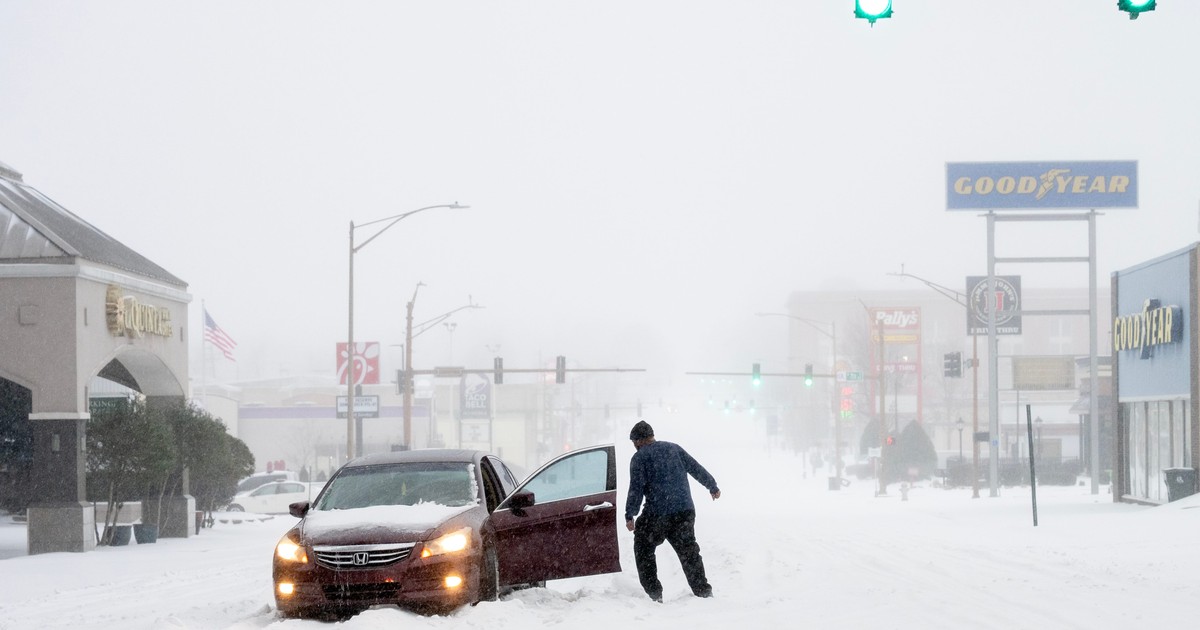
Winter Storm Fern: The Impact of a Massive Snowstorm Across the U.S.
Overview of the Storm
Winter Storm Fern has unleashed its fury across a 2,000-mile swath of the United States, stretching from New Mexico to Maine. This significant weather event began on Friday night, hitting the south-central region and subsequently making its way toward the Northeast, causing widespread disruption.
Updates from Major Cities
As snowfall began to accumulate in New York City, Mayor Zohran Mamdani took measures to protect the community by announcing that schools would transition to remote learning on Monday. This decision came amid concerns for student safety and travel conditions. Similarly, New York Governor Kathy Hochul emphasized the importance of staying off the roads. She authorized “all state employees” to work remotely at the start of the week, recommending that other employers consider similar policies.
Areas Affected
As Heavy snow continued to blanket large parts of the northeastern U.S., the National Weather Service (NWS) provided updates indicating that the storm would result in significant snowfall, especially over the Northeast, along with patches of rain and freezing rain affecting parts of the Mid-Atlantic. In the Appalachians, snow was expected to develop by Monday.
The Great Lakes Region and Beyond
The weather system was not limited to the Northeast; the Great Lakes region braced for new snowfall, driven south from Canada. As of Monday morning, various states—including Texas, Louisiana, Mississippi, Tennessee, Georgia, Arkansas, and Missouri—remained under extreme cold weather warnings. Arkansas specifically recorded around seven inches of snowfall from Friday night into Saturday.
States such as Indiana, Kentucky, and Ohio also faced winter storm warnings, with forecasts suggesting that power outages, tree damage, and hazardous travel conditions could develop due to ongoing freezing rain.
Impact on Travel
The storm wreaked havoc on travel plans across the country. Major cities such as Atlanta, Charlotte, Richmond, Washington, D.C., Baltimore, Cincinnati, Pittsburgh, Philadelphia, New York City, and Boston were all in the storm’s direct path. Reports indicated over 820,000 customers from New Mexico to Virginia were without power as of Monday morning, exacerbating travel difficulties.
Flight Disruptions
Airlines canceled thousands of flights over the weekend, with disruptions continuing into Monday. Over 3,700 flights had been canceled by 7 a.m. ET on Monday alone, with critical airports like Boston Logan suffering the most significant cancellations, seeing 60% of its flights grounded. This represented the worst single day of flight cancellations since the onset of the COVID-19 pandemic, with more than 11,500 cancellations reported on Sunday.
Airports such as Dallas Fort Worth International in Texas and Atlanta’s Hartsfield-Jackson were among the worst affected. In Washington, D.C., all flights were canceled on Sunday due to the severe weather but were expected to resume gradually as precipitation subsided.
Widespread Caution and Availability of Resources
In light of the severe weather, many airlines have stepped up by waiving rebooking fees for travelers affected by the storm. Officials across the regions encourage people to remain cautious, noting that widespread travel disruptions could persist for several days.
With new layers of snow expected and freezing conditions continuing, residents are advised to monitor updates from local authorities and the National Weather Service for the latest information on the storm’s path and safety recommendations.
This is a developing story. Please keep checking back for updates as more information becomes available.