


The Consequences of Political Actions on Global Sport
The recent political climate has thrown the world of international sports into disarray, particularly in light of events surrounding Venezuela and its President, Nicolás Maduro. The impact of these actions reverberates beyond borders and onto the global stage, raising pressing questions about the intersections of politics and sports.
Venezuela: A Tipping Point
Venezuela has faced upheaval for years, but the recent kidnapping of President Nicolás Maduro amidst ongoing international threats has amplified scrutiny of the country’s political situation. Maduro’s controversial tenure has been marked by accusations of severe human rights violations and economic mismanagement. However, it is the involvement of other nations, particularly the United States, that challenges the notion of sovereignty and prompts further international debate.
The Role of the United Kingdom
In light of these events, Brian Leishman, the Labour MP for Alloa and Grangemouth, has taken a stand by initiating an Early Day Motion (EDM). This motion calls upon the UK Government to confront the actions of the United States and reassess how it responds to international sporting events tied closely to political actions. Leishman’s motion expresses a desire for consistency in how nations are treated regarding international law—highlighting the ban on Russia from sporting events due to its actions in Ukraine while drawing parallels with the U.S.’s involvement in Venezuela.
Leishman’s statements reflect not only a critique of U.S. foreign policy but also a pressing reminder that diplomatic decisions can have ripple effects in the sporting world.
A Call for Consistency
Echoing sentiments of fairness, Leishman highlighted that while he harbors no affection for Maduro, the actions taken by the United States against Venezuela raise questions about the consistency of international law enforcement. By drawing attention to these discrepancies, Leishman urges a reevaluation of the moral grounds on which countries are judged in the realm of international athletics.
Leishman stated, “While I am no fan of Maduro, the United States of America has breached international law. My Early Day Motion seeks nothing but consistency in light of the events which unfolded earlier this month.”
The 2026 World Cup: A Complex Scenario
Looking ahead, the football world is bracing itself for the 2026 FIFA World Cup, set to take place in the U.S., Canada, and Mexico. This prestigious tournament will see matches hosted in 16 cities, with eleven in the U.S. alone. The tournament is particularly significant for Scotland, which will be participating for the first time since 1998 after a dramatic qualification win against Denmark.
However, the implications of international interventions weigh heavily on such events. Leishman is calling for FIFA and various sporting bodies to consider excluding the United States from hosting the tournament unless there are visible shifts in its approach toward international law and respect for sovereignty.
Football Diplomacy and its Challenges
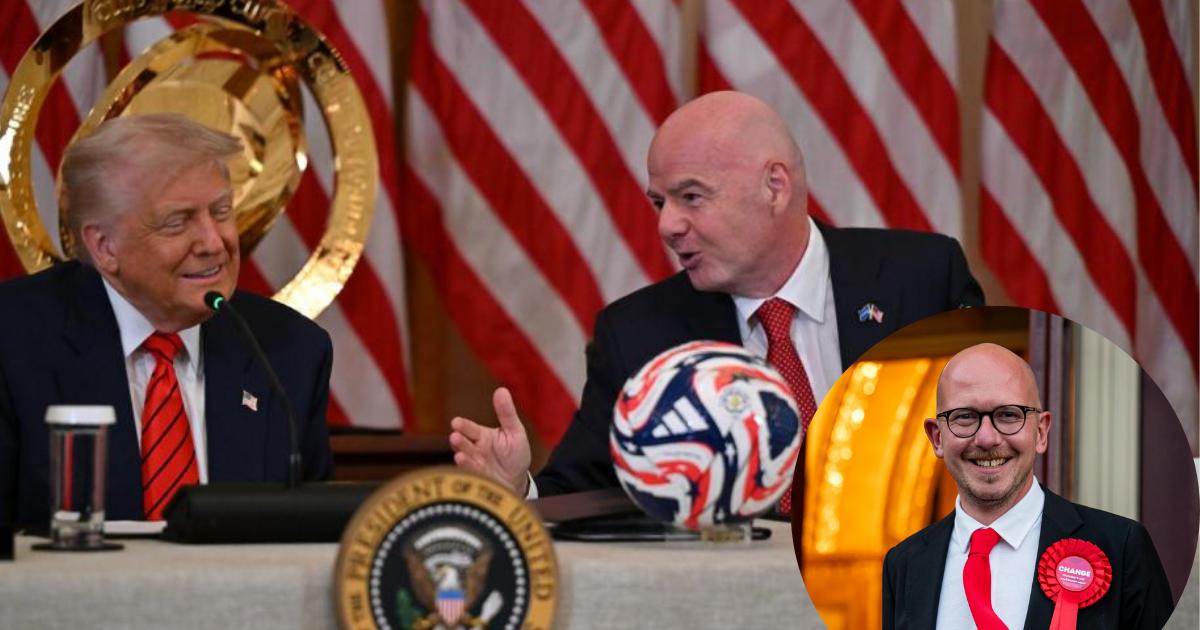
The relationship between sports and diplomacy is complex. Events like the World Cup are often seen not just as athletic competitions but as platforms for countries to showcase their values on the global stage. Former President Donald Trump, who was awarded the inaugural FIFA Peace Prize, has faced criticism for his threats to allies like Denmark, which have stirred tensions in the international community and undermined the notion of cohesive diplomacy through sports.
Leishman remarked, “Trump’s recent conduct—overt threats to nations—undermines the rules-based international order.” This perspective sheds light on the broader implications of international sportsmanship and mutual respect between nations.
The Power of Political Movements
The EDM initiated by Leishman is gaining traction, attracting high-profile signatures from notable politicians, including former Labour leader Jeremy Corbyn. This indicates a growing awareness and concern among politicians regarding the impact of foreign policy on global sports. The power of political movements extends into sports, where actions and inactions can lead to significant consequences, influencing everything from participation in international events to the integrity of the competitions themselves.
The unfolding political situation continues to spotlight the interconnectedness of global governance, diplomacy, and sports. As countries navigate these murky waters, the question lingers: how will the global community hold nations accountable for their actions both on and off the field?