


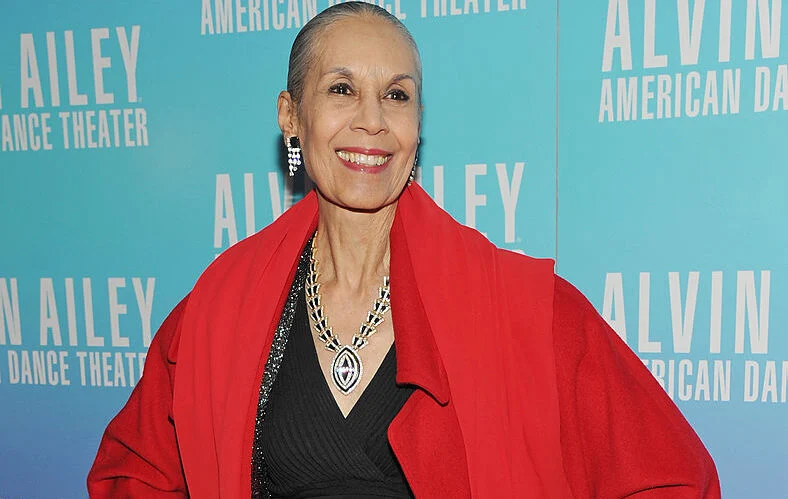
Carmen de Lavallade, the elegant and fearless performer whose artistry moved effortlessly across dance, theater, film, and television, has sadly passed away at the age of 94. Her son, Léo Holder, confirmed that she died in a New Jersey hospital following a brief illness. De Lavallade’s remarkable career spanned over six decades, marking her as one of the most iconic figures in American performing arts.
Throughout her illustrious career, de Lavallade collaborated with artistic luminaries such as Alvin Ailey, Lena Horne, Harry Belafonte, Agnes de Mille, and Josephine Baker. Notably, she spent 59 years married to artist and performer Geoffrey Holder, a partnership that enriched both their lives and careers. Known for her long, willowy frame and striking stage presence, de Lavallade defied ageism by continuing to perform well into her 80s. Duke Ellington famously praised her as “one of the most ravishing women in the world,” highlighting the lasting impact of her beauty and talent.
Born Carmen Paula de Lavallade on March 6, 1931, in Los Angeles, her childhood was steeped in cultural diversity, providing a unique perspective that shaped her artistic endeavors. Early in her life, she was mentored by her cousin Janet Collins, the first Black ballerina at the Metropolitan Opera, whose perseverance against racial barriers greatly influenced de Lavallade’s career. This early exposure to artistic passion ignited her own ambitions in dance and performance.
De Lavallade trained under modern dance pioneer Lester Horton and became a performer with his multiracial company during a time when such integration was rare. This experience was crucial in shaping her career, as she went on to work with prestigious institutions such as American Ballet Theatre, Alvin Ailey American Dance Theater, Dance Theater of Harlem, and the Metropolitan Opera. Each performance was a testament to her resilience and commitment to breaking racial barriers in the world of dance.
Her versatility extended beyond the stage; she appeared in influential films like ‘Carmen Jones’ and participated in various Broadway and Off-Broadway productions. De Lavallade also dedicated a decade to Yale University, where she served as a performer, choreographer, and adjunct professor. Her teachings influenced a new generation of artists, including the acclaimed Meryl Streep, who described de Lavallade as a guiding light in her artistic journey.
As news of her passing spread, tributes poured in across social media from fellow entertainers and fans alike, showcasing her immense impact on the arts community. De Lavallade’s work was not only about performance but also about activism; she used her art to advocate for civil rights, aligning herself with the movement through creative expression. Alongside Geoffrey, they choreographed significant works that conveyed the spirit of Black culture, such as her celebrated solo “Come Sunday,” set to powerful Black spirituals.
Despite the natural changes that age brings, de Lavallade remained committed to movement and self-expression. Her final performance at the age of 88 was a poignant illustration of her enduring passion for the arts. She spoke candidly about the complexities of aging, artistry, and the necessity of adaptability, inspiring many to embrace their own journeys in the performing arts.
Carmen de Lavallade leaves behind a legacy that will be cherished and celebrated by generations to come. She is survived by her son, her older sister Yvonne de Lavallade Davis, and an extended family who will remember her not just as an artist but as a trailblazer who opened doors for many Black artists in performing arts.