


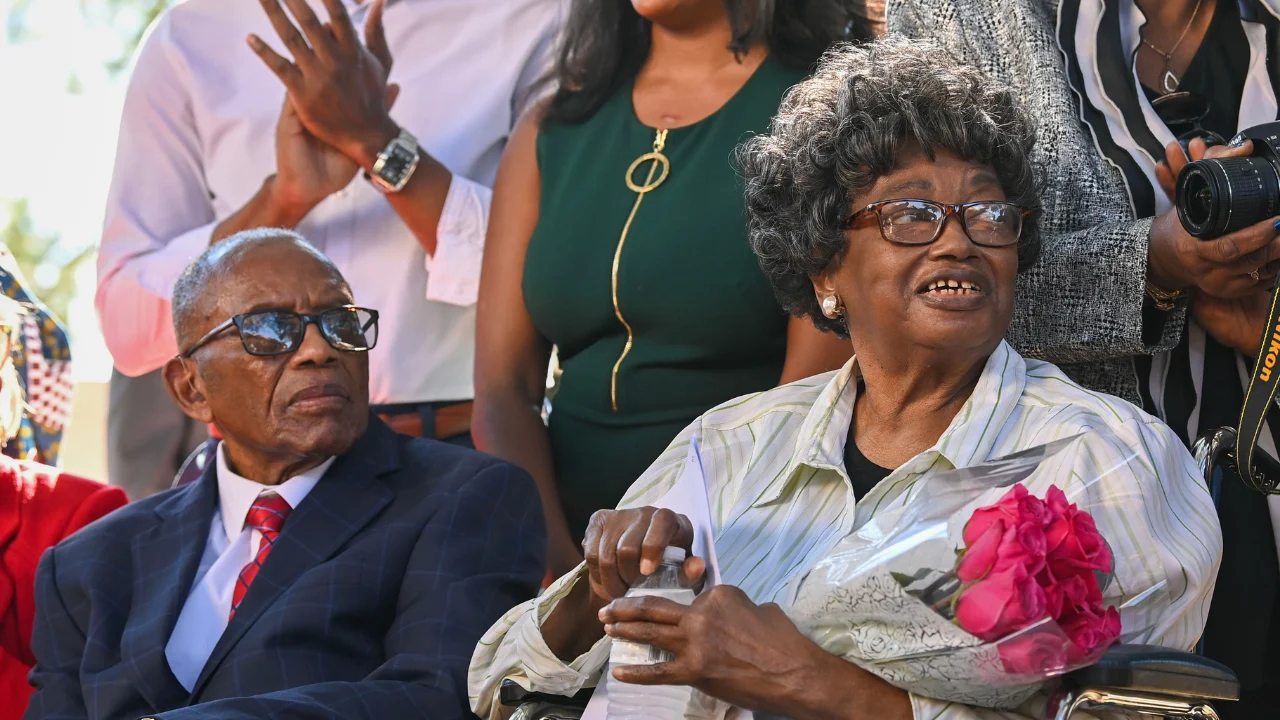
Claudette Colvin, an extraordinary civil rights pioneer, has passed away at the age of 86. Known for her bold defiance on a Montgomery bus in 1955, Colvin’s actions preceded and influenced those of Rosa Parks. Her death, confirmed by the Claudette Colvin Legacy Foundation, underscores the significant impact of her contributions to the Civil Rights Movement.
Colvin’s pivotal moment came on March 2, 1955, when she was just 15 years old. At the time, the Jim Crow laws enforced strict segregation in the South, and Colvin found herself on a bus where the oppressive rules were palpable. When the bus driver demanded that she move because she was seated near white passengers, Colvin took a brave stand. Unlike her friend, who complied and moved to the back, Colvin remained in her seat, causing the driver to call the police.
The arrest that followed was traumatic. Colvin recounted her terrifying experience, noting that she recited lines from poetry and scripture, including Edgar Allan Poe’s “Annabel Lee” and the Lord’s Prayer, in an effort to calm herself, fearing for her safety. She was charged with assaulting the officers during her arrest, although the initial accusations regarding disturbing the peace and violating segregation laws were eventually dropped.
Despite the bravery she demonstrated, Colvin faced an uphill battle in gaining the recognition she deserved. When the Freedom Riders and other civil rights activists began the fight against segregation, Colvin’s story was overshadowed. Rumors circulated that older civil rights leaders chose not to support her because of her age and circumstances, particularly after she became pregnant shortly after her arrest. This decision to uplift Rosa Parks instead did not diminish Colvin’s contributions but highlighted societal biases surrounding race, class, and gender.
Claudette Colvin herself reflected on these dynamics in an NPR interview, noting that the perception of teenagers as unreliable and the complexion of Parks, which matched societal preferences for a middle-class representative, played crucial roles in the movement’s narrative. Parks had the advantage of being an adult with experience in civil disobedience, earning her a more prominent position as the face of the campaign against segregation.
Despite being pushed to the sidelines, Colvin continued her advocacy and her story remained important within the historical context. In 2021, after 66 years, her arrest record was expunged—a significant milestone that she described as more than a symbolic gesture. It offered her the opportunity to share her experiences with future generations: “I get a chance to tell my grandchildren, my great-grandchildren, what life was like living in segregated America.”
Colvin’s legacy is a reminder of the countless unsung heroes of the Civil Rights Movement. Her determination and courage in the face of profound injustice laid the groundwork for the larger movements that followed. As discussions surrounding racial equality continue today, Colvin’s story serves as an essential narrative, one that demands recognition and respect. The journey for justice, equity, and acknowledgment of those who stood up remains ongoing, reflecting the enduring struggle against systemic racism.