


Uniting Faith and Labor: A Powerful Movement for Social Justice
The Gathering Sparks Change
At the AFL-CIO’s recent Martin Luther King Jr. commemoration in Baltimore, a diverse assembly of 1,179 delegates and guests gathered to discuss the potential synergy between religious organizations and labor movements. Notably, the majority of the attendees were African American, a demographic that strongly engages in both church activities and progressive politics. This confluence of faith and labor offers a unique opportunity for action, resonating with the legacy of Dr. King himself.
Faith and Dignity of Work
During a panel discussion, four religious scholars—representing Jewish, Catholic, and Islamic perspectives—explored how faith intersects with the dignity of work. They reflected on historical ties, particularly highlighting how Dr. King and Rev. Ralph Abernathy founded the Southern Christian Leadership Conference to advocate for civil rights and economic justice.
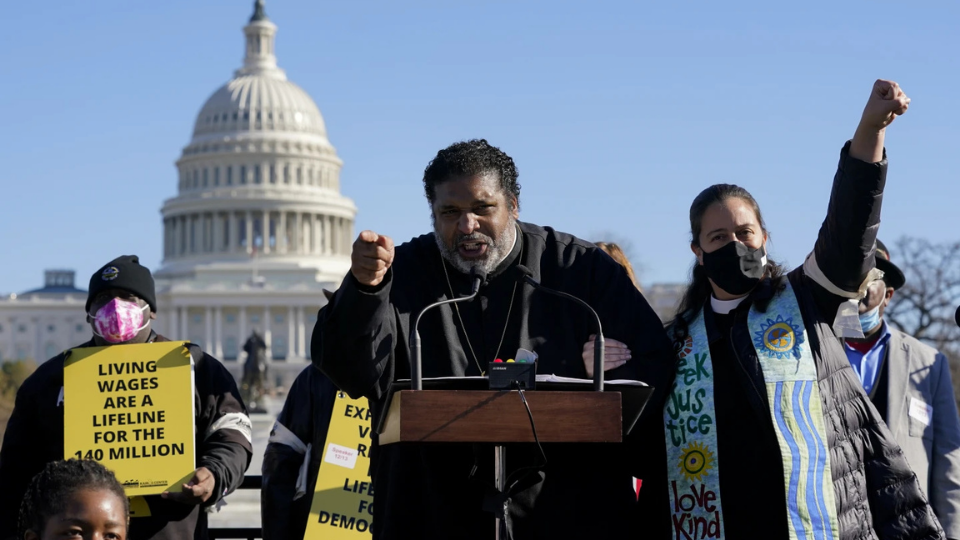
Rev. William Barber II and Rev. Liz Theoharis, co-chairs of the New Poor People’s Campaign, continue this legacy today by invoking religious themes to advocate for marginalized communities. Their platform emphasizes vital issues such as living wages and the right to organize, illustrating how religious principles can underpin social justice.
Historical Allies and Current Dynamics
In this modern movement, various religious groups, including non-Orthodox Jews and progressive Christian denominations, unite around common goals. Progressive Catholics have also emerged as significant allies, particularly with Pope Francis and his predecessor advocating for labor rights and opposing economic injustices. Their collective voices amplify a plea for societal change, demonstrating solidarity across cultural and religious lines.
However, the landscape isn’t entirely unified. The rise of extremely religious sects, such as the Southern Baptist Convention, presents a stark contrast. Historical allegiance to a literal interpretation of biblical teachings translates into staunch opposition against social progress, including labor rights, often aligning with Republican ideologies. The implications of this divide complicate efforts to forge partnerships that transcend faith barriers.
The Challenge of Religious Hate
Amidst efforts for unity, the challenge of rising anti-Semitism and Islamophobia looms large. Recent incidents, such as the arson attack on a historic synagogue in Jackson, Mississippi, underscore the urgent need for interfaith solidarity. Rabbi Rachel Gartner highlighted how white supremacist ideologies often perpetuate hate and division, urging faith communities to foster dialogue rather than discord.
The need for progressive groups to collaborate electorally is paramount. Rabbi Gartner warned that historical failures to unite against tyranny, as observed in pre-Nazi Germany, can lead to catastrophic outcomes. Today’s environment necessitates a strong coalition against forces of division.
Confronting Corporate Interests
Professor Eddie Glaude Jr. from Princeton pointed out the dangers of detaching faith from social issues. Corporate interests often exploit the vulnerable, and it’s vital for religious teachings to inspire compassion toward those on the margins. Glaude urges faith leaders to confront economic systems that view individuals as disposable, thereby challenging entrenched attitudes among some religious groups.
He also raised concerns about the willingness of white evangelicals to stand against discriminatory practices promoted by political figures like Donald Trump, revealing deep divisions that may impede collective action.
Hope Through Younger Generations
Yet, there is hope. Both Glaude and other progressive leaders express optimism about younger generations, who exhibit a yearning for meaningful engagement with faith and social justice. They are open to movements that reflect progressive values, even as they turn away from traditional organized religions. This generational shift signifies a potential for real change.
Engagement through action—where faith translates into tangible support for workers and marginalized communities—resonates with the younger populace. They seek authenticity in faith leaders who actively participate in the struggles for justice alongside them.
Building a Modern-Day Movement
As Rev. Barber preaches, the fight against hypocrisy remains central to their mission. By challenging attitudes that deviate from Christ’s teachings—particularly regarding compassion and justice—faith communities can inspire reform within their ranks.
Thus, the dialogue between religious belief and labor rights continues, rooted in a rich tradition of advocacy that started long ago with leaders like Dr. King. Today’s challenges are profound, but the potential for a coalition anchored in dignity, respect, and shared humanity is within reach. Faith leaders, labor advocates, and community members stand at a crossroads, eager to foster an environment where collaboration can nurture hope for a more just society.