


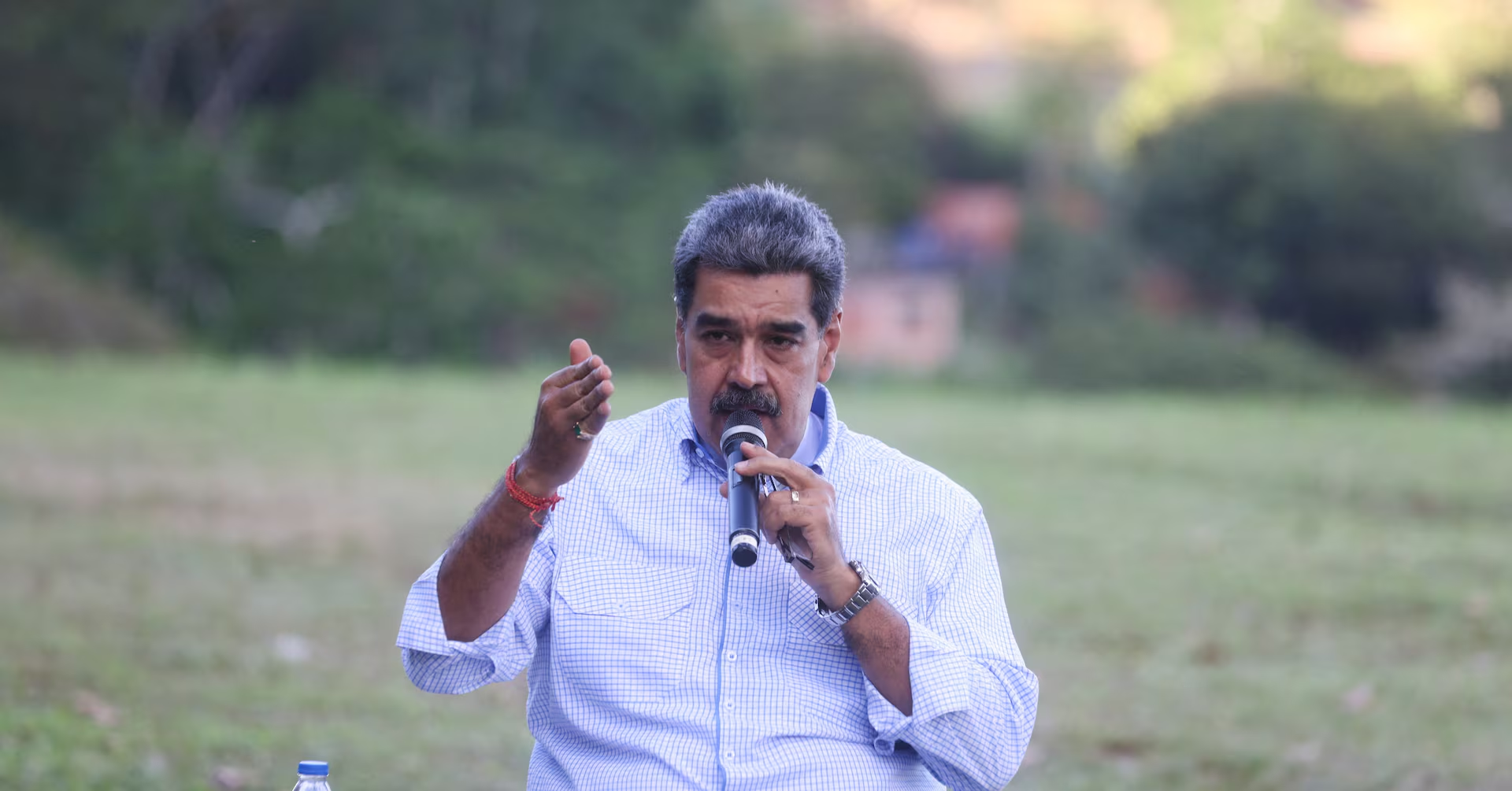
U.S. Escalates Pressure on Venezuela: An In-Depth Look
Rising Tensions and Military Maneuvers
The relationship between the United States and Venezuela has reached a critical juncture, with recent news highlighting a significant increase in military presence and covert operations planned against President Nicolás Maduro’s government. As U.S. officials reveal, preparations are underway that signal a new phase in American strategy towards Venezuela—a nation grappling with political upheaval, economic crisis, and rampant human rights abuses.
Covert Operations as a First Step
According to anonymous sources cited by Reuters, the U.S. is likely to initiate covert operations as the first part of its new strategy. This marks a potential shift towards more aggressive tactics aimed at destabilizing Maduro’s regime, which has been characterized by allegations of corruption and connections to drug trafficking. The Pentagon has been quiet regarding specific details, but the deployment of military forces to the Caribbean suggests preparedness for a heightened operational capability.
Overthrowing Maduro: Options on the Table
Among the options under consideration, including the possibility of overthrowing Maduro, underscores the U.S. administration’s willingness to explore drastic measures. Critics have labeled these steps as provocative, especially given Maduro’s frequent denunciations of U.S. intentions, framing them as imperialistic aggression. The Venezuelan president, who has been in power since 2013, insists that any U.S. move to unseat him will face fierce resistance from both citizens and the military.
Human Rights Concerns and International Criticism
As the U.S. weighs its options, human rights organizations and international allies have expressed grave concerns about the legality of American actions, particularly regarding accusations of extrajudicial killings. Reports indicate that U.S. military strikes purportedly targeting drug boats have resulted in significant civilian casualties, raising alarm bells among human rights advocates. The narrative surrounding these military operations complicates the legitimacy of U.S. actions on the global stage.
Military Buildup and its Implications
In what appears to be a show of force, the U.S. has mobilized considerable military assets, including the Gerald R. Ford aircraft carrier—America’s largest—accompanying a fleet of at least seven warships and a nuclear submarine. This naval buildup has not gone unnoticed, prompting warnings from the U.S. Federal Aviation Administration to international airlines about potential hazards when flying over Venezuelan airspace.
The Role of the Cartel de los Soles
A significant part of the U.S. strategy involves designating the Cartel de los Soles, a powerful faction allegedly linked to Maduro’s government, as a foreign terrorist organization. This designation could open up further avenues for U.S. military action and financial sanctions, targeting specific assets and networks involved in drug trafficking that Washington contends harm American citizens.
Diplomatic Efforts and the Complex Landscape
Interestingly, while preparations for military action accelerate, there are indications of possible diplomatic overtures between Caracas and Washington. Discussions may be taking place, leaving room for a potential negotiation route that could alter the timing or scale of U.S. operations. Trump’s commentary on the matter reflects a dual approach, where military readiness coexists with the hope for dialogue.
Venezuela’s Military Challenges
Internally, the Venezuelan military faces considerable challenges, hampered by inadequate funding, poor training, and equipment deficits. Reports suggest that soldiers are negotiating for food supplies, highlighting the dire economic conditions under Maduro’s administration. This landscape complicates any potential military confrontation, revealing deep vulnerabilities within the Venezuelan defense structure.
Guerrilla Tactics: Maduro’s Response Strategy
Anticipating potential U.S. military actions, Maduro’s government has discussed alternative strategies characterized as a “prolonged resistance,” involving guerrilla tactics across more than 280 locations. This could mean employing small, flexible units capable of sabotage and other unconventional warfare methods, aimed at countering U.S. military advantages.
Conclusion: A Pivotal Moment in U.S.-Venezuela Relations
The situation between the U.S. and Venezuela is fluid, with multifaceted dimensions involving military readiness, covert operations, human rights implications, and the precarious state of Venezuela’s military capabilities. As actions unfold, the international community is left to watch closely, deciphering the balance between potential military intervention and diplomatic negotiations amidst rising tensions.