


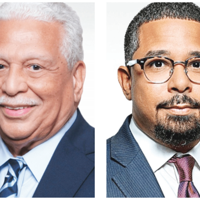
Reviving the Legacy of Black-Owned Banks: A Conversation with Liberty Bank Leaders
In the fall of 1968, America was still wrestling with the aftermath of the civil rights movement and the tragic assassination of Dr. Martin Luther King Jr. In his final speech, delivered just hours before his death, Dr. King emphasized the crucial role of supporting Black-owned businesses, particularly banks. “We want a bank-in movement in Memphis,” he urged, highlighting the necessity of redirecting financial resources toward strengthening Black institutions.
The Importance of Black-Owned Banks
Today, the call for a renewed focus on Black-owned banks remains ever relevant. Leaders like Alden J. McDonald Jr., the CEO of Liberty Bank, America’s largest Black-owned bank, emphasize that supporting these institutions is vital for fostering Black homeownership, business development, and community growth. Liberty Bank, headquartered in New Orleans, boasts over a billion dollars in assets, underscoring a strong legacy and a commitment to serving underserved communities.
Historical Foundation and Community Focus
Alden McDonald reflects on Liberty’s inception in 1972, highlighting its evolution into a bank dedicated to serving the African American community. “Our mission was to provide equitable access to financial resources,” he shares. The bank soon focused on areas like mortgage loans, recognizing that homeownership is a key driver of economic empowerment.
Todd O. McDonald, Alden’s son and Liberty’s president, addresses the dual challenge of financial sustainability and community service: “We built this bank on understanding the daily challenges faced by our community. Profitability is essential for sustainability, but it must align with our community’s needs.”
Navigating Historical Challenges
The journey hasn’t been without challenges. Alden recalls the devastation of Hurricane Katrina in 2005, which uprooted many lives and forced Liberty to rebuild nearly from scratch. “We lost our records and a significant portion of our customer base,” he explains. However, the community rallied to help. “We understood that where there are obstacles, there are also opportunities.”
This resilience is a hallmark of Liberty Bank’s history, as it has thrived through various economic downturns by remaining adaptable and committed to community needs.
Strategies to Bolster Community Support
One pressing question remains: How can the community effectively support Black banks? Alden urges, “When you deposit your money at Liberty, you’re helping us lend to people in your community.” He emphasizes the role deposits play in creating jobs and fostering local economic growth.
Todd adds that expanding the bank’s footprint—both physically and through technology—is crucial for attracting deposits. “By opening branches in new neighborhoods and embracing digital solutions, we can serve more people while helping our existing clientele.”
The Role of New Technologies and Generational Shift
While traditional banking faces increasing competition from fintech, Todd acknowledges the necessity for Black-owned banks to adapt. “Younger generations engage differently; they’re drawn to digital solutions,” he admits. “But they still need banks to process their transactions.”
This perspective underscores the importance of educating communities about the difference between fintech solutions and banking institutions. Todd passionately argues against predatory lending practices, noting that refinancing high-interest loans through Black banks can drastically improve individuals’ financial situations.
The Future Vision for Black-Owned Banks
Reflecting on the future, Todd and Alden discuss the critical goals of the National Bankers Association, which represents not only Black-owned banks but also institutions led by other marginalized groups. Todd stresses that the overall goal is collective growth, aiming to increase visibility and support for minority-owned institutions.
“The historical lack of support for Black banks poses significant challenges,” he notes. “We can learn from the cohesiveness seen in other communities. Imagine the economic power if we directed our funds within our own entities.”
Supporting Financial Literacy
To bridge the gap, Todd suggests a targeted advocacy campaign to educate the community on the importance of using Black-owned banks. A concerted effort could lead to an awakened consciousness about economic empowerment, as well as a shift in financial habits.
“My dream,” Todd shares, “is for every household to have at least one account with a Black-owned bank. This way, every deposit transforms into an investment within our community.”
Being strategic and intentional about financial choices can pave the way for a more equitable future, reinforcing the legacy of Dr. King’s vision.
A Call for Commitment and Collaboration
As the discussion draws to a close, the McDonald family exemplifies the importance of commitment—both to banking practices and to community investments. By fostering dialogues like theirs, the pathway toward uplifting Black-owned banks and the communities they serve becomes clearer.
This conversation not only highlights the significant role of Black-owned banks in economic health but also underscores the community’s essential role in ensuring their sustainability and growth for future generations.