


### A Critical Perspective on U.S. Foreign Policy: The Stance from France and Germany
In an unprecedented display of diplomatic candor, the presidents of France and Germany have issued stern critiques of U.S. foreign policy under Donald Trump. Their comments highlight concerns that Washington is straying from established international norms, posing potential threats to global stability. Emmanuel Macron and Frank-Walter Steinmeier have underscored the fragility of the post-World War II international order, which both leaders fear is at risk of disintegration.
### Breaking Free from International Rules
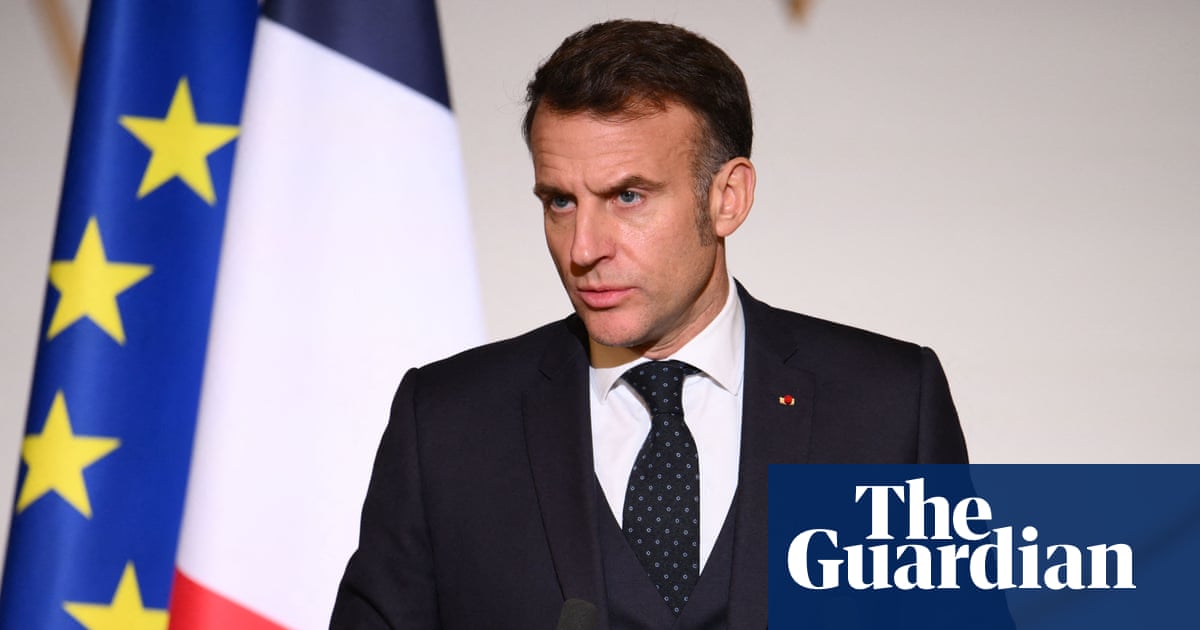
Emmanuel Macron, addressing France’s diplomatic corps at the Élysée Palace, described the United States as an “established power” that is progressively alienating its allies. He articulated a sense of betrayal felt across Europe, stating, “the US is gradually turning away from some of its allies and breaking free from the international rules that it was until recently promoting.” This unsettling shift raises critical questions about the effectiveness of multilateral institutions, with Macron lamenting that they are functioning “less and less effectively” in a world dominated by great power rivalry.
Macron’s remarks can be interpreted as a rejection of what he perceives as new forms of colonialism and imperialism, asserting that France seeks greater strategic autonomy. He emphasized the notion of self-reliance, particularly in the realms of defense and diplomacy, suggesting a push for “less dependence on the US and China.” This strategic pivot reflects a growing desire among European nations to chart their own course in foreign policy.
### Concerns Among EU Leaders
The urgency of these comments paints a complex picture for EU leaders, who find themselves caught between maintaining international law and safeguarding relationships with the U.S.—an indispensable partner in economic and military matters, especially in the context of the ongoing conflict in Ukraine. The challenge ahead is formidable as leaders struggle to forge a unified response to Washington’s actions, which some see as increasingly unilateral.
Though both Macron and Steinmeier refrained from direct references, their statements coincided with heightened tensions following a controversial U.S. military operation in Venezuela. As conversations surrounding U.S. ambitions to acquire regions like Greenland intensify, the EU’s foreign policy chief, Kaja Kallas, voiced concerns about potential repercussions, questioning, “If this is a real threat… then what would be our response?”
### NATO’s Strategic Considerations
In Brussels, NATO ambassadors convened to discuss the implications of the evolving geopolitical landscape. With mounting concerns over Arctic security, there was consensus on the necessity for a stronger military presence in the region to deter potential threats. While specifics remain under deliberation, suggestions have emerged to model responses after NATO’s existing missions in Eastern Europe.
### Defending Democracy and Global Order
Steinmeier echoed Macron’s apprehensions during remarks made at a symposium marking his 70th birthday. The German president warned that the erosion of the global order has reached a troubling stage, where smaller states could find themselves defenseless amidst the actions of more powerful nations. He identified the U.S.’s recent behaviors as indicative of a “breakdown of values,” which jeopardizes democracy worldwide and threatens to transform the global landscape into a “robber’s den.”
His assertions carry a weighty undertone, emphasizing the necessity for a fortified European security policy, particularly in light of recent geopolitical upheavals. Steinmeier strongly posited that Germany must enhance its military capabilities to be taken seriously on the global stage, asserting that a robust national defense is fundamental for effective involvement in international matters.
### The Digital Domain and Information Integrity
In a broader context, Macron also illuminated the significance of safeguarding academic independence and securing a “controlled information space.” He asserted that the digital landscape should foster genuine exchanges of ideas, free from the biases of corporate algorithms. This perspective aligns with the EU’s recent legislative efforts, notably the Digital Markets Act (DMA) and the Digital Services Act (DSA), aimed at regulating big tech giants.
Despite criticism from the U.S., which views these regulations as coercive, Macron contended that such measures are crucial to protect the integrity of information and civil discourse across Europe.
### The Way Forward
As these discussions unfold, France and Germany are navigating a precarious geopolitical landscape marked by shifting alliances and eroding norms. The implications of U.S. foreign policy not only reverberate across the Atlantic but also set the tone for international relations at large. The perceptions expressed by Macron and Steinmeier mark a significant moment in the evolution of European diplomacy, signaling a potential recalibration of power dynamics in the coming years.