



Understanding Sage Group’s Debt and Its Implications for Investors
Howard Marks once wisely stated that the risk of permanent loss is the primary concern for practical investors, rather than mere share price volatility. In this context, evaluating a company’s debt structure becomes crucial. Excessive debt can jeopardize a company’s survival, pushing it towards bankruptcy or shareholder dilution. Let’s explore how Sage Group plc balances its debt and what that means for potential investors.
The Nature of Debt Risk
Debt serves as a double-edged sword for businesses. While it can facilitate growth by funding expansion, it also puts companies at the mercy of their creditors. When a business fails to meet its debt obligations, the implications can be severe. Bankruptcy is the worst-case scenario, but more commonly, companies are forced to dilute their equity during tough economic times to manage their debt. Conversely, when managed prudently, debt can fuel growth, especially when the returns on investment exceed the cost of borrowing.
Understanding the debt levels, alongside cash reserves, provides insight into how a company can manage financial obligations.
Sage Group’s Debt Overview
As of September 2025, Sage Group carried £1.48 billion in debt, a notable increase from £1.17 billion the previous year. However, the company also maintained £390 million in cash. Thus, its net debt stands at £1.09 billion.
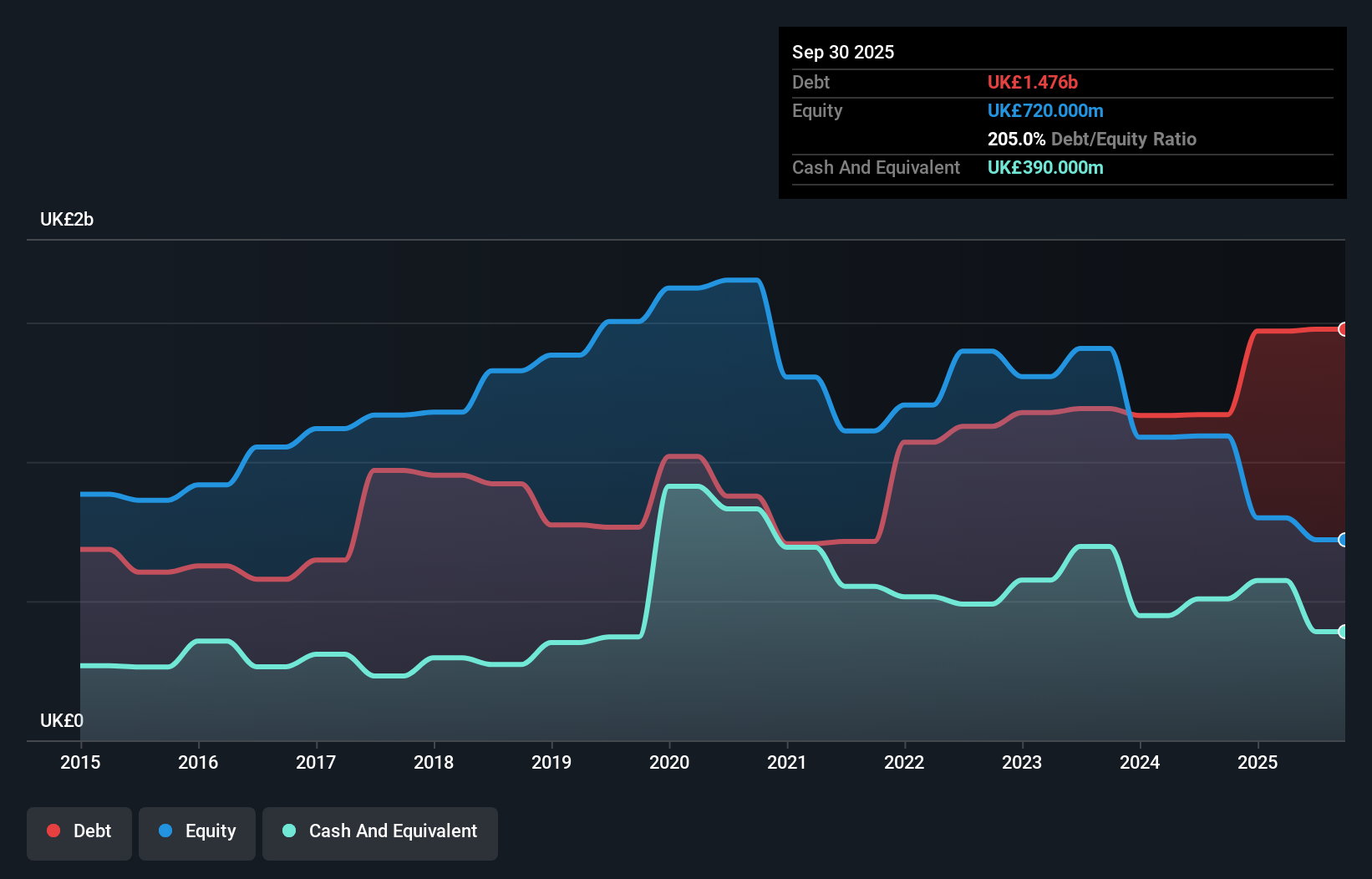
Analyzing Sage Group’s Balance Sheet
A deeper look into Sage Group’s balance sheet reveals total liabilities of £1.36 billion due within 12 months and £1.64 billion due beyond a year. Contrasted with £390 million in cash and £338 million in receivables due within a year, the company faces a shortfall of £2.27 billion when liabilities are set against its immediate cash flow.
Despite this imbalance, Sage Group’s market valuation of £10.2 billion suggests that raising capital to bolster its balance sheet, if necessary, wouldn’t be overly burdensome. However, it prompts further scrutiny of whether the company can manage its debt effectively without causing shareholder dilution.
Metrics to Assess Debt Levels
Two key ratios are employed to evaluate Sage Group’s debt situation relative to its earnings:
-
Net Debt to EBITDA Ratio: This ratio offers insight into how much debt the company carries in relation to its operational earnings before interest, taxes, depreciation, and amortization. For Sage Group, this ratio stands at a moderate 1.8, signaling a prudent approach to debt management.
-
Interest Cover Ratio: This metric shows how many times earnings before interest and tax (EBIT) can cover interest expenses. Sage Group has a robust interest cover of 12.4 times, providing extra assurance of its ability to meet interest obligations.
If Sage continues to grow its EBIT at a rate of 16%, as it has in the last year, managing its debt should remain feasible.
Free Cash Flow’s Role in Debt Management
Free cash flow is essential for paying off debt; this is a more reliable indicator than accounting profits. Sage Group has demonstrated impressive performance here, generating free cash flow equivalent to 88% of its EBIT over the past three years. This ability to convert earnings into cash strengthens its position to repay debts efficiently.
Overall Assessment of Sage Group’s Debt
Sage Group’s solid interest cover highlights its manageable debt situation, coupled with strong conversion rates from EBIT to free cash flow. The company appears to utilize debt sensibly, which enhances equity returns. However, it’s critical to remember that assessing debt extends beyond just balance sheets; operational and market conditions can also bring risks.
Investors should remain vigilant, as Sage Group has displayed certain warning signs that merit consideration. If you’re interested in healthier alternatives, take a look at companies with robust growth and strong balance sheets, which may be more aligned with investor risk profiles.