


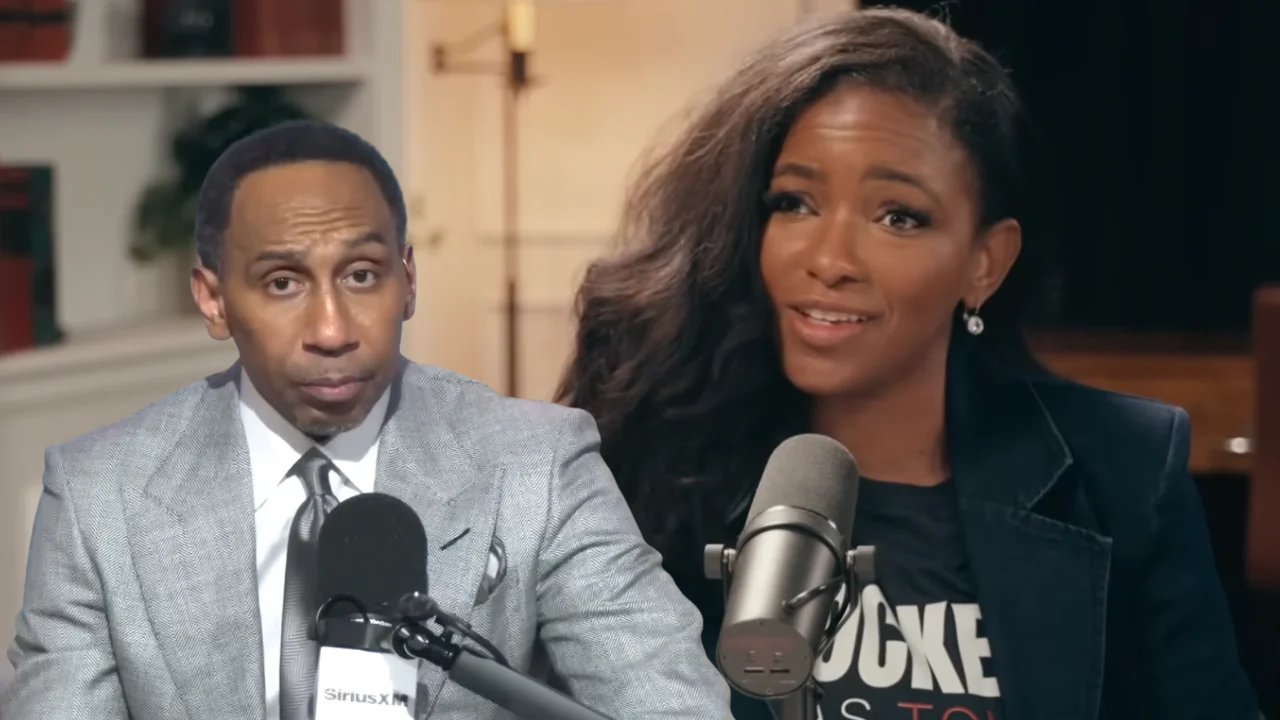
The Clash Between Jasmine Crockett and Stephen A. Smith: A Modern Political Showdown
U.S. Congresswoman and Texas Senate candidate Jasmine Crockett has recently reignited tensions with prominent sportscaster and political commentator Stephen A. Smith. Their fiery exchange reflects deeper themes in contemporary discourse about race, justice, and political criticism.
Awarding a “Sit Your A— Down” Moment
In a recent episode of the podcast “At Our Table with Jaime Harrison,” Crockett humorously yet pointedly presented Stephen A. Smith with the “Sit Your A— Down” award. This accolade, reserved for figures who’ve overstayed their welcome in public discourse, was bestowed upon Smith for his repeated criticisms of Crockett and for his controversial remarks justifying the fatal ICE shooting of Renee Good in Minneapolis.
Crockett invoked the award with a playful wordplay, suggesting that “SASS” perfectly represents her sentiments about Smith’s statements. While the tone remained light-hearted, the underlying message was serious, pointing to Smith’s perceived insensitivity and lack of accountability.
The Backstory: Criticism and Controversy
Stephen A. Smith first entered the spotlight regarding Crockett’s political stance when he accused her of deploying “rhetoric for the streets.” This statement was made in the context of her outspoken criticisms of former President Donald Trump, particularly her sharp language that Smith deemed irresponsible. As an ESPN anchor, Smith has often used his platform to express opinions spanning from sports to politics, but his recent focus on Crockett has raised eyebrows.
Crockett, a law school-educated civil rights attorney, countered Smith’s critiques by questioning the impact of his remarks on her constituents. The congresswoman has emphasized her commitment to addressing systemic issues that affect marginalized communities, and she argues that Smith’s criticisms distract from these vital conversations.
The ICE Shooting Incident
The situation escalated further when Smith attempted to justify the actions of ICE agents involved in the tragic shooting of Renee Good. Good, a 37-year-old legal observer, was shot multiple times as she tried to escape from agents, leading to significant outrage and demands for accountability. Crockett expressed her dismay at how Smith framed this incident, arguing that his comments not only misrepresented the situation but also detracted from the broader issue of police violence against marginalized communities.
Smith defended his stance by claiming that the shooting was justified based on specific interpretations of the law. However, this perspective has faced considerable backlash, especially from those who argued that visual evidence contradicted Smith’s narrative, raising critical questions about accountability and transparency in law enforcement.
A Personal Touch: Crockett’s Response
Crockett’s personal denunciation of Smith captures a sense of frustration that resonates with many. She noted the pattern of Smith’s ongoing attacks on Black women, expressing concern over a “hurt” that appears to manifest in his public commentary. Her commentary, laced with both humor and serious critique, invites audiences to consider not just the words said, but the motivations behind them.
“Somebody hurt you…bad,” she remarked, inviting listeners to reflect on the implications of Smith’s rhetoric in a broader societal context. The prospect of a media figure constantly belittling voices that challenge the status quo adds layers to the conversation about representation and accountability in public life.
Reconciliation, but Not Without Conditions
Despite the tensions, there is a hint of reconciliation. Smith has issued apologies to Crockett, acknowledging some of his remarks as offensive. Still, he maintains that his critiques stem from a place of concern for effective political dialogue. This notion of “tough love” raises questions about the boundaries of criticism: How do we evaluate critique that claims to be constructive but often causes harm?
Crockett’s challenge to Smith serves as a broader call to media figures—especially those in positions of influence—to consider the weight of their words. As public discourse evolves, it becomes ever more important to balance robust critique with respect, especially for those who have historically been marginalized.
The Bigger Picture
Crockett’s and Smith’s back-and-forth is emblematic of larger societal conversations about race, representation, and responsibility in the media. As they navigate this complex landscape, their exchange serves as a reminder of the importance of thoughtful dialogue and accountability, especially in an age where public figures wield substantial influence over public opinion and policy.