


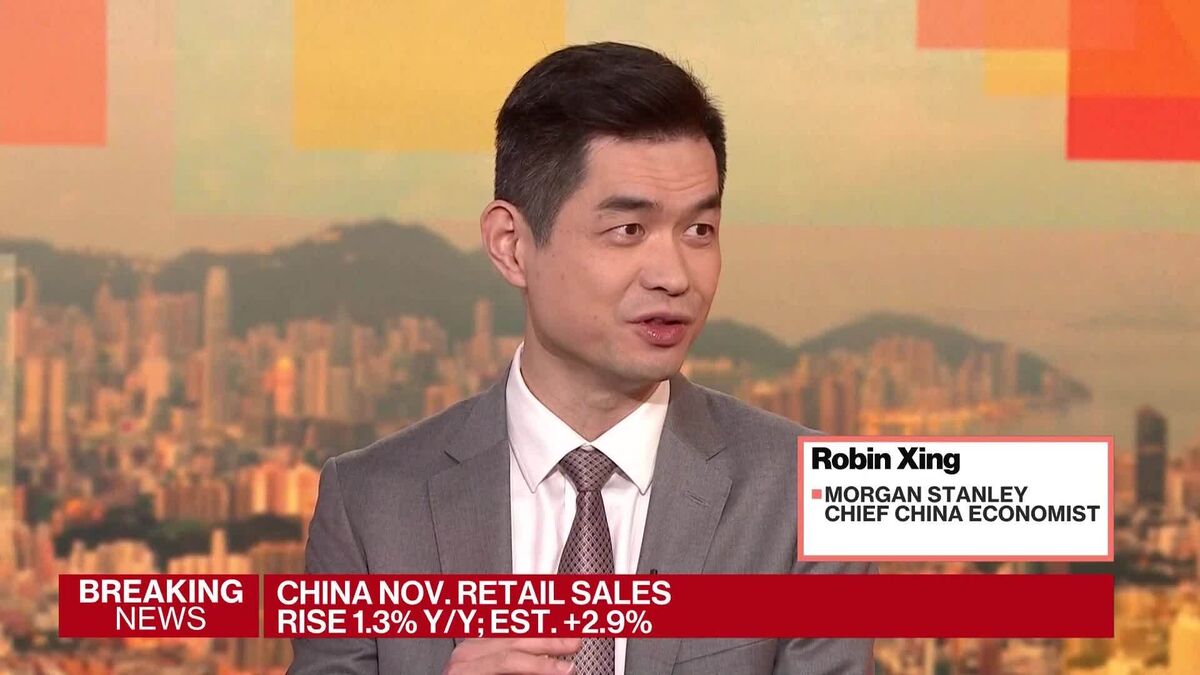
Rebalancing China’s Social Safety Net: Insights from Chief Economist Robin Xing
In recent discussions regarding China’s economic landscape, Chief China Economist Robin Xing has emphasized a crucial pivot: rebalancing the social safety net to stimulate consumer spending. This comes on the heels of new data revealing fluctuations in retail sales and home prices, underscoring the need for a proactive approach to economic recovery.
The Current Economic Context
China’s economy, which has long relied on manufacturing and exports, is undergoing significant transformations. Recent data from the country’s National Bureau of Statistics indicates that while there has been some recovery in retail sales, the overall consumer sentiment remains subdued. Home prices, once a symbol of wealth for many, are witnessing a downturn, prompting concerns about the stability of the real estate market and overall consumer confidence. In this context, Xing’s remarks resonate strongly, highlighting a pivotal moment for economic strategy.
Understanding the Social Safety Net
At its core, a social safety net refers to the set of programs designed to provide financial support to individuals, especially during times of need. In China, these benefits can include unemployment insurance, health care, pensions, and housing assistance. As the country grapples with an aging population and rising urbanization, the existing safety net needs reevaluation to ensure it caters effectively to diverse demographic groups. This is where Xing’s views come into play; by rebalancing these systems, the government could significantly enhance disposable income for many citizens, leading to increased consumption.
Boosting Consumer Spending
Consumer spending is vital for any economy, particularly one emerging from years of growth slowdown. Xing argues that by rebalancing the social safety net, the Chinese government can bridge the gap between savings and consumption. Historically, Chinese citizens have been known to save a significant portion of their income, often for future health care or education needs. By making social safety provisions more robust and accessible, people may feel more secure about their financial futures, leading them to spend rather than save excessively.
Improving Health Care and Education
Two critical areas that require attention are health care and education. A more responsive health care system can alleviate the financial burdens families face when medical emergencies occur, thereby reducing the need to save excessively in anticipation of health costs. Similarly, investing in education not only benefits individuals but also boosts overall economic productivity. When people see substantial returns on these essential services, their willingness to spend on non-essential goods and services likely increases.
Addressing the Real Estate Market
The real estate market plays a significant role in China’s economy, and its current instability poses challenges for consumer confidence. With home prices declining, many potential homeowners are hesitant to engage with the market. This hesitation can be alleviated through supportive policies that stabilize prices and make purchasing more accessible. Implementing measures like subsidies for first-time homebuyers or incentives for developers to maintain reasonable pricing could harmonize the housing market and boost consumer interest.
Rethinking Pension Systems
Xing also highlights the importance of modernizing pension systems. As China’s population ages, ensuring a stable income for retirees becomes increasingly vital. By restructuring pensions to offer more substantial and predictable income, the government can encourage elder citizens to transition from saving for retirement into spending during their retirement years. Such a shift could stimulate the economy and provide a buffer against the burdens of elderly poverty.
The Role of Technology and E-commerce
As we move toward a more digital economy, the role of technology cannot be understated in reshaping consumer behavior. The rise of e-commerce platforms has already altered how consumers shop and spend. By integrating social safety nets with digital solutions—like health and education services accessed online—authorities can make these services more efficient and user-friendly. Such integrations not only empower consumers but also drive rapid economic growth by reaching untapped markets.
The Need for Political Will and Collaboration
Successfully rebalancing the social safety net requires not just economic rationale but also strong political will and collaboration among various sectors. Policymakers, economists, and business leaders need to work together to craft innovative solutions that address the nuanced needs of the population. Stakeholders must prioritize the voices of everyday consumers to develop a safety net that reflects their realities and fosters trust in the economic system.
Conclusion
The dialogue led by Robin Xing brings forth a comprehensive view of the distinct challenges and opportunities facing China’s economy. As the nation looks to reinvigorate consumer spending amidst evolving demographics and economic pressures, rebalancing the social safety net emerges as a potent strategy. By addressing health care, education, housing, and pension systems with a modern lens, China can work toward a more prosperous future that benefits all its citizens.