



The 2030 World Cup: Morocco’s Preparations and Aspirations
The 2030 World Cup is shaping up to be a groundbreaking event, as host nations begin to articulate their logistical strategies and necessary infrastructure enhancements to accommodate the tournament’s expanded demands. Among the co-hosts is Morocco, which is reportedly considering a strategy akin to that previously adopted by the United States in preparation for their own upcoming World Cup.
A Multinational Hosting Approach
While the 2026 World Cup will showcase matches across the United States, Canada, and Mexico, the 2030 edition will feature an adventurous co-hosting arrangement involving Spain and Portugal, with opening matches slated to take place in Argentina, Uruguay, and Paraguay. As one of the primary hosts, Morocco is investigating the feasibility of staging a major international competition prior to 2030, aiming to bolster their preparedness.
Club World Cup Interest
Reported by RMC Sport, Morocco is emerging as a credible candidate to host the 2029 FIFA Club World Cup. “According to several converging sources, Morocco is one of the most credible candidates to host the 2029 FIFA Club World Cup,” the outlet noted, suggesting high expectations that Morocco could indeed secure the tournament.
Rationale Behind the Interest
FIFA’s interest in choosing Morocco as the venue for the expanded second edition of the Club World Cup can be attributed to the desire to utilize the competition as a large-scale rehearsal for the country’s readiness. With numerous stadiums still under construction or undergoing renovations, hosting a significant tournament just a year before the World Cup would function as an ideal test of both infrastructure and organizational capabilities.
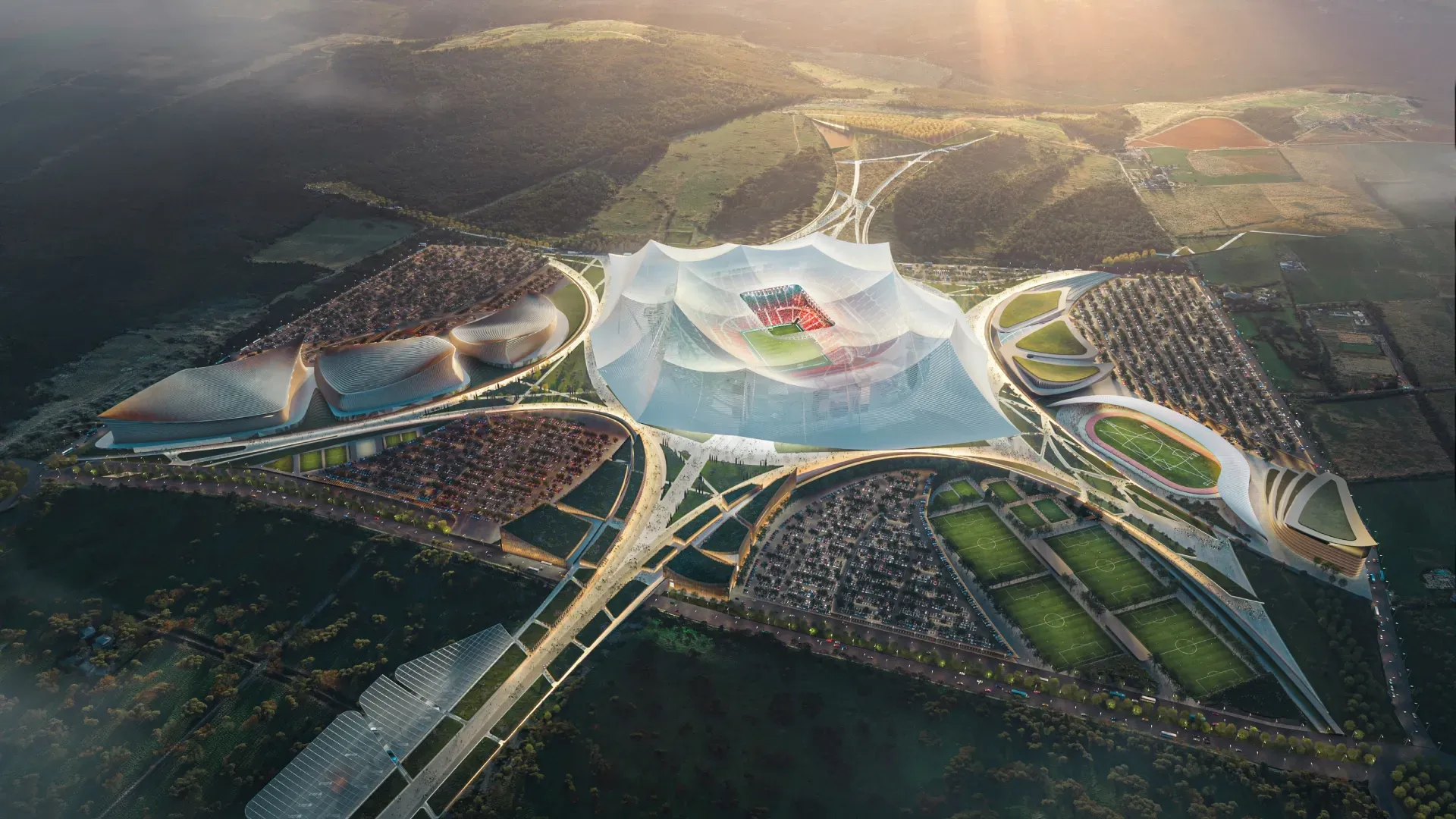
Digital renderings of the proposed Stade Hassan II stadium in Morocco.
Hosting Sequence Leading Up to 2030
Morocco is also poised to host the 2025 Africa Cup of Nations, which could be followed by the Club World Cup in 2029, setting the stage for the 2030 World Cup. This sequence closely mirrors the strategic approach taken by the United States, which will host the 2024 Copa América before staging the inaugural expanded Club World Cup, effectively preparing both venues and operational frameworks for the 2026 event.
Architectural Ambitions
Among Morocco’s flagship projects in anticipation of the 2030 World Cup is the Hassan II Stadium, currently being constructed in El Mansouria, a commune in Benslimane Province just east of Casablanca. Slated to open in 2028, this stadium is projected to have a capacity of 115,000, making it not only the largest soccer stadium in Morocco but also the largest in the world, second overall only to India’s Narendra Modi Stadium.
Uncertainty Surrounding FIFA’s Decisions
As the buzz surrounding World Cup preparations grows, many nations—including Brazil, Qatar, and even the United States—have expressed interest in hosting the 2029 Club World Cup. However, Morocco’s forthcoming status as a World Cup host could provide it with a strategic advantage in the selection process.
Despite the excitement surrounding these potential events, it’s important to note that FIFA has yet to announce the host nation or nations for the 2029 Club World Cup. An official decision on this matter is still pending, with a clear timeline for resolution remaining elusive. Over the coming months and years, FIFA is expected to finalize its long-term tournament planning, adding an element of anticipation to the unfolding narrative of global soccer events.