


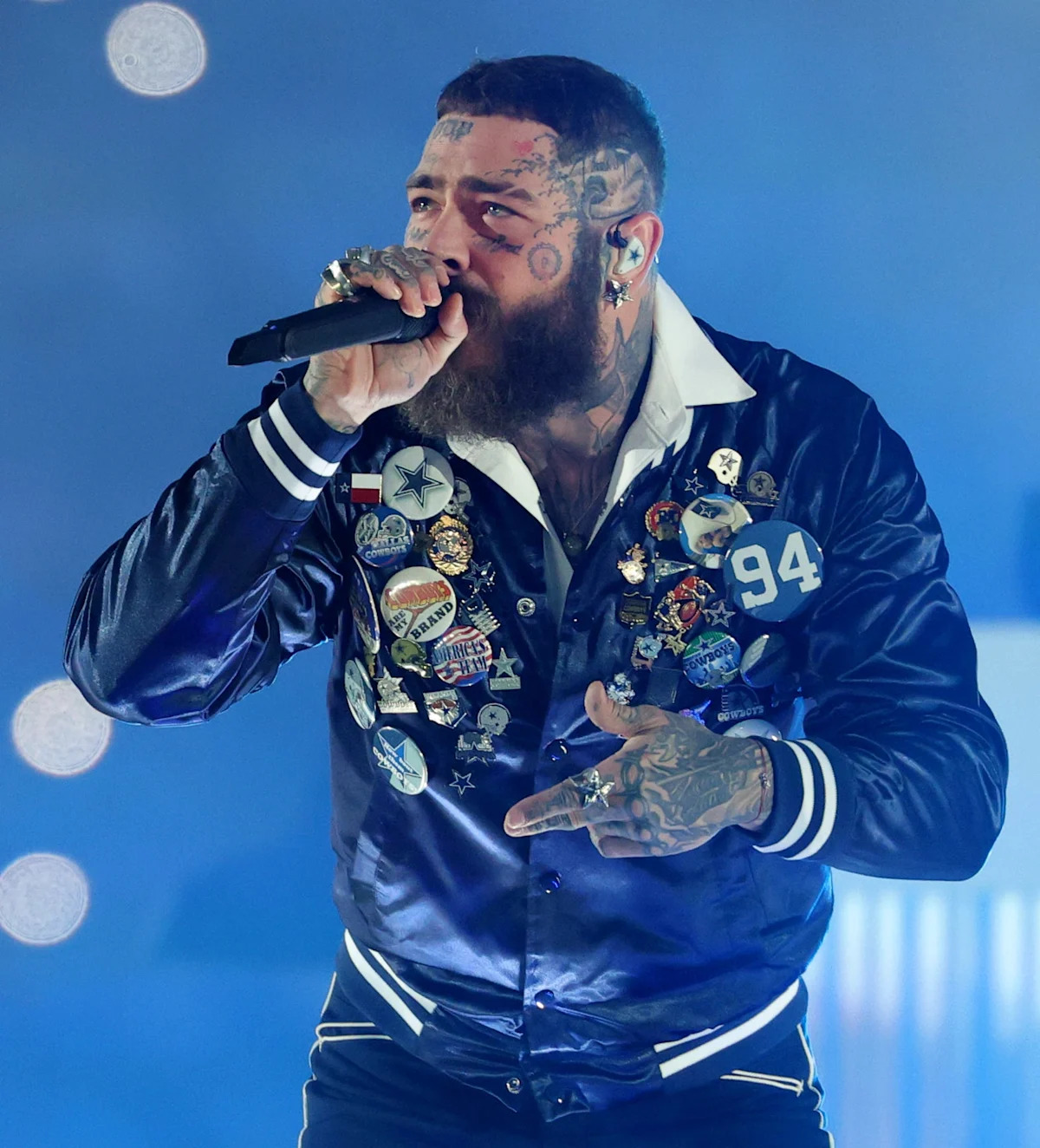
Post Malone’s Heartfelt Tribute at the Thanksgiving Halftime Show
This article discusses suicide and suicidal ideation. If you or someone you know is struggling or in crisis, help is available. Call or text 988 or chat at 988lifeline.org.
ARLINGTON, Texas — In a world where celebrity performances often prioritize spectacle over substance, Post Malone reminded us of the power of connection and community during his halftime show at the Thanksgiving NFL game. The energy in AT&T Stadium was palpable as Malone declared, “We love you 94, we love you!” to the roaring crowd. This heartfelt declaration was not just an entertaining gesture; it was a poignant tribute to Marshawn Kneeland, a former Dallas Cowboys defensive tackle who tragically died by suicide earlier that month.
A Personal Connection
Malone wore a patch with the number 94 on his jacket, a clear nod to Kneeland’s legacy. This act signified more than just respect; it reflected Malone’s deep emotional connection to the Cowboys and the community. As a lifelong fan, his ties to the franchise run deep—his father, Rick Post, spent nearly 15 years with the team as the assistant director of food and beverage. This familial connection intertwined with the collective mourning of Kneeland’s death, making Malone’s tribute all the more touching.
Speaking Up for Mental Health
After the performance, Malone articulated the significance of having someone to lean on during difficult times. In an interview, he shared, “The biggest thing for any of us is having someone to lean on when you need it the most.” His words resonated powerfully, especially in light of recent events and the ongoing societal struggles surrounding mental health. The awareness surrounding these issues is crucial, especially in a culture that often stigmatizes discussions about mental health.
The Influence of Dak Prescott
Malone’s sentiments are bolstered by the advocacy of Cowboys quarterback Dak Prescott, who has become a powerful voice for mental health awareness following the suicide of his brother, Jace, in 2020. The NFL star has emphasized the importance of seeking help and creating a supportive environment for those in need. During the show, Malone noted, “It’s very important to be able to have someone you can talk to. I’ve always stood for that.” This unity between artists and athletes highlights a growing movement within sports and entertainment to address mental health issues more openly.
A Childhood Dream Realized
Malone’s choice to perform at the halftime show held special meaning for him. Growing up, he spent countless nights sleeping at Texas Stadium, where his father worked late shifts. The nostalgia of returning to that environment as a major performer was not lost on him. Charlotte Jones, Cowboys’ executive vice president and chief brand officer, highlighted Malone’s nervousness about performing, saying, “He was more nervous about the game than he was the halftime show.” For Malone, it was a dream fulfilled against the backdrop of a serious message.
A Legacy of Support
Jerry Jones, the owner of the Cowboys, also expressed his enthusiasm about Malone’s performance. Reflecting on Malone’s history with the Cowboys, Jones shared, “You know his background… he would sleep in (Texas Stadium) when his dad was in charge of all our beverages.” The juxtaposition of Malone as a child sleeping on a cot at the stadium and returning years later as a celebrated artist is nothing short of inspirational. Jones’s recollections serve to encapsulate the journey from humble beginnings to a celebrated platform, showcasing the stadium not only as a venue for sports but also as a space for community and expression.
A Unique Moment in Time
As the halftime show transitioned to kick off the Salvation Army’s annual Red Kettle campaign, it became clear that Malone’s performance transcended entertainment. The convergence of music, sports, and mental health advocacy added layers of meaning to the spectacle. “This is a special place,” Malone remarked, and his performance was a significant reminder of the profound impact that public figures can have when they choose to speak out.
In today’s climate, where conversations about mental health are more critical than ever, Malone’s heartfelt tribute is a renewed call to action for support and compassion within our communities. Each event like this serves as a reminder that healing starts with a conversation, and public figures can play an essential role in initiating those dialogues.