


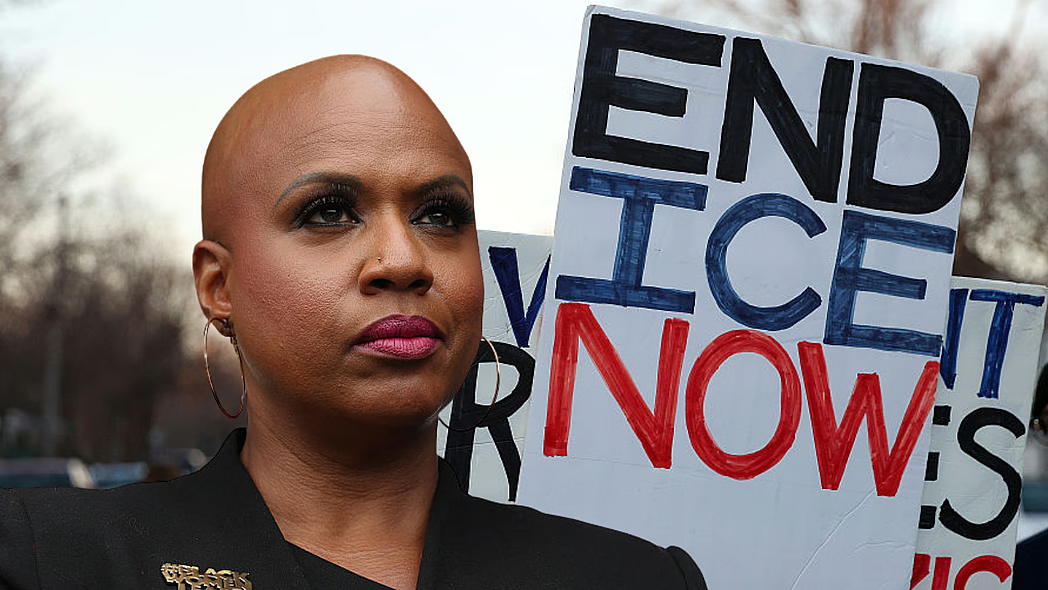
In the wake of tragic events involving Immigration and Customs Enforcement (ICE) agents, U.S. Congresswoman Ayanna Pressley has stepped forward with a bold legislative proposal. Following the fatal shootings of individuals like Renee Good and Keith Porter, Pressley introduced a bill in the U.S. House of Representatives aimed at abolishing qualified immunity, thereby enhancing accountability for ICE agents.
Pressley articulated her concerns in a powerful statement: “We cannot stand idly by while rogue federal agents—emboldened by the Trump White House—ravage our communities, brutalize families, and kill our neighbors on the street in cold blood.” This sentiment underlines a larger movement demanding justice and accountability from federal law enforcement.
The proposed legislation, known as the Qualified Immunity Abolition Act of 2026, is co-led by Senator Ed Markey in the Senate. The bill seeks to empower victims of civil rights violations by granting them the right to sue federal law enforcement officers, as well as state and local officers, for misconduct, effectively eliminating the qualified immunity defense in court.
The urgency of this proposal was highlighted just days after the fatal shooting of Renee Good, a 37-year-old mother and poet, by an ICE agent in Minneapolis. Similarly, Keith Porter, a 43-year-old father, was shot by an off-duty ICE officer in Los Angeles on New Year’s Eve, spurring further calls for accountability within the agency.
In a joint statement from Pressley’s and Markey’s offices, they echoed the sentiment that expanded legislation is vital for delivering justice for families affected by law enforcement misconduct, particularly in cases involving ICE agents. “All too often, the flawed and judge-made doctrine of qualified immunity shields law enforcement officers from liability, even when they commit egregious misconduct or use excessive force,” they noted. Their proposed act aims to eliminate this unjust defense in cases against federal law enforcement officers, allowing victims to seek redress in court.
Senator Markey added a crucial point: “With ICE agents trampling over our laws, our rights, and our communities, we must demand justice and hold wrongdoers accountable.” This marks a significant push for accountability in a legal landscape often criticized for protecting law enforcement from repercussions.
The conversation surrounding qualified immunity gained traction in 2020, particularly following the murder of George Floyd, an event that ignited nationwide protests and calls for police reform. At that time, Pressley and Markey introduced the Ending Qualified Immunity Act, attempting to dismantle a legal doctrine that has faced increasing scrutiny.
Qualified immunity, a concept established by the Supreme Court in 1967, allows government officials to avoid personal liability in cases of misconduct. Critics argue that this doctrine has been misapplied, shielding officers from accountability, even in blatant violations of constitutional rights. Pressley and Markey’s offices argue that Congress never intended for this doctrine to protect public officials from liability.
Referencing the Civil Rights Act of 1871, sometimes known as the Ku Klux Klan Act, the lawmakers pointed out that the Act was designed to allow individuals to sue government officials, including law enforcement officers, for civil rights violations. Over the years, however, federal courts have increasingly narrowed the scope of the Act by expanding qualified immunity, effectively removing accountability for egregious misconduct.