


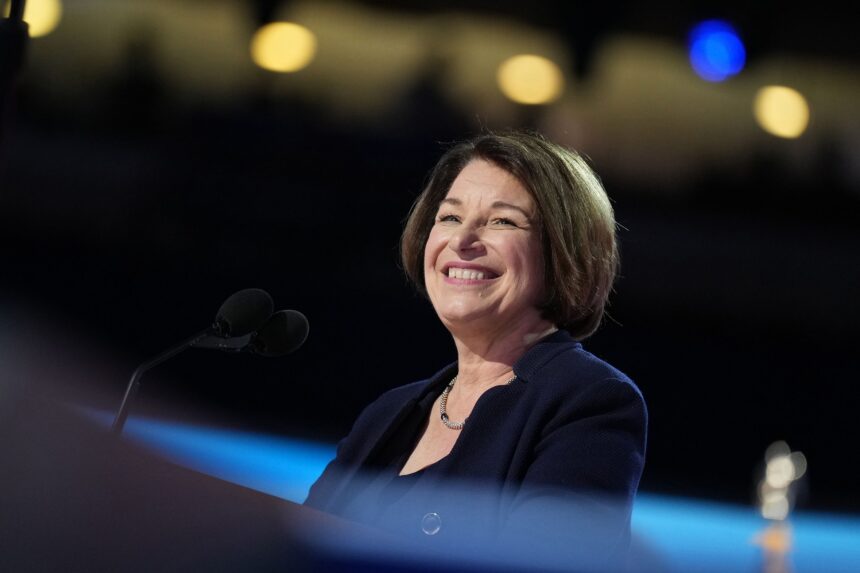
Amy Klobuchar’s Bid for Minnesota Governor: A Political Landscape in Flux
Introduction
In a significant political maneuver, Senator Amy Klobuchar of Minnesota has officially filed paperwork to form a campaign committee aimed at securing the governorship of her home state. This decision comes at a crucial time when Minnesota finds itself at the heart of intense national debates around immigration and welfare policies. As Klobuchar prepares for this new challenge, the dynamics within the state are rapidly evolving, with implications for both the immediate political landscape and the broader electoral climate.
Context of Klobuchar’s Decision
The timing of Klobuchar’s gubernatorial aspirations is particularly noteworthy, given the abrupt withdrawal of Governor Tim Walz from his reelection bid amid a sprawling federal investigation into welfare fraud. This scandal has drawn national attention, particularly due to its exploitable aspects by the Trump administration, which has emphasized the narrative of governmental inefficiency and mismanagement in Democratic-led states. The resignation of Walz not only leaves a political vacuum but also shifts the spotlight onto Klobuchar as she contemplates leaving her Senate seat, where she has served for nearly two decades.
Klobuchar’s Popularity and Track Record
At 65, Amy Klobuchar has established herself as a prominent figure in Minnesota politics, having won four consecutive Senate elections with significant margins. Her public service background includes a tenure as the Hennepin County Attorney, which has undoubtedly bolstered her image as a pragmatic leader capable of addressing complex issues. Known for her incisive questioning in high-stakes judicial hearings, Klobuchar has long portrayed herself as a candidate who can straddle the line between liberal and moderate constituents.
The Politics of Immigration and Public Safety
Amid rising tensions over immigration, sparked by the tragic death of Renee Good—an incident that has fueled protests and drawn significant media coverage—Klobuchar’s campaign will likely navigate a complex sociopolitical landscape. With the Department of Justice launching investigations into several Democratic officials in Minnesota and increased federal scrutiny regarding immigration enforcement, the issues of public safety and community relations are set to dominate her gubernatorial campaign. Klobuchar has been vocal about the need for an objective federal inquiry into such incidents, framing her candidacy against a backdrop of urgent reform and increased accountability.
Navigating Party Dynamics
Klobuchar’s potential candidacy stands at a crossroads as the Democratic field appears to be taking shape. Party strategists believe she could clear the field, making her the presumptive nominee without significant opposition. Conversely, the Republican landscape is crowded with candidates, each eager to leverage the ongoing controversies for electoral gain. With Minnesota trending away from split-ticket voting—an indicator of shifting party loyalty—the challenge for Klobuchar will be to unify a Democratic base while also appealing to moderate Republicans and independent voters.
Addressing the Fraud Scandal
The welfare fraud scandal has been a double-edged sword—posing serious challenges but also providing Klobuchar with opportunities to advocate for systemic changes. As over 90 individuals have been charged, many hailing from the Somali community, Klobuchar’s stance on immigration and community support will be scrutinized closely. Navigating this sensitive issue will be critical before voters, particularly as national narratives around immigration become more polarized.
Klobuchar’s Dual Role and Future Ambitions
While Klobuchar is exploring the governorship, she recognizes the complexities of her current Senate role. With over four years remaining in her term, she does not plan to resign outright, indicating a strategic approach to balancing both positions in a potential transition. If she wins, Klobuchar might leave the Senate, allowing the former Governor Walz to appoint her successor, or she could choose someone to fill her seat after assuming the governorship. This flexibility could prove advantageous for Klobuchar’s political future, allowing her to maintain strong ties with party leadership and constituents alike.
Preparing for the Midterms
As Minnesota’s political landscape shifts dramatically, Klobuchar’s entry into the gubernatorial race signals an attempt to capitalize on the growing discontent surrounding current leadership and federal policies. Her ability to appeal to a diverse electorate, track record of electoral success, and recognition of the urgent need for effective governance will be pivotal as she embarks on this new journey. The stakes are particularly high, not just for her political career but for the Democratic party’s ability to retain control over a state that has historically been a stronghold.
Legislative Achievements and National Focus
Klobuchar’s legislative accomplishments, especially in the realm of electoral reforms and public policy, position her as a candidate prepared to tackle governance challenges head-on. Having served as the chairwoman of the Senate Rules Committee during the Capitol riots, she has a unique perspective on national security and civic responsibility—issues that resonate deeply with a wary electorate. With her eyes on a potential future presidential run, Klobuchar recognizes that success in Minnesota could be a pivotal stepping stone in her career.
Conclusion
As the political narratives surrounding Klobuchar’s campaign unfold, one thing remains clear: her strategic maneuvers and public perceptions will heavily influence not just the gubernatorial race, but the broader political landscape in Minnesota and beyond. With the eyes of both supporters and critics focused on her next moves, the implications of her candidacy could resonate far into the future.