


Tensions Rise: US-South Africa Relations and the Controversy Surrounding Afrikaner Refugees
Context of the Incident
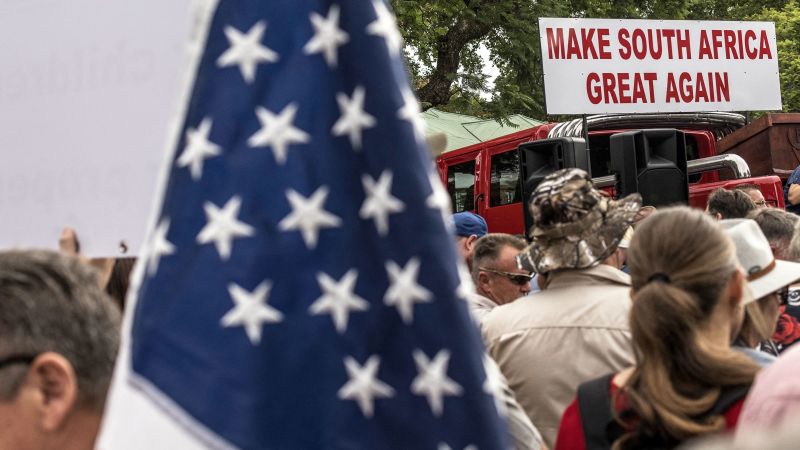
Recently, tensions flared between the United States and South Africa when the South African government briefly detained two US government employees. These individuals were on assignment in South Africa as part of the Trump administration’s significant and controversial initiative to facilitate the admission of Afrikaners—descendants of Dutch settlers—into the United States. This incident raises questions about the already strained diplomatic relationship between the two nations.
The Current Diplomatic Climate
The relationship between the United States and South Africa has been fraught with complications, especially following the Trump administration’s efforts to classify White South Africans as refugees. The South African government has officially rejected these assertions, particularly the narrative that a “genocide” is taking place against Afrikaners. Such claims, often echoed by Donald Trump, have been met with skepticism and strong refutations from South African authorities.
The Investigation and Response
It remains unclear why the US employees were initially questioned and briefly detained. The State Department voiced its concern, seeking immediate clarification and emphasizing the need for full cooperation from the South African government. Tommy Pigott, the State Department’s principal deputy spokesperson, asserted the administration’s commitment to standing up for US interests and personnel, firmly stating that interference in US refugee operations is unacceptable.
Contextualizing the Claims of Genocide
The Trump administration’s justification for resettling Afrikaners in the US hinges on claims of violence—specifically, that White farmers in South Africa are facing brutal killings and land confiscation. These assertions have been widely disputed. Investigative reports, including those from CNN, have found no substantial evidence to support the notion of a “white genocide” occurring in South Africa.
Resettlement Efforts and Challenges
Over the past year, US personnel, particularly from the US Citizenship and Immigration Services (USCIS), have been conducting “circuit rides” in South Africa to interview Afrikaners aspiring to immigrate to the US. This renewed focus comes alongside a drastic reduction in the annual refugee cap, limiting it to 7,500, primarily excluding the most vulnerable populations worldwide.
Government Actions and Diplomatic Fallout
In the wake of recent events, South African immigration officials approached a site where US officials were conducting refugee interviews. This action resulted in brief questioning of the two US government employees and detention of Kenyan nationals assisting with the process. Following the incident, all individuals involved were released. The American administration continues to collaborate with local partners in managing the admissions process.
The Role of Activist Organizations
Organizations like the Amerikaners, which work alongside the US government to facilitate the admission of Afrikaners, have taken to social media platforms to express urgent concerns about the operations in South Africa. Their involvement underscores the complexities of navigating immigration in the context of geopolitical strife and domestic tensions.
Recent Diplomatic Visits
The backdrop of these recent incidents includes a meeting earlier this year between President Trump and South African President Cyril Ramaphosa. During this gathering in the Oval Office, Trump reiterated his claims about the plight of White farmers, gravely impacting perceptions of South Africa’s governance and fostering an environment of mistrust.
Historical Perspectives
Trump’s focus on the alleged mistreatment of White South Africans is not a recent development. Throughout his administration, he has frequently echoed concerns about helping displaced White farmers. These remarks reflect a broader narrative that has become a cornerstone of his immigration policies. Furthermore, the administration has taken actions such as freezing aid to South Africa, expelling its ambassador, and purposely excluding the country from G20 events.
This ongoing saga between the United States and South Africa continues to evolve, shaping the future of their bilateral relations and significantly impacting the lives of individuals caught in the crossfire of a contentious immigration policy rooted in complex historical narratives.