


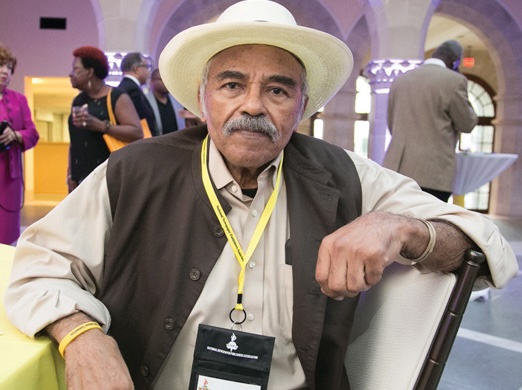
The Legacy of Thomas H. Watkins: A Pioneer of Black Journalism in New York City
A Bold Visionary
In a time when the odds were stacked against Black media, Thomas H. Watkins forged a path that would not only challenge the status quo but also lay the groundwork for future generations. Founding the New York Daily Challenge, he became the first Black owner of a daily newspaper in New York City, an achievement that stood as a testament to his entrepreneurial spirit and unwavering belief in the power of the Black press. Watkins passed away on December 19, 2025, at the age of 88, leaving behind a rich legacy of resilience and advocacy for Black voices in journalism.
The New York Daily Challenge: A Game Changer
The New York Daily Challenge, based in the vibrant neighborhood of Bedford-Stuyvesant, offered crucial coverage of Black political power, economic interests, and community matters. During its peak, the publication generated an impressive $30 million annually, employing a diverse team of African Americans in various journalistic roles, from reporting to management. This financial success demonstrated that Black journalism was viable, operational, and essential in addressing the needs and interests of Black communities.
Expanding Influence Beyond One Publication
Watkins did not stop with just one newspaper. He expanded his influence by founding and acquiring a range of other outlets, including the Afro Times, New American, Jersey City Challenge, Paterson-Passaic Challenge, and Newark Challenge. This regional Black press network allowed for comprehensive coverage of local government, national politics, and international affairs. Each publication added another layer to the fabric of Black media, ensuring diverse and nuanced representation.
An Advocate for Economic Power
In a 2008 interview, Watkins candidly identified himself as a capitalist, emphasizing that ownership was vital for Black advancement. He believed that newspapers could serve as both economic engines and civic institutions. His conviction was clear: advertising dollars spent within Black communities should circulate locally, reinforcing economic independence and empowerment. This belief guided his approach to nurturing Black media and empowering other Black publishers.
Fearless Reporting and Advocacy
Watkins was not merely a publisher; he was a fierce advocate for justice. Under his leadership, the Daily Challenge boldly reported on critical issues such as police misconduct, housing inequity, and political boycotts. The publication approached these topics with courage, often at considerable personal and professional risk. Watkins marked a pivotal shift in Black journalism, proving that media could actively participate in societal change rather than just report on it.
National Leadership and Community Engagement
Beyond his role at the Daily Challenge, Watkins served as president of the National Newspaper Publishers Association (NNPA), spent decades on its board, and championed collaboration among Black-owned newspapers while preserving their editorial independence. His leadership played a crucial role in strengthening collective efforts to elevate Black media.
Watkins also dedicated time to speaking engagements at historically Black colleges and various national organizations, where he passionately promoted economic control and narrative authority. His rhetoric resonated with many and served to inspire a new generation of Black journalists and activists.
A Call to Honor His Legacy
In the wake of his passing, Benjamin Chavis Jr., president and CEO of the NNPA, highlighted Watkins’ monumental impact on the evolution of the Black press in America, calling him an icon of assertion and presence. Chavis also reminded contemporary journalists and publishers of their responsibility to keep Watkins’ legacy alive and impactful, urging them to continue fighting for Black voices in the media.
Watkins’ life and work have left an indelible mark on the landscape of Black journalism, demonstrating that media ownership and independence are central to economic empowerment and social justice. His unwavering commitment to these principles continues to inspire and guide those dedicated to the cause of the Black press.