


Martin Luther King Jr. Day: A Complex Legacy
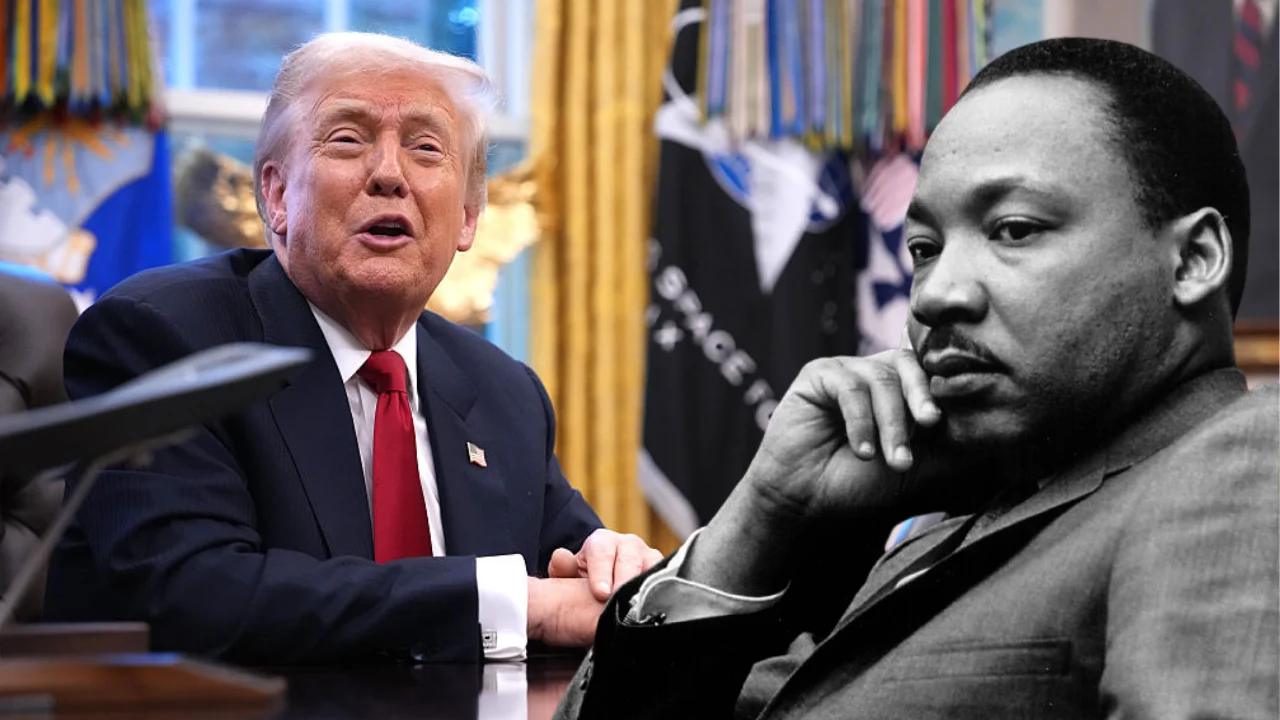
As the final hours of Martin Luther King Jr. Day drew near, the Trump White House issued a proclamation honoring Dr. King’s legacy. This proclamation, signed by President Donald Trump, aimed to pay homage to a man whose activism played a pivotal role in securing civil rights for African Americans. “Today, we honor the noble work of the Reverend Dr. Martin Luther King, Jr., whose commitment to justice paved the way to the full realization of the American promise,” the proclamation read.
NAACP’s Critique of Presidential Inaction
However, the issuance of this proclamation followed a period of silence that the NAACP, the nation’s oldest civil rights organization, found concerning. Just hours before the proclamation was made, NAACP President Derrick Johnson condemned Trump for not acknowledging the federal holiday through a statement or by participating in commemorative events. “Donald Trump has zero interest in uniting this country or recognizing its history and diversity,” Johnson stated firmly, positioning the president’s actions—or lack thereof—as a failure to honor Dr. King’s legacy.
Dr. King’s Vision versus Current Political Climate
Dr. King’s activism was deeply rooted in the fight for civil and voting rights, primarily for Black Americans oppressed under Jim Crow laws. Trump’s proclamation acknowledged King as a symbol of a movement that aimed to reaffirm the belief that every person is endowed with rights to “life, liberty, and the pursuit of happiness.” Yet, notably absent from his proclamation was any direct mention of African Americans or the ongoing struggles against systemic racism, raising questions about the sincerity of his intentions.
In a stark irony, Trump had previously invoked Dr. King’s name during his inaugural address, vowing to “make his dream a reality.” However, critics argue that his administration’s policies have done anything but. Many civil rights leaders have pointed out that Trump’s actions have generally undermined King’s vision for racial and economic justice through divisive policies concerning diversity and civil rights enforcement.
The Debate on Civil Rights Legislation
Recently, Trump made controversial claims regarding the Civil Rights Act of 1964, suggesting that it had detrimental effects on white Americans. He asserted, “It accomplished some very wonderful things, but it also hurt a lot of people.” This stance stirred significant backlash, as many perceived it to promote a narrative of white victimhood that obscures the historical and ongoing injustices faced by Black Americans.
In a powerful rebuttal, Bernice King, daughter of the civil rights icon, addressed Trump’s remarks during a Sunday sermon. She emphasized that the Civil Rights Act did not confer “special treatment” to Black Americans but instead outlawed discrimination. “The recent claim…is just wrong, and it’s dangerous,” King warned, indicating that such statements rewrite history in ways that could incite division and fear.
The Broader Implications of Trump’s Policies
As the nation reflects on Dr. King’s legacy, the conversation surrounding his ideals and their implementation continues to ignite debate. Trump’s administration has frequently leaned toward a narrative that emphasizes grievances from white Americans, particularly amidst discussions on programs aimed at closing racial disparities in areas such as wealth and health.
This emphasis has led many to question how genuine Trump’s homage to Dr. King truly is. While proclaiming to honor the civil rights leader, the current political atmosphere appears to diverge sharply from the principles King stood for—namely, equality, justice, and community unity.
A Legacy Under Scrutiny
In reflecting on Martin Luther King Jr.’s contributions, the gap between his vision of a racially harmonious society and the divisive rhetoric frequently seen in the contemporary political landscape raises critical questions. King’s dream was of a world governed by the content of one’s character, a sentiment that seems increasingly neglected in today’s discussions on race and rights.
As the nation continues to grapple with issues of systemic racism and inequality, it becomes ever more vital to ensure that Dr. King’s legacy is honored not merely in proclamations but through substantive action and a commitment to the principles of justice, equality, and unity that he espoused throughout his life.