


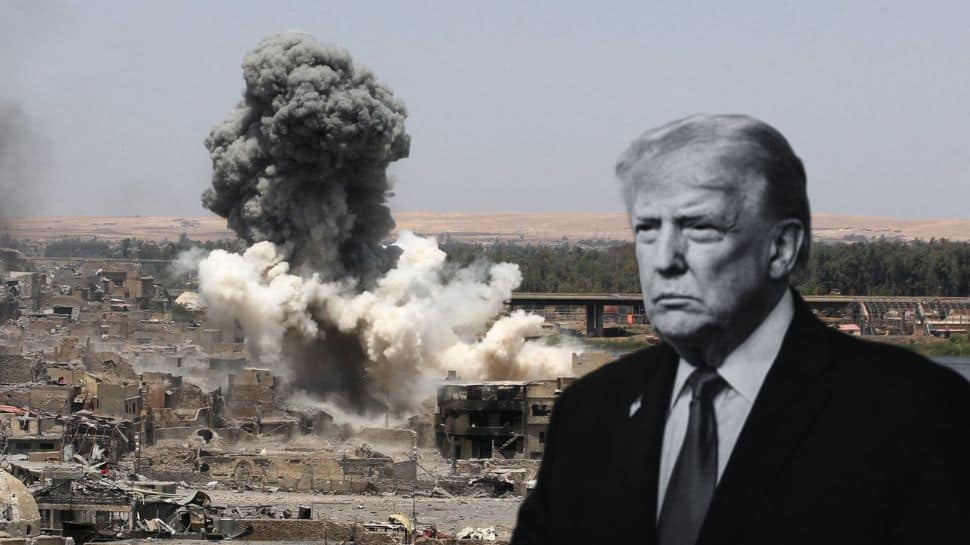
A Deeper Look into Trump’s Counterterrorism Strategy in Nigeria
US President Donald Trump is asserting himself on the global stage with a focus that extends beyond mere counterterrorism. His recent military actions, particularly a strike in Nigeria, hint at a broader game plan that intertwines military action with strategic political maneuvers.
The Recent Strike in Nigeria
On December 17, Trump pledged to eliminate Islamic terrorism from its roots. In a swift follow-up, less than ten days later, the US Navy and Air Force conducted a significant operation against Islamic State militants in Nigeria. According to Pentagon reports, the strike resulted in the death of over 20 terrorists linked to ISIS and its affiliates, as well as the destruction of a major weapons cache. The operation received intelligence support from Nigeria’s military, confirming cooperation between the two nations.
This operation marks Trump’s second significant strike against Islamic terrorism in under a month; the previous one occurred on December 19 in Syria. By linking his messaging to the protection of Christians, particularly on his Truth Social platform, he paints the conflict in religious terms, suggesting a crusade to save Nigeria’s beleaguered Christian community.
The Brutal Reality in Nigeria
For more than 16 years, Nigeria has been ravaged by violence inflicted by Islamic State and Boko Haram militants, with Christians disproportionately affected. Reports indicate that over 53,000 Christians have lost their lives in this conflict. Additionally, nearly 20,000 churches and cemeteries have been destroyed, and approximately 16 million Christians have been displaced. As a result, the United Nations has classified Nigeria as a country of special concern, highlighting the urgent need for international attention and intervention.
A Calculated Timing
Given the longstanding crisis facing Nigerian Christians, one must ponder why Trump’s focus has sharpened on this issue now. The answer lies in a multi-faceted strategy that encompasses political, social, and economic dimensions.
Trump’s Four-Point Strategy
First, there is the appeal to America’s significant Christian voter base. By positioning himself as their protector against Islamic terrorists, Trump aims to rally support among evangelical and conservative groups who prioritize religious freedom and protection.
Second, this strategy extends to African-American voters, many of whom have ancestral ties to Nigeria. Engaging with issues relevant to these communities could bolster support and create a bridge between Trump and minority populations.
Third, the quest for Nigeria’s resources cannot be overlooked. The country is rich in oil and rare earth minerals, crucial for America’s energy independence and technology sectors. Securing access to these resources would have long-term economic implications.
Fourth, Trump’s approach seeks to re-establish American dominance in Africa. The continent has seen a shift over the past few years, with nations strengthening ties with China and Russia, often at the expense of American influence. By conducting military operations, Trump signals that the United States is reclaiming its foothold in the region.
The Bigger Picture
Analysts argue that Trump’s assertive actions in Nigeria illustrate a broader maneuver to counteract the diminishing American influence in Africa. Once a significant player on the continent, the US’s standing has declined as nations forge closer economic relationships with China and Russia. Trump’s military strikes, therefore, are not solely about combating terrorism; they represent a strategic offensive to reassert American presence and power on the global stage.
A Complicated Landscape
The overarching question remains: Will Trump’s approach to counterterrorism in Nigeria lead to tangible results, or will it exacerbate geopolitical tensions? With major players like Russia and China already entrenched in Africa, the stakes have never been higher. The outcome of these actions may not only reshape the African landscape but also redefine international relations for years to come.
In navigating this intricate web of strategy, Trump is not just confronting Islamic terrorism; he is engaging in a multifaceted competition that could hold profound implications for the future of global politics.