


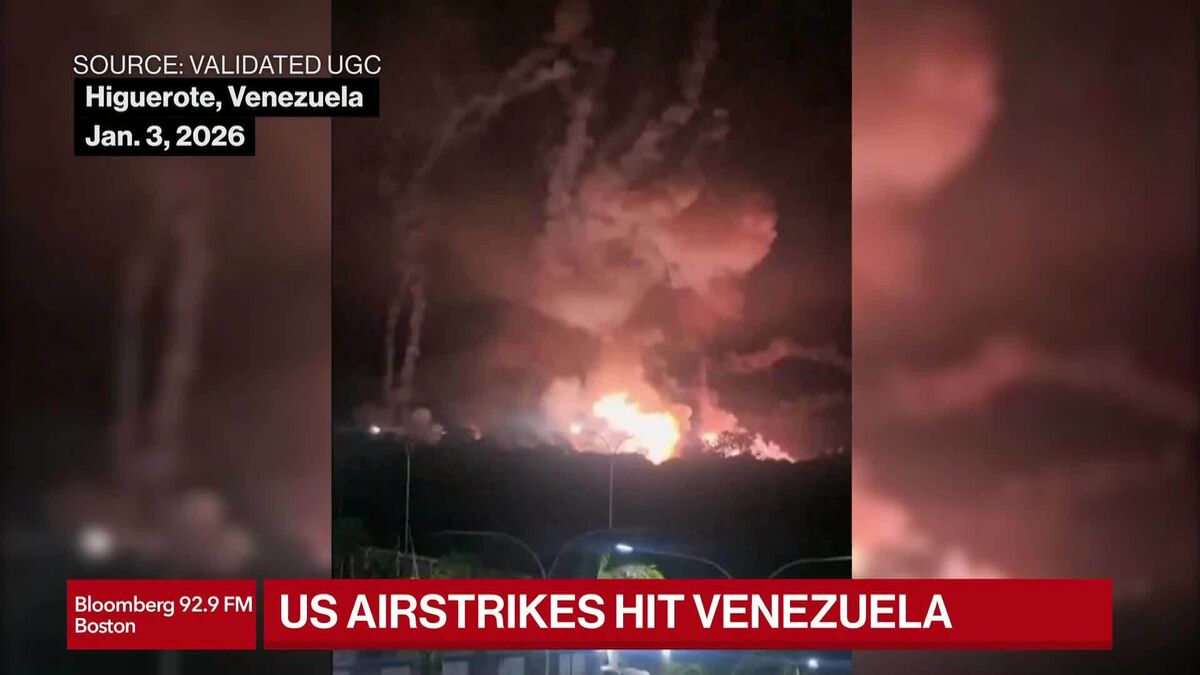
US Airstrikes Against Venezuela: A Turning Point in Global Politics
The recent airstrikes launched by the United States against Venezuela have sent shockwaves through the international community. News reports indicate that these military actions resulted in the capture of President Nicolás Maduro and his wife, Cilia Flores, who have since been flown to the United States. This dramatic development raises numerous questions about the implications for Venezuela, the wider geopolitical landscape, and the potential ramifications for US foreign policy.
The Operation: A Bold Military Move
Following months of escalating tensions, the US government executed a large-scale military operation that targeted key locations associated with Maduro’s regime. President Donald Trump announced the success of the operation via social media, affirming that the United States had “successfully carried out a large scale strike against Venezuela and its leader.” This move marks a significant escalation in US intervention in South America, emphasizing Washington’s dissatisfaction with Maduro’s leadership and policies.
Justifications for the Strike
The justification for the airstrikes, articulated by US Attorney General Pam Bondi, centers on a series of grave allegations against Maduro and his administration. According to Bondi, Maduro faces multiple charges, including “Narco-Terrorism Conspiracy, Cocaine Importation Conspiracy, Possession of Machineguns and Destructive Devices, and Conspiracy to Possess Machineguns and Destructive Devices against the United States.” Such accusations paint a picture of a leader deeply entrenched in criminal activities, attempting to undermine US sovereignty and stability.
Reactions from the Maduro Administration
In response to the airstrikes and the subsequent capture of Maduro and his wife, Venezuela’s government has vehemently condemned the operation. Officials have denounced it as a blatant act of aggression and imperialism, suggesting that the US is attempting to interfere in Venezuela’s sovereign affairs. This rhetoric not only aims to rally nationalistic sentiments among Venezuelans but also seeks to garner international support against what they characterize as unjust US imperialism.
Implications for Venezuelan Politics
The fallout from this military intervention could drastically reshape Venezuela’s political landscape. The absence of Maduro, a polarizing figure, opens the door for various factions within the country. While some citizens may view his capture as a liberating moment, others could see it as an opportunity for chaos and division among the opposition groups vying for power. The question remains: who will step in to fill the leadership void, and what type of governance will emerge in a post-Maduro Venezuela?
International Response: A World Divided
The airstrikes and capture of Maduro have prompted mixed reactions from other nations. Some countries have voiced their support for the US actions, arguing that Maduro’s regime has long been a destabilizing force in the region. Conversely, several nations, particularly in Latin America, have denounced the intervention as an infringement on national sovereignty, echoing sentiments of solidarity with the beleaguered Venezuelan state.
Concerns About Escalation
One of the key international concerns revolves around the potential for this intervention to escalate into a broader conflict. With various geopolitical interests at play, including relationships with Russia, China, and other regional powers, the situation is fraught with the possibility of backlash. If the US military presence and activities increase further, it could lead to a proxy conflict involving multiple nations.
The Legal Framework
The legal basis for the US airstrikes and the subsequent capture of Maduro resides heavily on international law and the perceived need to protect American interests. The notion of “Narco-Terrorism” as a justification for military action adds a complex layer to the debate. Critics argue that such a precedent may be dangerous, as it could open the floodgates for militaristic interventions under the guise of combating drug trafficking and terrorism.
Looking Forward
As the world watches Washington’s next moves, the implications of the airstrikes against Maduro will likely unfold over the coming weeks and months. The political, economic, and social ramifications for Venezuela and its neighbors will be profound. Questions abound regarding the future of democracy in Venezuela, the strategic aims of the US in Latin America, and the potential responses from global powers that view these events as a threat to international stability.
With each passing day, the situation continues to develop, highlighting the fragile balance of power and the intricate relationships that shape our world. The capture of Maduro represents not just a victory for the US but also a complex challenge that could redefine alliances and hostilities alike.