


JUMP TO:
The 2026 World Cup promises to be the most ambitious FIFA showcase in history. This tournament will mark a significant milestone as it expands to 48 teams for the first time in the nearly 100-year history of the competition. Set to be hosted by the United States, Canada, and Mexico, the event is slated to run from June 11 to July 19, 2026. During this month, fans around the globe will witness over 104 thrilling matches, culminating in the dramatic final at MetLife Stadium.
As the excitement builds, the tournament format is shaping up to be one of the most talked-about aspects. Before any matches can kick off, the stage must be set through the FIFA World Cup draw—an event that will determine the matchups and the bracket for the competition. Here’s a closer look at how this intricate process works, what teams will be involved, and other key details surrounding the upcoming tournament.
How does the FIFA World Cup draw work?
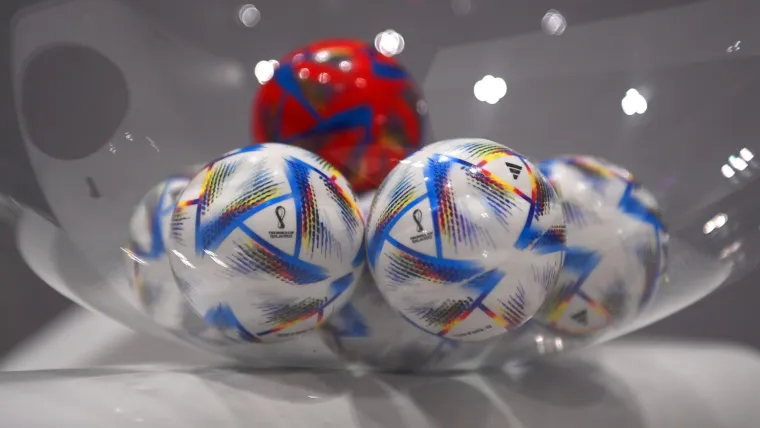
The 2026 FIFA World Cup draw will be conducted in four distinct stages. Each participating team’s name will be written on a slip of paper, placed inside a plastic ball, and divided into four pots based on their FIFA rankings. During the draw, officials will pull one ball from each pot to create four-team groups.
A computer will automatically allocate each drawn team to the appropriate group, taking into account geographical restrictions. With the draw completed, all teams will discover not only their group-stage opponents but also their potential paths through the knockout rounds should they advance.
When is the 2026 FIFA World Cup draw?
Mark your calendars! The 2026 FIFA World Cup draw is scheduled for December 5, 2025, at noon local time (ET). This event will take place just six months before the tournament kicks off, intensifying the anticipation leading up to the games.
Where is the 2026 FIFA World Cup draw?
Fans will be excited to know that the draw will take place at the prestigious John F. Kennedy Center for the Performing Arts in Washington, D.C.. This iconic venue reflects the importance of the event, with U.S. President Donald Trump announcing the draw’s location.
2026 World Cup draw format and rules
This year’s format introduces some changes due to the expansion to 48 teams, while retaining core elements from previous editions. Teams will be divided into four “pots” based on their FIFA rankings, with the host nations automatically placed in Pot 1 and assigned specific groups.
Pots and seeding
As the draw process progresses, it’s crucial to highlight how the pots will be organized. While host nations occupy Pot 1, teams that emerge from the intercontinental playoffs will be placed in Pot 4, regardless of their FIFA rankings at the time of the draw. This is designed to maintain balance and fairness.
Drawing teams
The process to draw teams will be straightforward; it begins with Pot 1 and moves through to Pot 4, filling out 12 groups of four teams each instead of the previous eight groups. As hosts, Mexico, Canada, and the USA will be pre-drawn into Groups A, B, and D respectively.
Geographic restrictions
Geographic restrictions play a significant role in the draw, ensuring that countries from the same confederation do not end up in the same group, with the notable exception being UEFA. Each group will feature a minimum of one European team, but no more than two teams from Europe can occupy the same group to maintain balance in representation.
Pot 1 seeding
To ensure competitive balance during the knockout rounds, FIFA has implemented additional constraints on Pot 1 teams. For instance, the top-ranked teams—Spain and England—will be separated into different halves of the groups, so that if they win their respective groups, they won’t clash until the later knockout stages.
What are the pots for the 2026 FIFA World Cup?
The specifics of the pots will be finalized once all teams have qualified for the World Cup, as they rely heavily on FIFA ranking updates. Here’s a look at teams that have qualified so far, along with their confederation and the pot they are likely to enter.
Teams already qualified for the 2026 FIFA World Cup
| Nation | Confederation | Pot (FIFA rank) | Qualified Via |
| USA | CONCACAF | 1 (16) | Host nation |
| Mexico | CONCACAF | 1 (14) | Host nation |
| Canada | CONCACAF | 1 (28) | Host nation |
| Argentina | CONMEBOL | TBD (2) | 1st, CONMEBOL qualification |
| France | UEFA | TBD (3) | 1st, UEFA qualification Group D |
| England | UEFA | TBD (4) | 1st, UEFA qualification Group K |
| Portugal | UEFA | TBD (5) | 1st, UEFA qualification Group F |
| Brazil | CONMEBOL | TBD (7) | 5th, CONMEBOL qualification |
| Croatia | UEFA | TBD (11) | 1st, UEFA qualification Group L |
| Morocco | CAF | TBD (12) | 1st, CAF qualification Group E |
| Colombia | CONMEBOL | TBD (13) | 3rd, CONMEBOL qualification |
| Uruguay | CONMEBOL | TBD (15) | 4th, CONMEBOL qualification |
Places still to be determined at the 2026 FIFA World Cup
| Nation | Confederation | Pot (FIFA rank) | Qualified Via |
| TBD | CONCACAF | 1st, CONCACAF qualification Group A | |
| TBD | CONCACAF | 1st, CONCACAF qualification Group B | |
| TBD | CONCACAF | 1st, CONCACAF qualification Group C | |
| TBD | UEFA | 1st, UEFA qualification 2nd round Path A | |
| TBD | UEFA | 1st, UEFA qualification 2nd round Path B | |
| TBD | UEFA | 1st, UEFA qualification 2nd round Path C | |
| TBD | UEFA | 1st, UEFA qualification 2nd round Path D | |
| TBD | TBD | 4 (TBD) | Intercontinental Playoff qualifier 1 |
| TBD | TBD | 4 (TBD) | Intercontinental Playoff qualifier 2 |
How is the World Cup draw different from other tournaments?
The draw for the World Cup, while unique, is somewhat similar to other major football tournament draws around the world. Fans accustomed to the structures of tournament draws will find the organizational setup familiar. It particularly resembles the former structure of the Champions League draw before the introduction of the Swiss Model.
However, unlike domestic cup competitions where teams are assigned ball numbers, the World Cup draw uses a more tactile approach—teams are represented by slips of paper placed inside balls, adding a layer of suspense and tradition to the occasion.
History of World Cup draw changes
Over the decades, the World Cup draw has evolved significantly. Initially, the tournament operated on a simple seeding system, but as the competition grew, so did the complexity of the draw. Starting in 1950, the group stage format made the need for a thorough and detailed draw essential.
With expansions in the number of participating teams, particularly during the switch to 32 teams in 1998, the draw format remained relatively unchanged, yet its significance grew with each edition of the tournament.
World Cup draw controversies
While FIFA portrays the World Cup draw as a celebratory kickoff to the tournament, it hasn’t come without its share of controversies. From technical glitches to allegations of manipulation, the draw process has faced scrutiny over the years.
One infamous incident occurred in 1982, where a series of blunders caused embarrassment. Issues ranged from improper geographical separations to equipment failures that left tournament officials scrambling to salvage the integrity of the event.
1982 — Spain
This draw is particularly notorious for procedural errors, as the organizers failed to properly exclude teams from certain groups. Not only did this oversight complicate the process, but it also led to technical failures that left a lasting impression of chaos on the event.
World Cup draw simulators
Many fans enjoy simulating World Cup draws prior to the official event. A popular resource is the Draw Simulator, which allows enthusiasts to predict potential matchups. Another option is Sim World Cup, though it’s important to note that it does not automatically pre-draw the 2026 hosts.