


Calls for FIFA to Expel the USA from the World Cup: A Political Storm
In a bold and unexpected move, twenty-one Members of Parliament (MPs) have signed a motion demanding that FIFA expel the United States from the upcoming World Cup. The MPs argue that President Donald Trump’s recent military actions against Venezuela violate international law and warrant serious consequences.
Diplomatic Tensions and Military Actions
The motion comes in response to President Trump’s controversial decision to dispatch commandos to capture Venezuelan leader Nicolás Maduro, an operation characterized by critics as a “kidnapping.” This military action is sparking outrage globally, particularly as it is perceived as a blatant violation of Venezuela’s sovereignty. The MPs’ call for expulsion reflects a growing concern over what they describe as Trump’s “veiled and overt threats” toward other nations, including Denmark, Cuba, and Colombia.
The Expanding Crisis in Venezuela
The situation in Venezuela has escalated significantly. The White House’s plans may involve expanding military operations, with threats directed at not just Maduro but also at Colombian President Gustavo Petro. In a particularly alarming statement, Trump warned Petro to “watch his ass,” hinting at potentially dire consequences similar to those faced by Maduro. Tensions have also risen as Trump suggested that Cuba is on the verge of “falling,” indicating a heightened military posture in the region.
FIFA’s Role and Responsibility
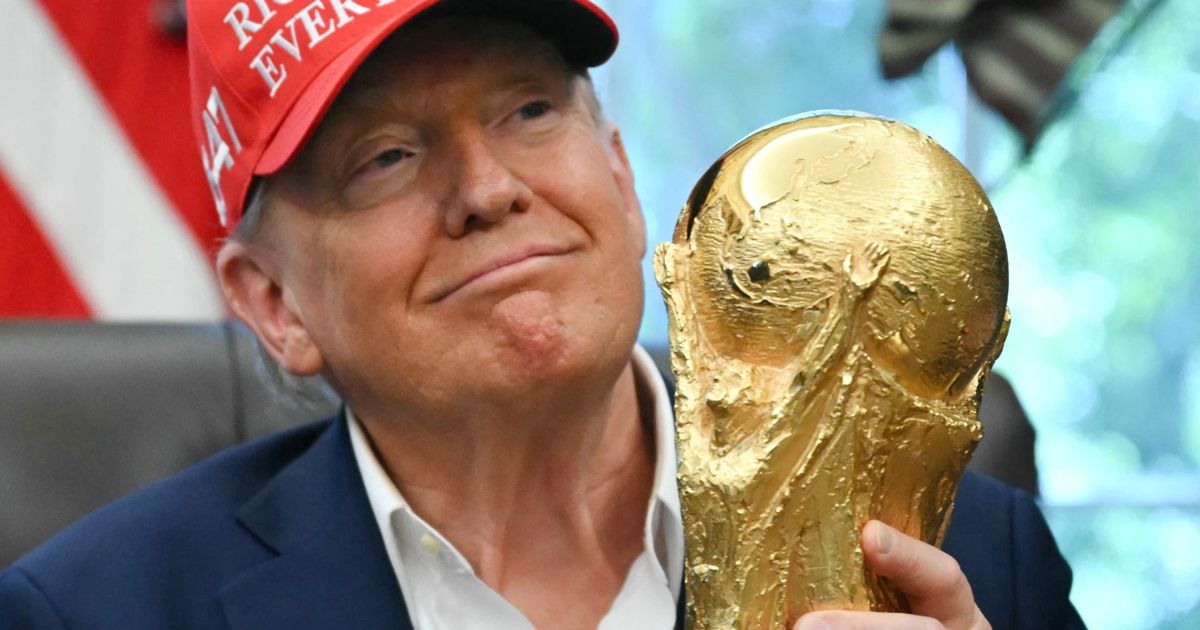
As the world’s governing body for football, FIFA is tasked with upholding certain standards, including the principle of non-involvement in political matters. However, the critics argue that FIFA’s actions—such as awarding Trump the FIFA Peace Award—demonstrate hypocrisy. Labour MP Brian Leishman, who initiated the motion, expressed frustration with the inconsistency in FIFA’s political neutrality. He stated, “This is rank hypocrisy by the international community and by sporting bodies.”
A Unified Political Front
The motion has garnered support from a diverse coalition of MPs, including 15 Labour backbenchers, Jeremy Corbyn, a Lib Dem MP, and four members from Plaid Cymru. They contend that international sporting events should not be used to legitimize or normalize violations of international law by powerful states. The MPs are urging the Commons to take a strong stand against the “kidnapping” of foreign leaders and injustices directed at sovereign nations.
International Reaction and Britain’s Position
While reactions to Trump’s actions have been varied, the British government has expressed support for Denmark in light of Trump’s threats to annex Greenland, a Danish territory. The stance highlights the tension not just between the U.S. and Venezuela, but also among traditional allies grappling with Trump’s controversial foreign policy.
Current Odds and Qualifications
As the World Cup approaches, the United States is seen as a long shot with odds set at 50/1 to win the tournament. The national team has qualified for the World Cup eleven times since the inaugural tournament in 1930. This year, they find themselves in a competitive group with Paraguay and Australia, making their prospects for advancement into the later stages uncertain.
Legal Ramifications and International Law
The operation to detain Maduro has raised pressing questions about the legality of U.S. military interventions. The U.S. government has labeled Maduro a “narco-terrorist,” while Maduro himself has described his capture as a “kidnapping” and referred to himself as a “prisoner of war.” This disconnect demonstrates the complex nature of modern geopolitical conflicts and their implications for international relations.
Final Thoughts on Sporting Integrity
As discussions continue regarding the US’s participation in global sports events, the call from these MPs serves as a poignant reminder of the intersection of politics and sports. While the world looks forward to the spectacle of the World Cup, this issue underlines deeper questions about ethical responsibilities and international norms in an increasingly polarized world.