


The Capture of Nicolás Maduro: A Turning Point in U.S.-Venezuela Relations
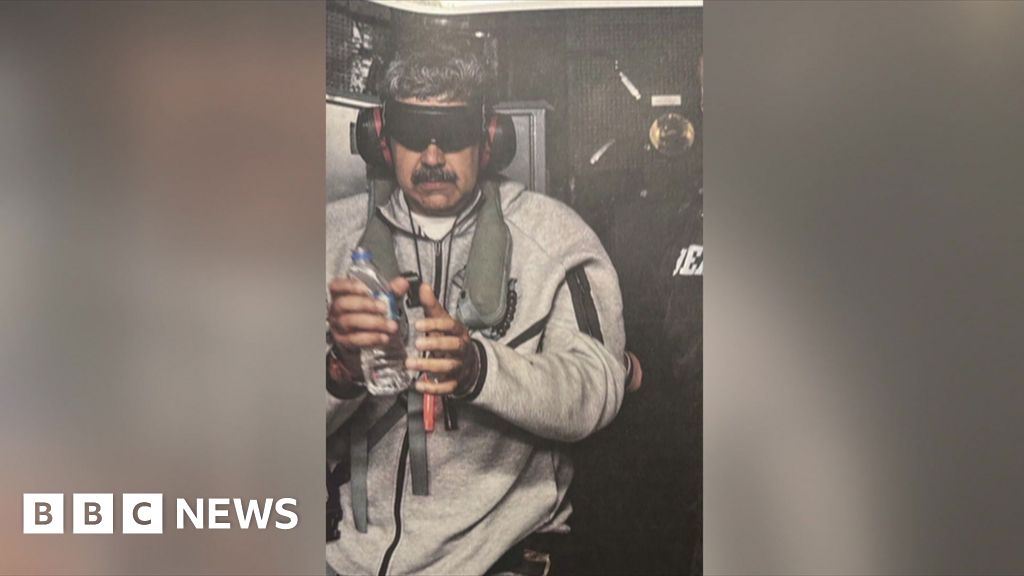
In a dramatic military operation, Nicolás Maduro, the President of Venezuela, has been captured by U.S. forces. This event has sent shockwaves through international politics, further straining relations between the United States and Venezuela. Following months of rising tensions, President Donald Trump announced Maduro’s capture amidst military strikes that shook the capital city of Caracas.
Operation Overview
The strike, led by the U.S. Army’s Delta Force, involved extensive planning and intelligence gathering, reportedly aided by a CIA informant within the Venezuelan government. The operation, termed Operation Absolute Resolve, took months to develop, culminating in coordinated air and ground assaults that began early in the morning on a Saturday. Over 150 aircraft were deployed to assist in the extraction of Maduro and his wife, Cilia Flores.
The Moment of Capture
Maduro was reportedly taken from his heavily fortified compound at 2:01 AM local time. According to Trump, Maduro attempted to escape into a fortified safe room but was intercepted by U.S. forces. Following his capture, he and Flores were transported to Stewart Air National Guard Base in New York, where they were expected to face drug-related charges in federal court.
The Prelude to Conflict
The U.S. has long accused Maduro of drug trafficking and related crimes, a claim that he vehemently denies. Tensions escalated as Washington began to target vessels suspected of transporting drugs from Venezuelan waters. The conflict reached a boiling point with the military strikes, which included reported explosions across military bases in Caracas.
Venezuelan Response
In response to the operation, Vice-President Delcy Rodríguez appeared on state television, urging Venezuelans to unite against what she called “military aggression.” The Venezuelan government quickly mobilized its armed forces, declaring a national emergency while condemning the strikes as violations of sovereign territory.
Targeted Locations of the Strikes
BBC Verify has identified multiple sites targeted during the strikes, including:
- Generalissimo Francisco de Miranda Air Base (La Carlota): A military airfield.
- Fuerte Tiuna: One of Venezuela’s largest military complexes.
- Port La Guaira: Venezuela’s primary maritime access to the Caribbean.
- Higuerote Airport: An airport located east of Caracas.
- Antenas El Volcan: Telecommunications towers in the Miranda state.
These locations were reportedly chosen to disrupt Maduro’s control over military and communication infrastructures.
Domestic and International Reactions
The operation has drawn intense reactions from various sectors. Within Venezuela, officials have accused the U.S. of committing acts of aggression, with claims that civilian areas were impacted. On the international stage, Russia and China condemned the U.S. strikes, labelling them aggressive and expressing deep concerns over their legality.
Neighboring countries, such as Colombia and Brazil, also criticized the actions, asserting that such interventions violate regional sovereignty. In stark contrast, right-leaning leaders in Latin America, such as Argentina’s Javier Milei, hailed the operation as a step toward liberation.
Immediate Aftermath: What Lies Ahead for Venezuela?
Trump has made clear that the U.S. plans to effectively “run” Venezuela during the transition of power, suggesting that American oil companies would play a significant role in restoring infrastructure and resource exploitation. He stated that the U.S. would reclaim its expenditures from Venezuela’s oil revenues, a prospect that raises questions about the country’s future viability.
Charges Against Maduro
U.S. Attorney General Pam Bondi confirmed that Maduro and his wife are charged with a range of serious offenses, including conspiracy to commit narco-terrorism and possession of destructive devices. These legal actions are a direct consequence of the alleged involvement of the Maduro regime in international drug trafficking, particularly related to cocaine.
Nicolás Maduro: The Man Behind the Controversy
Maduro’s rise to power was deeply intertwined with his predecessor, Hugo Chávez. Elected in 2013, Maduro has faced significant opposition and claims of illegitimacy, particularly following the disputed elections in 2024. Critics argue that his government has systematically undermined democracy in Venezuela, while his administration attributes unrest and dissent to U.S.-led interference and threats against their sovereignty.
Cilia Flores: A Powerful Figure in Her Own Right
Cilia Flores, the First Lady and now a co-defendant, has held influential political positions, including Attorney General. Known for her strong alliance with Maduro, Flores has also faced serious accusations, including alleged involvement in drug trafficking. Both leaders had previously been under U.S. sanctions, signifying their contested status in the international community.
Global Implications
This military operation signifies a significant shift in U.S. foreign policy toward Latin America. With tensions already high, the potential for conflict escalation remains. The international community is left grappling with the implications of such actions, as questions arise about legality, military intervention, and the future of diplomatic relations in the region.
The unfolding situation in Venezuela raises complex legal, ethical, and humanitarian considerations, all of which will demand close attention in the coming months.