


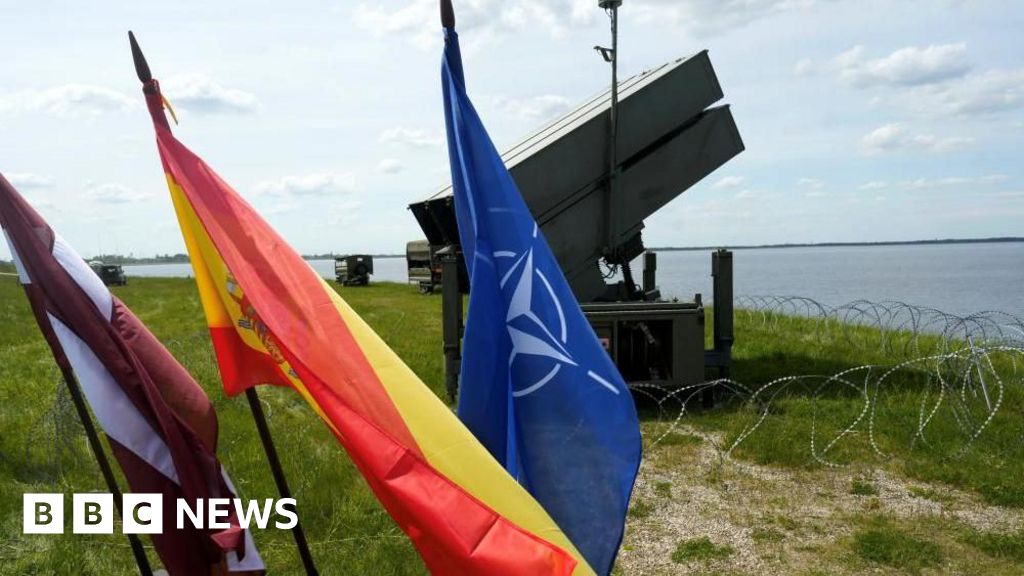
Understanding NATO: A Deep Dive into Its Role and Recent Developments
Recent Incidents in Poland
On the night of September 9-10, 2023, tensions heightened in Eastern Europe when Polish Prime Minister Donald Tusk reported that Polish and NATO aircraft intercepted several Russian drones that had violated Polish airspace. Although Ukraine is not a NATO member, Poland’s involvement, as a member of the alliance, raised questions about the potential impact on NATO’s collective defense agreements. Tusk called for an investigation into whether these violations posed a threat to the territorial integrity and security of NATO member states.
This incident followed a NATO summit in June 2023, where the alliance reiterated its “ironclad commitment to collective defense,” as defined under Article 5, and agreed to increase defense spending, particularly under the pressure from the United States.
What is NATO?
The North Atlantic Treaty Organization (commonly referred to as NATO) was formed in Washington, D.C., in 1949 by 12 countries, including Belgium, Canada, Denmark, France, Iceland, Italy, Luxembourg, the Netherlands, Norway, Portugal, the United Kingdom, and the United States. The primary aim of NATO was to counter the expansion of the Soviet Union during the Cold War, offering a collective security arrangement for its members.
NATO does not maintain its own standing army; rather, it operates as a coalition where member states can engage in collective military actions when needed. Historical interventions, like the NATO-led missions during the Bosnian War from 1992 to 2004, underscore its capability for coordinated military response.
The Principle of Collective Defense: Articles 5 and 4
At the heart of NATO’s function is Article 5, a fundamental principle declaring that an armed attack on one member is an attack on all. In such events, NATO members are obliged to come to the defense of the affected state, taking necessary action which may include armed force. However, this guarantee is limited in geographic scope, not extending to military bases abroad or conflicts outside the alliance area, as seen in historical instances like the Vietnam War.
In addition to Article 5, NATO members can invoke Article 4, allowing any member to raise concerns regarding their security, prompting discussions in the North Atlantic Council, which is the alliance’s primary decision-making body. This provision has been utilized seven times since NATO’s inception.
Membership Composition
Currently, NATO consists of 32 member countries across Europe and North America. This includes the original 12 founding nations and an additional 20 that joined post-1949. The expansion saw numerous Eastern European countries, such as Poland and the Baltic States, come in after the dissolution of the Soviet Union.
More recently, Finland joined NATO in April 2023, followed by Sweden in March 2024—both countries shifting from decades of neutrality largely in response to the security concerns raised by Russia’s military aggression. Ukraine, Bosnia and Herzegovina, and Georgia are among the nations that have expressed interest in NATO membership but are not yet members.
Defense Spending Commitments
NATO members are encouraged to spend at least 2% of their national GDP on defense. This guideline is not legally binding, but it stems from the alliance’s desire to ensure collective readiness against threats. The United States, along with nations bordering Russia like Poland and the Baltic states, traditionally allocates a substantial portion of their GDP to defense.
In 2024, the U.S. defense budget reached approximately $935 billion, which constituted about 3.2% of its GDP—almost double the combined defense spending of all other NATO members. Interestingly, nine NATO countries fell short of the 2% target in 2024, with Spain spending the least at 1.24%.
New defense spending targets were agreed upon during the June summit, committing to 3.5% of GDP for core defense initiatives by 2035, alongside provisions for wider security measures.
The Question of Ukraine’s Membership
Ukraine’s aspirations to join NATO have been complicated by its ongoing conflict with Russia. The Kremlin has vehemently opposed Ukraine’s NATO membership due to fears of NATO expansion towards its borders. Although NATO indicated in 2008 that Ukraine could eventually join, Ukrainian President Volodymyr Zelensky’s appeals for a quicker process gained momentum, especially after Russia’s invasion in 2022.
However, NATO Chief Jens Stoltenberg noted that membership could only be considered in the future, once the war had concluded. In February 2025, U.S. Defense Secretary Pete Hegseth remarked that NATO membership for Ukraine might not be a feasible outcome amid ongoing hostilities.
Despite the military and humanitarian support provided to Ukraine by NATO members, the alliance has not directly engaged in the conflict, fearing escalation into a full-blown confrontation with Russia, which maintains a significant nuclear arsenal.
Conclusion
From its origins in 1949 to the evolving dynamics of European security, NATO’s role as a collective defense organization remains central to geopolitical stability in the region. Recent events underscore the alliance’s commitment to collective security while navigating the complex landscapes of international relations. The future will likely present further challenges and opportunities for NATO, as it seeks to adapt to changing security environments while maintaining unity among its diverse membership.