


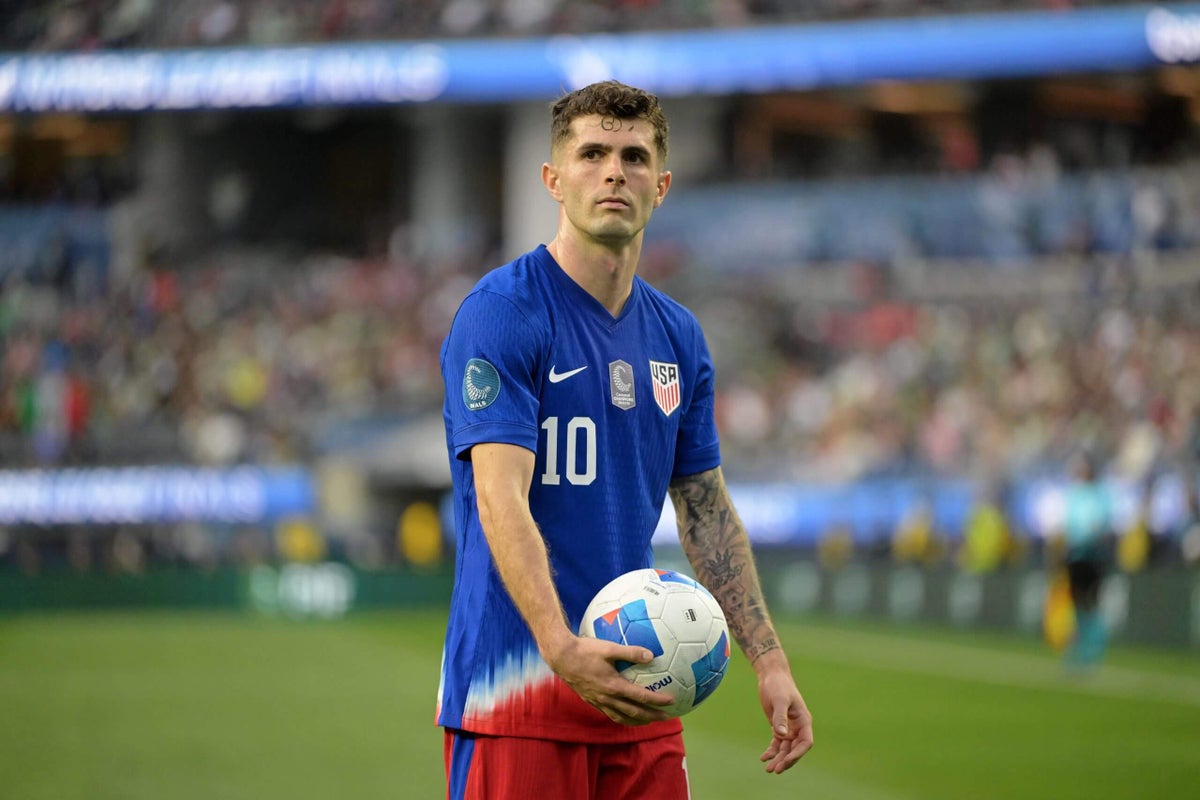
One of Mauricio Pochettino’s most impassioned appeals as United States head coach came a few weeks ago, and it centered on a simple concept: that every game matters. The Argentinian’s philosophy, while accurate, isn’t entirely original. Its underlying motivation is grounded in the idea that every match—be it a friendly or a competitive clash—plays a crucial role in building up a solid soccer program that can compete on the world stage.
As we reflect on the recent World Cup draw, the USMNT finds itself in a winnable group with some lurking dangers, highlighting that not all matches carry the same weight. Among these, the opening game against Paraguay in Los Angeles on June 12 next year could prove to be the most critical for the Americans.
“We’ll be looking forward to that for a while,” expressed Milan’s U.S. forward Christian Pulisic following the draw. His confidence reflects both the excitement and the pressure surrounding this first match.
For one, Paraguay might be the toughest opponent Pochettino’s squad faces in Group D. They sit at 39 in the FIFA world rankings, but an Elo rating puts them at a surprising 21. Their recent successes in CONMEBOL qualifying, including victories over heavyweights like Argentina and Brazil, also underline their capability. The group also includes Australia and a UEFA playoff champion yet to be determined from a pool of teams that includes Turkey, Romania, Slovakia, and Kosovo.
Moreover, the South Americans will arrive with extra motivation, following a contentious friendly match last November, where a late-game altercation added spice to an already charged atmosphere. Pochettino described the incidents from that match as “very, very dangerous,” setting the stage for a much-anticipated rematch.
Pulisic acknowledges the anticipation surrounding the first match goes beyond the identity of the opponent. “It doesn’t matter who we’re playing,” he asserted, acknowledging the historical significance of the World Cup opener in American soccer lore. “First match of the World Cup, obviously playing in L.A., we’re going to be ready for that game.”

Clint Dempsey’s early goal against Ghana in 2014 helped the U.S. start the World Cup with a win. (Carl de Souza / AFP / Getty Images)
History shows that major tournament campaigns are inherently unpredictable, but a pattern emerges that indicates the opening match carries magnified significance for the U.S. Since returning to soccer’s premier stage in 1990 after a four-decade absence, there’s a stark trend: when the U.S. has lost its first group game, it has been eliminated before reaching the knockout stages.
Conversely, any time it has avoided defeat to kick off the tournament, the team has progressed to at least the first knockout round. “Getting three points right off the bat would be an amazing start for us and just put us in a great position in the group,” Pulisic noted. The imperative of a strong start is clear, weighing heavily in the minds of players and coaches alike.
Reflecting on the past, losses in their inaugural matches in 1990 (5-1 against Czechoslovakia) and during the disastrous outings in 1998 and 2006, where the team managed just one point across six games, lay the foundation for this mentality. On the flip side, victories against Portugal in 2002 and Ghana in 2014 propelled them to the knockout stages, cementing the opening game’s importance in the overall trajectory of their World Cup experience.

Tensions flared between the USMNT’s Alex Freeman and Paraguay’s squad during the friendly in November. (Vincent Carchietta / Getty Images)
With the World Cup expanding to 48 teams for this tournament across the U.S., Canada, and Mexico, Pochettino will undoubtedly have his sights set not just on progressing, but on making a deep run in the tournament. Understanding the stakes from the outset is paramount, especially against opponents like Paraguay and their head coach Gustavo Alfaro, who will be determined to turn the tide from last month’s encounter.
Alfaro had previously led Ecuador to a 2-0 victory against Qatar, showcasing his tactical acumen and motivation to ensure his team rises to the occasion. “The U.S. is a very intense team,” he remarked, highlighting the physicality and mobility that the American team brings to the pitch. “You have to play with the same intensity.”
Considering the difficulty of starting strong, the historical outcomes from previous World Cups provide insights into the potential consequences. Looking back, the first games of tournaments from 1986, 1990, and 1994, which featured 24 teams progressing to a 16-team knockout stage, reveal a grim record for teams eliminated after group play—two wins against 17 losses.
While Pochettino’s assertion that “every game matters” holds truth, the pressing need for a strong start may be as telling an indicator as any for a favorable journey ahead in the tournament.