


A Troubling Deportation Case in Eswatini
Background of the Deportations
In July, three men were deported from the United States to Eswatini, a small landlocked nation in Southern Africa. This move is part of a controversial immigration policy initiated during the Trump administration that has seen countless individuals sent to various African countries without clear legal frameworks. While many of these individuals served their time in U.S. prisons, their subsequent treatment raises serious human rights concerns.
The Plight of Orville Etoria
Among the deported is Orville Etoria, a 62-year-old Jamaican national. Etoria had completed his criminal sentence in the U.S. for murder and was released on parole in 2021. However, upon his deportation to Eswatini, he found himself in a maximum-security prison without charges or legal counsel. His legal representatives from the New York-based Legal Aid Society claim that he was “inexplicably” sent to Eswatini, especially when his home country, Jamaica, was willing to accept him.
Misleading Claims by U.S. Authorities
The U.S. Department of Homeland Security (DHS) has suggested that nations are unwilling to accept these deportees, branding them as “dangerous criminals.” In the case of Etoria, the DHS falsely claimed Jamaica had refused to take him back. Such assertions raise flags about the transparency and fairness of the deportation process, with legal representatives alleging that individuals have been subjected to indefinite detention without meaningful legal recourse.
Additional Deportees and Their Conditions
In addition to Etoria, two other men from Laos and Vietnam were also deported and are currently held under similar conditions. Their lawyer, Tin Thanh Nguyen, highlighted that both had successfully reintegrated into their communities post-release in the U.S. They, too, were taken without warning, revealing a troubling aspect of the third-country deportation program that allows for arbitrary detention.
Experiences of Other Deportees
The situation is further complicated by the cases of two men from Yemen and Cuba, who are also imprisoned in Eswatini. They too have faced a lack of legal representation. Alma David, their lawyer, pointed out the audacity of the claim made by Eswatini authorities that only the U.S. Embassy could grant access to the detained individuals. This raises questions about jurisdiction and international legal standards.
The Broader Implications of the Deportation Program
Since July, the U.S. has ramped up its third-country deportation strategy, targeting various African nations, including South Sudan, Eswatini, and Rwanda. This program has been criticized for its secrecy and the arbitrary nature of the transfers. The lack of transparency means little is known about the fates of those deported, like eight individuals brought to South Sudan in early July, described only as “dangerous criminals.”
Conditions in Eswatini
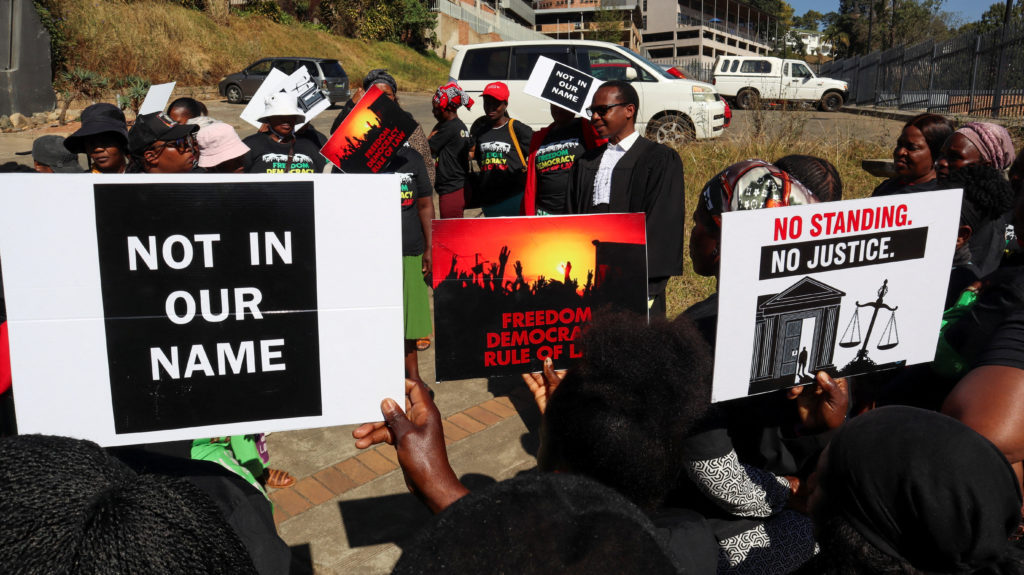
The deportees in Eswatini are currently housed at the Matsapha Correctional Complex, a facility notorious for housing pro-democracy activists and being marked by harsh conditions. The fact that these deportees are being held in solitary confinement further exacerbates concerns around their treatment and well-being.
The Secretive Nature of Deportation Deals
While some deportations have been publicly acknowledged, many others remain shrouded in secrecy. For instance, seven migrants were sent to Rwanda in mid-August, with little information released about their identities or circumstances. Such secrecy raises ethical questions about deportation practices and the treatment of individuals who may already have faced severe hardships.
The Human Rights Perspective
The indefinite detention of these individuals at taxpayers’ expense and without due process exemplifies a troubling trend within U.S. immigration policy. Human rights advocates argue that the actions taken by the U.S. government violate fundamental legal principles and pose significant risks to the health and safety of those affected.
The Intersection of Domestic and International Law
As the situation evolves, the intersection of U.S. immigration policy and international human rights law comes into sharper focus. With deportees facing detention without legal representation, the potential for abuses increases, leading to calls for reform and accountability in how deportations are handled globally.
Through this complex web of legal and human rights issues, the cases of Etoria and others underscore the profound impacts of immigration policies on individual lives and the ethical responsibilities contained within international relations.