


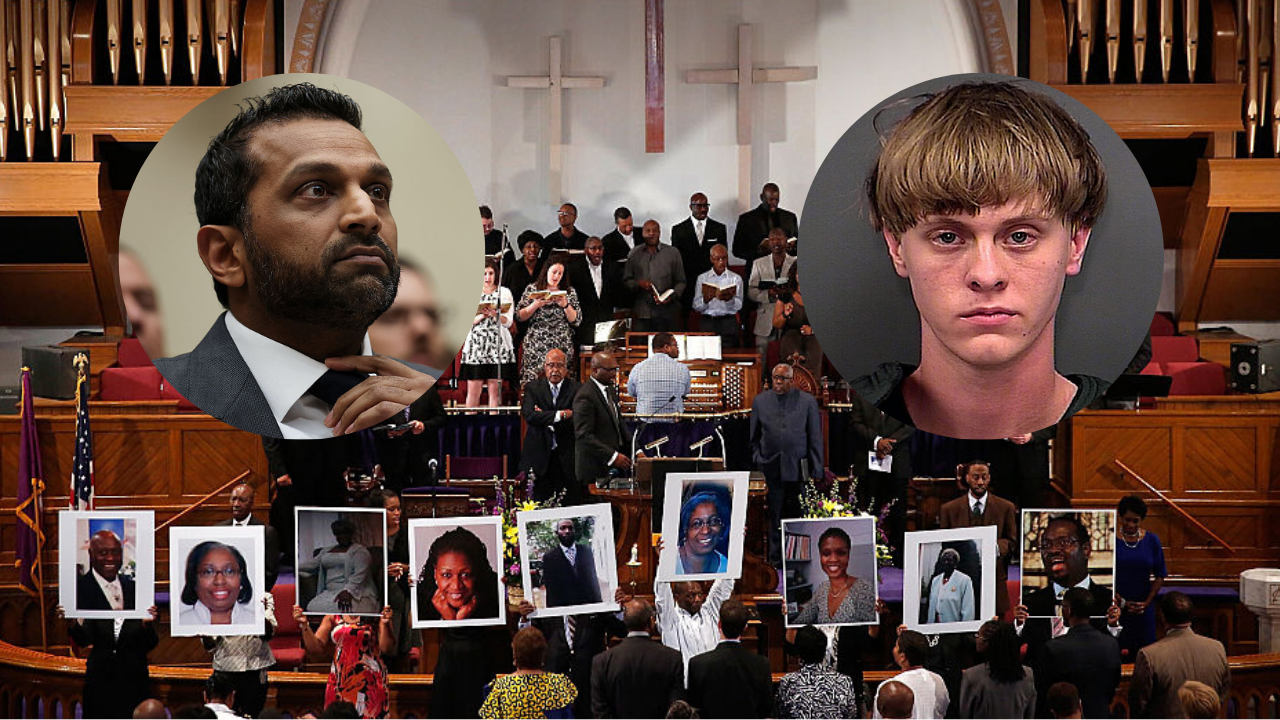
Kash Patel’s Hearing: A Crucial Moment in the Conversation on Domestic Terrorism and Racial Violence
During a recent House Oversight Committee hearing, Kash Patel, the newly appointed FBI Director, found himself under the spotlight, particularly concerning his knowledge—or lack thereof—about one of the most horrific acts of racial violence in recent American history. When Texas Rep. Sydney Kamlager-Dove questioned him about Dylann Roof, the white supremacist responsible for the massacre of nine Black parishioners at Emanuel AME Church in Charleston, South Carolina, in 2015, Patel’s apparent unawareness raised eyebrows across political and social spectrums.
The Moment in the Hearing
Kamlager-Dove’s line of questioning was direct and pointed. She spotlighted Roof’s actions, emphasizing how they were representative of a growing trend of violent extremism linked to far-right ideologies. In a puzzled response, Patel asked, “I’m sorry, Dylan Roof? Can you give me some more information?” This exchange has drawn significant criticism, leading many to question Patel’s qualifications for overseeing the FBI, especially during a time when domestic terrorism, particularly that which stems from white supremacist ideology, has been increasingly scrutinized.
The Congresswoman didn’t mince words when she expressed her astonishment. “You’re head of the FBI. You probably know this. If you don’t know, that’s fine,” she said. This moment encapsulated a broader concern about whether those leading law enforcement agencies are sufficiently aware of the threats they are meant to combat.
Context of the Inquiry
Patel’s appointment as FBI Director by the Trump administration has been controversial, primarily because of his stated views on political violence. In the wake of the recent shooting of conservative activist Charlie Kirk, Patel and other prominent Republican voices, including former President Trump, have frequently claimed that extreme liberal ideology is to blame for a rise in political violence. This framing drew skepticism, particularly from Kamlager-Dove, who aimed to bring attention back to the documented rise of violent actions linked to white supremacy.
Rep. Kamlager-Dove deftly cited Roof’s case as part of a larger pattern of attacks influenced by radical right-wing beliefs. She urged Patel to acknowledge this reality, highlighting that it was not just isolated incidents, but a systematic issue rooted in America’s socio-political landscape.
A Focus on Racially Motivated Violence
During her questioning, Kamlager-Dove noted that Patel’s predecessor, Christopher Wray, had identified racially-motivated violent extremism as one of the most lethal threats facing the nation. Patel better acknowledged this reality, affirming, “That there are racially motivated crimes being committed in America? Yes.” However, the acknowledgment fell short when it came to specifically addressing the historical context and ramifications of Roof’s actions.
Moreover, the Congresswoman didn’t stop with Roof; she pressed further, referencing other mass shootings, including the tragic event in Buffalo, New York, in 2022, where ten Black shoppers were killed by a white nationalist. Kamlager-Dove’s insistence on getting Patel to say that these murders were committed by white supremacists highlighted the struggle to get acknowledgment from law enforcement about the threats posed by domestic terrorism.
Reactions from the Political Sphere
Following the hearing, reactions poured in quickly. Kamlager-Dove took to social media to express her shock, calling Patel’s lack of knowledge about Roof “incredibly shameful and concerning.” The comment caught the attention of political analysts and commentators, who echoed her sentiments regarding the implications of having a seemingly uninformed leader at the FBI.
Democratic strategist Antjuan Seawright expressed his disgust, pointing out that understanding such a significant act of violence is essential for anyone in Patel’s position. He emphasized that the Charleston massacre had ramifications far beyond South Carolina, permeating nationwide discussions on race, gun violence, and domestic terrorism.
Rep. Jasmine Crockett, also from the Democratic Party, further challenged Patel, expressing the fears that many in the Black community harbor due to rising white supremacist violence. “I don’t know who feels safe in this country, except for the white supremacists,” she said, articulating a shared sentiment among many that systemic racism and domestic terrorism are interconnected issues that demand urgent attention.
A Look Back at Dylann Roof’s Actions
Dylann Roof’s actions in 2015 were not just a singular event but a stark reminder of the racial tensions simmering in America. At the age of 21, Roof had become radicalized through hate groups and propaganda, documenting his racist ideologies in a manifesto. His targeting of a historic Black church underlines how domestic extremism can manifest in violence, with lasting consequences on communities and national discourse.
The hearing’s atmosphere underscored the necessity for law enforcement agencies to be well-informed about such events and their broader sociopolitical context. Roof’s attack was not merely an isolated incident; it was a harbinger of the battles still ongoing today against white supremacy and racism in America.
Implications for Law Enforcement
The implications of Kash Patel’s limited knowledge on such a crucial case highlight a critical issue in American law enforcement. As discussions about domestic terrorism evolve, the foundation of effective prevention lies in the acknowledgment of historical and current threats—and doing so requires informed leadership.
Kamlager-Dove’s insistence that the FBI must take these issues seriously reflects a broader demand for accountability within federal agencies. As the landscape of terrorism continues to evolve, so too must the understanding and response strategies of those tasked with protecting the nation.
In an era where information is ubiquitous, a lack of awareness from leadership can weaken the integrity of institutions designed to keep citizens safe. Recognizing this reality is essential not just for the FBI, but for all sectors responsible for safeguarding democracy and civil rights in America.