


United Voice: Black Mayors Stand Against White Supremacy
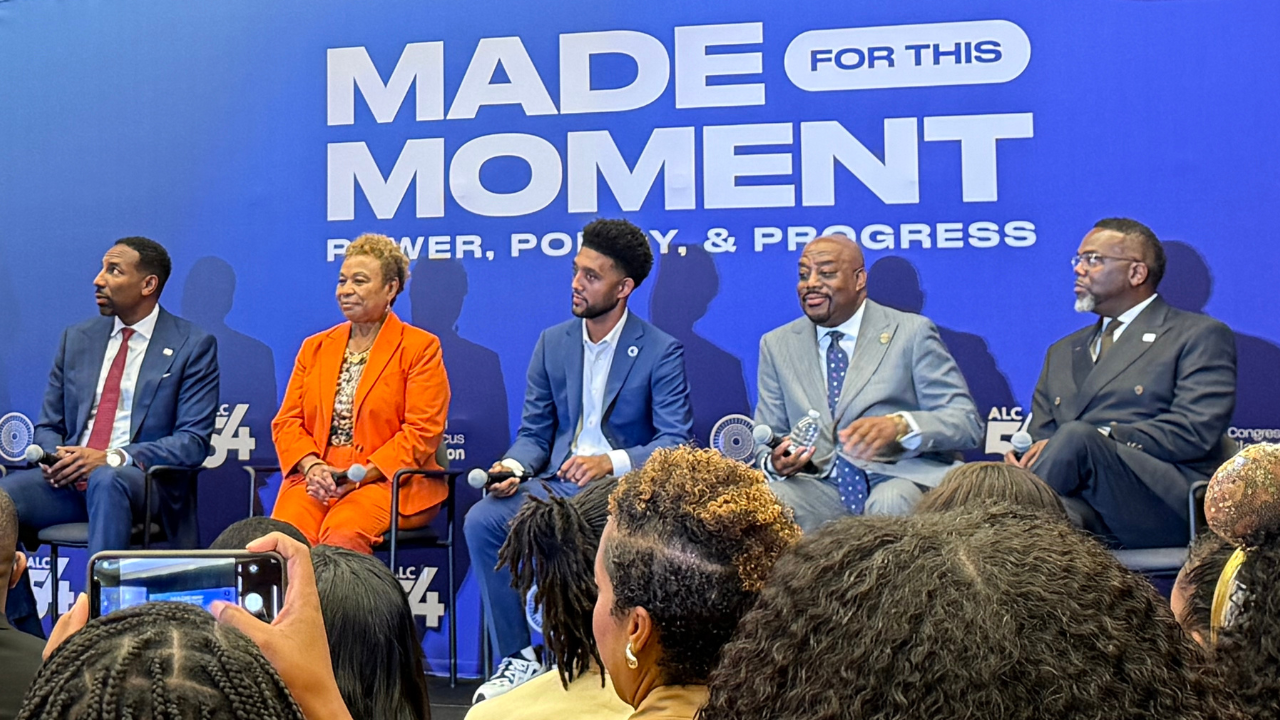
Recently, a historic gathering unfolded at the 54th Black Congressional Caucus Annual Legislative Conference, where Black mayors from some of America’s largest cities united to address pressing issues in a politically charged environment. Their rallying cry was clear: to confront ongoing threats from the Trump administration, which they view as an attempt to uphold white supremacy.
The Power of Unity
Among the prominent figures was Chicago Mayor Brandon Johnson, a rising star who has fiercely opposed President Trump’s militarization of cities under the guise of law and order. “The assignment is to finally bury white supremacy and build Black wealth,” he proclaimed, emphasizing the need for direct action against systemic inequality. His remarks resonated powerfully in a room filled with activists and leaders committed to change.
Joining Johnson at this pivotal moment were D.C. Mayor Muriel Bowser, Baltimore Mayor Brandon Scott, Oakland Mayor Barbara Lee, Atlanta Mayor Andre Dickens, and Savannah Mayor Van Johnson. Moderated by activist Angela Rye, the panel served as a platform for discussing the broader implications of their leadership in this critical fight.
A Dark History Revisited
Mayor Johnson pointed out that every city threatened with federal intervention under Trump’s administration is led by a Black mayor, suggesting a deliberate political strategy targeting minority leadership. He stated, “There is an extremism in this country that has not accepted the results of the Civil War.” The panelists voiced concerns over Trump’s moves to dismantle civil rights protections and erase significant parts of Black history.
Inspiration from the Past
Drawing inspiration from history, Johnson reminded the audience of the resilience of Black Americans who once led the largest act of dissent in the nation. Referring to the profound impact of enslaved individuals who ceased laboring, he highlighted them as exemplars of resistance against oppression. “They put down the tools that white supremacy was using to build this so-called democracy,” he stated, framing the current struggle as a continuation of this long fight for freedom.
Confronting Erasure in Politics
In a powerful, unyielding declaration, Baltimore’s Mayor Scott remarked that white conservatives often react defensively against the presence of Black leadership. He asserted, “They might be out here trying to erase us and to erase Black history, but… they too come from Africa.” His words underscored a collective cultural heritage that cannot be erased, reinforcing the notion that history is foundational to identity.
Legislation and Community Initiatives
Mayors discussed their cities’ unique responses to the ongoing political landscape. Mayor Scott unveiled his administration’s strategies in Baltimore, including tax breaks for vacant properties to bolster affordable housing and the “Buy the Block” initiative aimed at building generational wealth among residents. “We’re allowing renters… in our neighborhoods to become homeowners,” he explained, emphasizing an inclusive approach to urban development.
Similarly, Atlanta’s Mayor Dickens highlighted the city’s commitment to supporting Black businesses through equitable contracting, linking economic empowerment to community success. “It is inescapable, and we stand firmly on the principles of economic inclusion,” he insisted, showcasing the city’s proactive stance against federal policies that threaten this progress.
Solidarity Under Pressure
Savannah Mayor Van Johnson articulated the dual pressures faced by Black mayors: the weight of “white fear” and the expectation of their communities. He described this intersection as a challenging terrain where they must consistently prove their value. “When you mess with one of our mayors, you’ve got a problem from all of us,” he asserted, emphasizing the solidarity among Black leadership in the face of adversity.
The Reality of Political Dangers
Mayor Johnson also addressed the dangers of political extremism, referencing the January 6 insurrection, and connecting it to the broader narrative of white fear during electoral changes. He said, “These are incredible acts of evil,” reminding the audience of the volatile political climate and its impact on civil society.
Navigating the Complex Terrain of Race and Power
As challenges persist, the mayors encouraged the community to remember their roots. Mayor Lee, Oakland’s first Black female mayor, spoke about the importance of courage, stating, “We don’t have the spirit of fear but the spirit of power.” Her acknowledgment of the historical struggle connected the past to present efforts, reinforcing the idea that those with a legacy of fighting for justice are well-equipped for leadership in turbulent times.
In this ongoing struggle against systemic oppression, Black mayors are not just figureheads; they are active participants in reshaping the narrative of their cities. Through unity, resilience, and unfaltering commitment, they strive to create a future reflective of the communities they represent, championing justice and equity against all odds.