


The U.S. Supreme Court and the Future of Voting Rights: A Deep Dive into Louisiana v. Callais
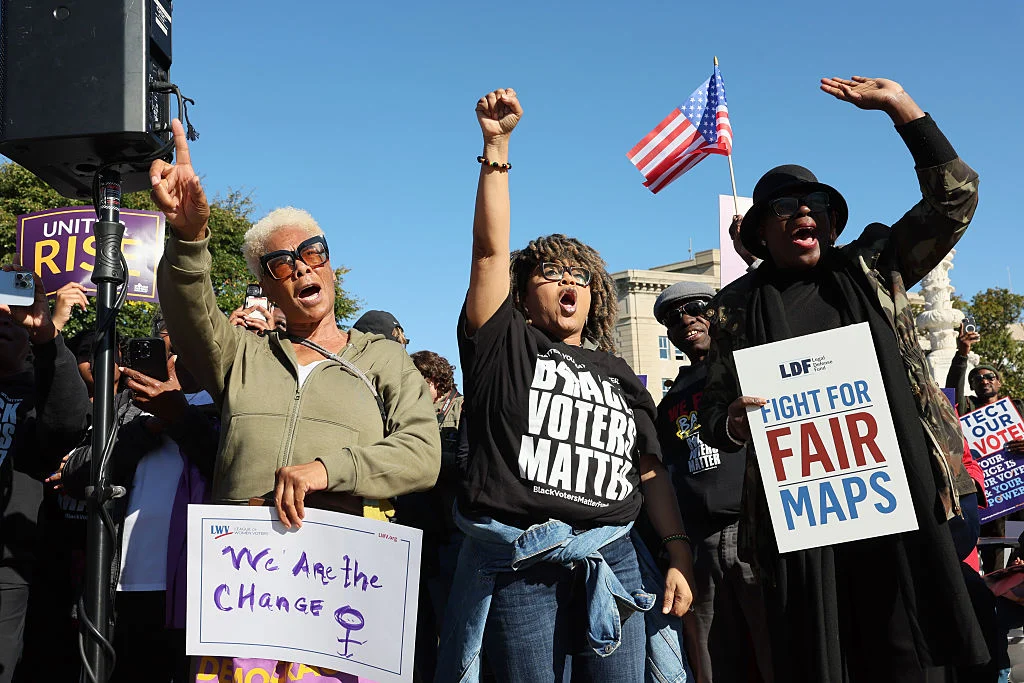
On a pivotal Wednesday, the U.S. Supreme Court heard oral arguments in a case that could profoundly impact the Voting Rights Act of 1965. Louisiana v. Callais presents a significant challenge to existing congressional maps and the protections designed to safeguard Black communities from racial discrimination. The stakes are high, as the ruling could not only reshape Louisiana’s electoral landscape but also set a precedent that could ripple across the nation.
Understanding Louisiana v. Callais
At the heart of this case is Louisiana’s current congressional map, which features two majority-Black districts. The issue before the Court centers on whether this map adheres to the constitutional protections outlined in the 14th and 15th Amendments. The plaintiffs, a coalition of white voters, argue that the map discriminates against non-Black individuals by favoring racial minorities.
Megan Keenan, a staff attorney with the ACLU’s Voting Rights Project, highlights the absurdity of treating the acknowledgment of racial discrimination as inherently prejudiced. “The parties in this case are arguing about whether recognizing and acknowledging the existence of discrimination is somehow itself racist,” she pointed out, asserting that such a stance runs counter to the very essence of the amendments in question.
Section 2 of the Voting Rights Act
Central to this discourse is Section 2 of the Voting Rights Act. This provision permits voters to seek judicial relief if they believe race-based limitations have been placed on their voting rights. It establishes “opportunity districts” specifically crafted to avoid diluting the voting power of racial minorities.
As the Supreme Court deliberates, concerns rise over whether Section 2 may face an outright repeal. Historical context is essential; in 2013, the Court invalidated Section 5, which required federal oversight of voting laws in states known for racial discrimination, including Louisiana. This previous ruling has already had a tangible impact on voter representation in areas where Black communities have been systematically marginalized.
The Stakes for Black Representation
Janai Nelson from the NAACP Legal Defense Fund provided a compelling argument during the hearings, stating that racial discrimination in voting against Black Americans is not just a relic of history. “If we take Louisiana as one example, every congressional member who is Black was elected from a Voting Rights Act opportunity district,” she explained. This reality underlines the critical significance of maintaining Section 2 for fostering meaningful representation.
The implications of a potential ruling against the current map are palpable. For instance, Democrat U.S. Representative Cleo Field, one of Louisiana’s two Black congressional members, could see his seat jeopardized if the existing map is struck down.
Judicial Perspectives on Discrimination
Justice Ketanji Brown Jackson, the first Black woman on the Supreme Court, articulated the necessity of Section 2 as “not a remedy in and of itself, but a critical tool for identifying instances of discrimination.” She likened it to a measuring device that provides insights into whether there are unequal electoral opportunities. Her defense points to a broader principle: that an examination of these inequalities is essential for addressing the root causes of voting rights issues.
Looking Ahead: The Broader Political Landscape
The Supreme Court’s decision in Louisiana v. Callais will undoubtedly influence other redistricting cases across the nation, including controversies unfolding in Texas, where state Republicans have recently undertaken contentious map redraws. Such maneuvers are viewed by advocates as strategic efforts to consolidate power ahead of the upcoming midterm elections.
Cliff Albright, co-founder of Black Voters Matter, voiced concerns that the potential nullification of Section 2 could sanction a wave of racially biased redistricting efforts. “They can literally create a permanent one-party rule system without the Voting Rights Act in place,” he warned, emphasizing the potentially dire consequences for Black voters and communities.
Implications for American Democracy
The implications of the Louisiana v. Callais case extend beyond just the immediate question of congressional mapping. Advocates for racial equity in voting assert that the stability of Section 2 is essential for preserving America’s two-party system, a cornerstone of its democratic structure. Concerns about a resurgence of autocratic tendencies are firmly grounded in the actions observed during the Trump era, raising alarms about the erosion of accountability in governance.
Albright articulated a pressing concern: “You can’t have a people’s agenda when you’ve got a government that does not reflect the people.” His comments reflect the fears among advocates that without legislative safeguards, political leaders may prioritize self-preservation over public accountability.
The drama unfolding in the Supreme Court encapsulates a critical juncture in American jurisprudence. The outcome holds the potential to not only redefine voting rights in Louisiana but also influence a broader narrative about racial equity, representation, and the future of democracy in the United States.